To maintain balanced juice habits, stick to portions of 4 to 6 ounces and avoid frequent consumption—once or twice a day works best. Diluting juice with water or ice helps reduce sugar intake while still enjoying flavor. Focus on pairing juice with meals and complementing your diet with whole fruits, vegetables, and water. Following these guidelines helps maximize nutrients and keep sugar levels in check—continue exploring for more tips on healthy juice routines.
Key Takeaways
- Limit juice portions to about 4–6 ounces to prevent excessive sugar intake and support nutrient absorption.
- Consume juice once or twice daily as part of a balanced diet, not as a replacement for whole foods.
- Dilute juice with water or ice to reduce sugar concentration and improve digestion.
- Pair juice with meals to enhance nutrient absorption and stabilize blood sugar levels.
- Incorporate a variety of whole fruits, vegetables, and water to maintain overall nutritional balance.
Have you ever wondered how your daily juice habits impact your health? The way you incorporate juice into your routine can markedly influence how well your body absorbs nutrients and how much sugar you’re consuming. When you drink juice, especially on a regular basis, it’s vital to consider the balance between enjoying the flavors and supporting your overall well-being. Too much juice, or juice that’s high in sugar, can hinder nutrient absorption and lead to unwanted weight gain or energy crashes. Knowing the right frequency and portion sizes helps you maximize the benefits while minimizing potential drawbacks.
First, understanding the impact of your juice intake on nutrient absorption is key. Juices are often rich in vitamins, minerals, and phytochemicals, but these nutrients are most effectively absorbed when consumed in moderation. Large quantities of juice, especially when consumed frequently, can overwhelm your digestive system, making it harder for your body to extract and utilize these nutrients efficiently. Instead of drinking large glasses multiple times a day, aim for smaller portions that allow your body to absorb nutrients more effectively. Incorporating a variety of whole fruits and vegetables alongside juice can also slow down sugar absorption, providing a steadier supply of nutrients and energy. This approach enhances nutrient absorption and prevents spikes in blood sugar levels.
Moderate juice intake improves nutrient absorption and prevents blood sugar spikes.
Speaking of sugar, it’s one of the most vital factors to monitor in your juice habits. Many commercial juices are loaded with added sugars, which can quickly contribute to excessive sugar intake. Even natural fruit juices contain a significant amount of natural sugars, which, in large amounts, can cause blood sugar spikes and crashes. These fluctuations can leave you feeling tired, hungry, or irritable, undermining your overall health goals. To maintain a balanced sugar intake, keep your portions modest—about 4 to 6 ounces per serving—and choose juices that are 100% fruit without added sugars. Diluting juice with water or adding ice can also help you enjoy the flavor without overdoing the sugar content.
Finally, establishing a sensible frequency for juice consumption is essential. Drinking juice once or twice a day, as part of a balanced diet, allows you to benefit from its nutrients without overloading your system or increasing your sugar intake unnecessarily. Timing your juice intake around meals can further improve nutrient absorption and help regulate blood sugar levels. Remember, juice should complement a diet rich in whole foods, fiber, and water. By paying attention to portion sizes and frequency, you guarantee that your juice habits support your health rather than hinder it. Balancing enjoyment with moderation is the key to making your juice routine both pleasurable and healthful.
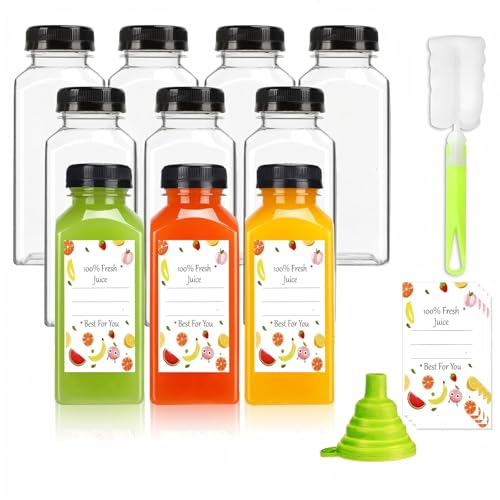
Plastic Juice Bottles with Caps 10pcs 12oz, Reusable Juice Containers with Black Tamper-Evident Lids, Clear Bottles for Juicing, Milk, Smoothie Bottle, Drinking with 10 Labels, Brush and Funnel
High Quality:The juice bottles are thick food grade PET, which are safe and tasteless, fall resistant and durable….
As an affiliate, we earn on qualifying purchases.
As an affiliate, we earn on qualifying purchases.
Frequently Asked Questions
Can Juice Consumption Replace Daily Fruit Intake?
Juice can’t fully replace your daily fruit intake because it lacks the fruit fiber and nutrient density found in whole fruits. When you juice, you miss out on fiber that aids digestion and keeps you full. While juice provides vitamins, it doesn’t offer the same health benefits as eating whole fruits. For ideal health, enjoy a mix of fresh fruits and juices, but prioritize whole fruits for fiber and nutrient richness.
Are There Specific Times Best for Drinking Juice?
Ever wondered if timing considerations matter when drinking juice? The best time for consuming juice is mid-morning or early afternoon, when your energy levels peak. An ideal drinking schedule helps maximize nutrients and minimizes sugar spikes. Drinking juice on an empty stomach might cause discomfort, so avoid early mornings or late evenings. Staying mindful of timing considerations ensures your juice habits support your overall health and energy needs effectively.
How Does Juice Affect Blood Sugar Levels?
Drinking juice can cause a quick glycemic response, leading to a spike in your blood sugar levels. This rapid increase prompts your body to release insulin, which helps lower blood sugar. If you consume a lot of juice or high-sugar varieties, you might experience insulin spikes, making your blood sugar fluctuate. To keep it stable, opt for smaller portions and choose juices with lower glycemic indexes, especially if you’re sensitive to blood sugar changes.
Is Cold-Pressed Juice Healthier Than Pasteurized Juice?
Did you know cold-pressed juice retains 60% more nutrients compared to pasteurized juice? Cold-pressing preserves juice nutrients better because it uses minimal heat, avoiding nutrient loss. In contrast, pasteurization involves heat that can diminish vitamins and enzymes, potentially reducing health benefits. So, if you’re after maximum nutrition, cold-pressed juice is the healthier choice for preserving those essential nutrients.
Can Juice Help With Weight Management?
Juice can aid your weight management efforts if you choose wisely. A juice detox might help reset your cravings and reduce overeating, but watch out for sugar content in some juices, which can spike your calorie intake. Opt for low-sugar, nutrient-rich options, and balance your juice intake with whole foods. Remember, moderation is key, and combining juice with a healthy diet supports your weight goals effectively.

Juice Bottles with Caps 10Pcs 12oz, Plastic Bottleswith Caps, Clear Reusable Water Bottle, Used for Juicing Bottles, Smoothie Bottle, Juice Containers – with 10Pcs Labels & Bottle Brush
[Plastic Bottles with Caps]: Package includes 10 Pcs 12 oz empty bottles, 10 tamper-proof black bottle caps, a…
As an affiliate, we earn on qualifying purchases.
As an affiliate, we earn on qualifying purchases.
Conclusion
Remember, moderation is key—too much of anything can tip the balance. By paying attention to how often you enjoy juice and keeping portions in check, you support your health and well-being. Think of it as tending a garden; with consistent, mindful care, your habits flourish. So, sip wisely and enjoy the benefits without overdoing it. After all, a little balance goes a long way toward a healthier, happier you.

Dole 100% Pineapple Juice, No Added Sugar, Excellent Source of Vitamin C, 100% Fruit Juice, Packaging May Vary, 8.0 Fl Oz (Pack of 24)
No Added Sugar: Dole Pineapple Juice is a great way to get vitamin C, with no added sugar,Add…
As an affiliate, we earn on qualifying purchases.
As an affiliate, we earn on qualifying purchases.

Glass Measuring Cup 10 Oz For Milk,Juice,Milkshake, vegetable, coffee, salad, ice cream (Black) (Black)
Made of hard silicon glass by hand blowing, the glass scale cup is environmental protection and safe with…
As an affiliate, we earn on qualifying purchases.
As an affiliate, we earn on qualifying purchases.

Cindy thoroughly researches juicing trends, techniques, and recipes to provide readers with practical advice and inspiration. Her writing style is accessible, engaging, and designed to make complex concepts easy to understand. Cindy’s dedication to promoting the advantages of juicing shines through her work, empowering readers to make positive changes in their lives through the simple act of juicing.