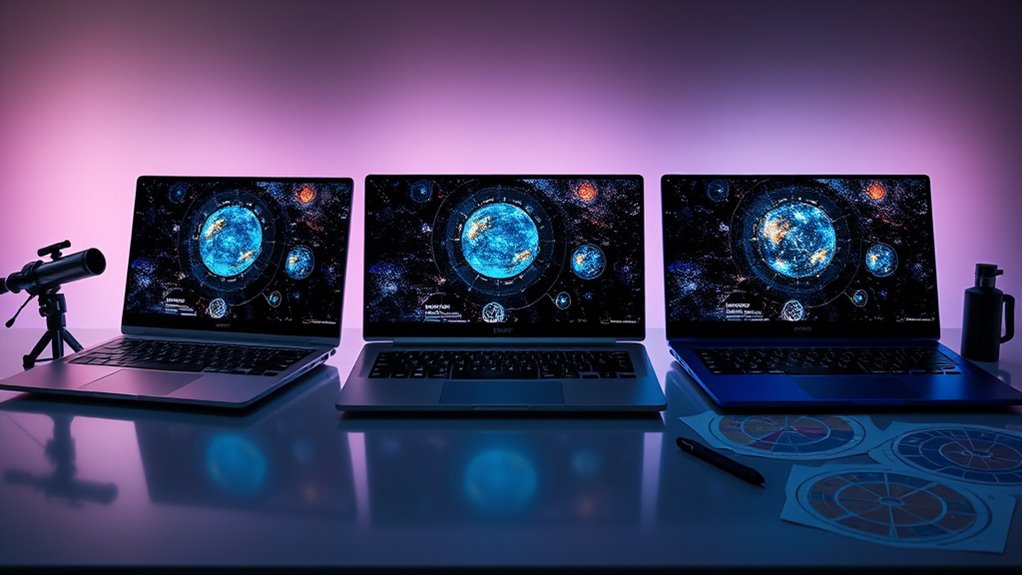
Choosing a laptop for astronomy in 2026 means balancing long battery life with sufficient performance and portability. The 2026 New Laptop Computer offers great portability but limited battery runtime, making it ideal for short observing sessions or field use. The ACEMAGIC Laptop provides a solid mix of power and battery life for more intensive tasks, while the HP Essential Laptop 2026 Edition emphasizes portability and affordability, though with shorter battery duration. Below, I compare these options to help you find the best fit for your stargazing and astronomical work needs, highlighting their main tradeoffs.

Get kitchen staples and gadgets delivered free with Prime
- Fast, free delivery on millions of items
- Prime Video, Amazon Music and more included
- Member-only deals all year
Key Takeaways
- Battery life varies significantly, from around 4 hours to over 11 hours, impacting field usability.
- Performance levels differ, with some laptops suited for light tasks and others capable of handling multitasking or creative work.
- Portability is a key factor, with lighter models favoring fieldwork, while larger displays enhance viewing comfort.
- Storage capacity ranges from 128GB to 512GB, influencing how many astronomy datasets or software can be stored locally.
- Connectivity options such as USB-C, HDMI, and Wi-Fi 6 can enhance usability during observations or data transfer.


| astronomy laptops with high battery life | Processor | RAM | Storage | Display |
|---|---|---|---|---|
| 2026 New Laptop Computer | Core M3-6Y30 | 8GB DDR3 | 256GB SSD | 15.6-inch FHD |
| ACEMAGIC Laptop | Intel 12th Gen Alder Lake Quad-Core | 16GB DDR4 | 512GB SSD | 16-inch FHD IPS |
| HP Essential Laptop Computer | Intel N150 | Not specified (assumed moderate) | 128GB SSD | 14-inch HD |
| HP Everyday Laptop with Copilo | AMD High Performance | Not specified | 128GB SSD | 14-inch HD |
| 2026 Laptop with Pentium Gold | Pentium Gold 6500Y | 12GB | 128GB SSD | 14-inch FHD IPS |
More Details on Our Top Picks
2026 New Laptop Computer, Core M3-6Y30, 8GB RAM, 256GB SSD, 15.6″ FHD, Windows 11 Pro, Office 365, 2-Year Warranty
This lightweight laptop stands out for its portability, thanks to a slim profile and 3.5-pound weight. Its 15.6-inch FHD display offers good visibility for star charts and data analysis. The Intel Core M3 processor combined with 8GB RAM delivers reliable performance for light multitasking, perfect for quick observations or field notes. However, the battery life is capped at around 4 hours, which may limit longer nights of stargazing. Compared with larger, more powerful options, this model is less suited for intensive tasks but excels in ease of transport and quick setup.
Pros:- Lightweight and easy to carry
- Fast SSD storage enhances responsiveness
- Pre-installed Windows 11 Pro and Office 365 for productivity
- Two-year warranty offers peace of mind
Cons:- Limited battery life of about 4 hours
- Processor less capable for heavy multitasking
- Battery performance drops at high brightness
Best for: Field astronomers or casual observers needing portability.
Not ideal for: Those planning extended observation sessions without access to power outlets.
- Processor:Core M3-6Y30
- RAM:8GB DDR3
- Storage:256GB SSD
- Display:15.6-inch FHD
- Battery:5000mAh (up to 4 hours)
- Weight:3.5 pounds
Our verdict“A solid choice for portable, short-duration astronomy sessions, but not for extended field use.”
ACEMAGIC Laptop, 16GB DDR4, 512GB SSD, 16-inch FHD Display, Intel 12th Gen Quad-Core, Windows 11, Metal Shell
This model offers a robust combination of performance and battery life. The 16-inch FHD IPS display provides excellent clarity for star mapping and long observation sessions. Its Intel 12th Gen Quad-Core processor and 16GB RAM handle multitasking, software, and even light creative work with ease. The 5-hour battery life, though not exceptional, is respectable for a high-performance laptop in this class. Its durable metal shell makes it suitable for outdoor use, but the slightly heavier weight (~3.5 lbs) might matter for frequent fieldwork. Compared to smaller models, this one trades portability for power and screen real estate.
Pros:- Powerful Intel 12th Gen processor
- Large, high-quality 16-inch display
- Durable metal shell suitable for outdoor conditions
- Ample RAM for multitasking
Cons:- Battery life around 5 hours, not enough for all-night sessions
- Weight slightly heavier than ultra-portable models
- No dedicated graphics card for gaming or intensive graphics work
Best for: Astronomers who need a balance of performance and longer battery life for field observations or data processing.
Not ideal for: Ultra-portable users who prioritize minimal weight over power.
- Processor:Intel 12th Gen Alder Lake Quad-Core
- RAM:16GB DDR4
- Storage:512GB SSD
- Display:16-inch FHD IPS
- Battery Life:Approximately 5 hours
- Weight:Approximately 3.5 lbs
Our verdict“A strong contender for users who value performance and decent battery life in a portable form factor.”
HP Essential Laptop Computer, 2026 Edition, 128GB SSD, Intel N150 CPU, Long Battery Life, Portable Design, 1TB Cloud Storage, Windows 11 with Microsoft 365
This lightweight HP model emphasizes mobility and long battery life. Its Intel N150 processor is designed for efficient, everyday tasks, and the 14-inch HD display is sufficient for basic star charts and data viewing. The standout feature is its extended battery life, which can last well over 8 hours, making it ideal for night-long observations in the field. Limited local storage with only 128GB SSD is a drawback, but the included 1TB cloud storage helps mitigate this. Compared to more powerful laptops, this one is best suited for casual astronomers or beginners who prioritize portability and battery longevity.
Pros:- Excellent battery life lasting over 8 hours
- Lightweight and slim design
- Includes 1TB cloud storage
- Pre-installed with Windows 11 and Microsoft 365
Cons:- Limited local storage with only 128GB SSD
- Processor may struggle with heavy multitasking
- HD display resolution could be sharper
Best for: Beginner or casual astronomers needing all-day battery life and lightweight design.
Not ideal for: Advanced users requiring higher processing power or local storage for large datasets.
- Processor:Intel N150
- RAM:Not specified (assumed moderate)
- Storage:128GB SSD
- Display:14-inch HD
- Battery:Extended, over 8 hours
- Weight:3.24 lbs
Our verdict“Perfect for casual or beginner astronomers who prioritize battery longevity over processing power.”
HP Everyday Laptop with Copilot AI 2026 Edition, 14-inch, AMD Processor, 128GB SSD + 1TB OneDrive, Windows 11
This model offers a practical combination of features for daily astronomy and general use. Its AMD processor and 14-inch HD display make it suitable for quick data access, star chart viewing, and light multitasking. The impressive 11-hour battery life adds significant value for fieldwork or long observation nights, especially for users who want a reliable, all-day device. The 128GB SSD is somewhat limiting for large datasets, but the inclusion of 1TB OneDrive storage helps compensate. Compared to others, this laptop emphasizes affordability and battery longevity, making it ideal for casual astronomers or students.
Pros:- Very long battery life of up to 11 hours
- Lightweight and portable
- Includes 1TB cloud storage
- Affordable with decent performance
Cons:- Limited internal storage at 128GB
- HD resolution may not suit high-detail viewing
- Processor may be less capable for intensive tasks
Best for: Everyday astronomers or students seeking long battery life and reliable connectivity.
Not ideal for: Power users or those needing high storage capacity locally.
- Processor:AMD High Performance
- RAM:Not specified
- Storage:128GB SSD
- Display:14-inch HD
- Battery:Up to 11 hours
- Weight:3.24 lbs
Our verdict“A dependable option for casual use, especially when battery life is a priority.”
2026 Laptop with Pentium Gold 6500Y, 12GB RAM, 128GB SSD, 14-Inch FHD IPS Display, 5000mAh Battery, Type-C Port
This portable 14-inch FHD IPS display laptop focuses on connectivity and decent performance for everyday astronomy and travel use. Its Pentium Gold processor and 12GB RAM provide smooth multitasking, and the 5000mAh battery supports several hours of use, though exact runtime is unspecified. Its multiple ports, including Type-C and HDMI, facilitate easy data transfer and external device connection during observations. The limited 128GB SSD storage may restrict large dataset storage, but the pre-installed Office apps and 1-year warranty make it a practical, budget-friendly choice.
Pros:- High RAM capacity at 12GB
- Portable and lightweight design
- Good connectivity options including Type-C and HDMI
- Decent battery life for everyday use
Cons:- Limited local storage at 128GB SSD
- Processor may be insufficient for heavy tasks
- Battery life specifics are not detailed
Best for: Travelers or casual astronomers needing a versatile, connected device with good battery life.
Not ideal for: Power users or those needing extensive local storage or high processing power.
- Processor:Pentium Gold 6500Y
- RAM:12GB
- Storage:128GB SSD
- Display:14-inch FHD IPS
- Battery:5000mAh
- Ports:Type-C, HDMI
Our verdict“A flexible, budget-friendly choice for casual field astronomy and travel, with decent battery support.”

How We Picked
Our selection process focused on laptops that balance high battery life with adequate performance for astronomy-related activities. We prioritized models with at least 4 hours of real-world battery life, considering portability, processor power, display quality, and connectivity options. Each choice offers a different balance of these factors, ensuring options for various user needs—from field observers to desktop-based stargazers.
| astronomy laptops with high battery life | Processor |
|---|---|
| 2026 New Laptop Computer | Core M3-6Y30 |
| ACEMAGIC Laptop | Intel 12th Gen Alder Lake Quad-Core |
| HP Essential Laptop Computer | Intel N150 |
| HP Everyday Laptop with Copilo | AMD High Performance |
| 2026 Laptop with Pentium Gold | Pentium Gold 6500Y |
Factors to Consider When Choosing Astronomy Laptops With High Battery Life
When selecting an astronomy laptop with high battery life, I focus on key factors that impact your observing experience: battery endurance, portability, processing power, display quality, and connectivity. Longer battery life is essential for extended nights in the field, but it shouldn’t come at the expense of enough performance to run astronomy software smoothly. The ideal laptop balances these elements based on your specific observing style, whether you need a lightweight companion or a more powerful machine for data processing.
Battery Life
Maximum runtime depends on the processor, screen brightness, and usage levels. For field astronomy, aim for at least 6-8 hours of battery life to cover a typical night of stargazing without needing a recharge. Smaller, energy-efficient processors like Intel N-series or AMD low-power chips excel here, but they may compromise on performance.
Portability and Weight
If you plan to carry your laptop to dark-sky sites, a lightweight model (under 3.5 pounds) with a compact form factor is ideal. Larger screens improve visibility but can add weight and bulk, so weigh your need for screen real estate against ease of transport.
Performance and Storage
Processing power should match your activity level. Casual observers can manage with dual-core or low-power CPUs, while astrophotographers or data analysts need more robust processors and RAM. Storage capacity matters if you keep large datasets locally; otherwise, cloud options can offset limited SSD space.
Display and Connectivity
A clear, bright display helps in dark environments and detailed chart reading. Connectivity options like HDMI, USB-C, and Wi-Fi enable connection to external displays and data collection devices. Consider your ports and compatibility based on your accessories and observation setup.
Frequently Asked Questions
How long should the battery last for a typical night of astronomy?
Ideally, your laptop should offer at least 6-8 hours of battery life to cover a typical night of stargazing. This duration allows you to set up, observe, and record without worrying about running out of power, especially in remote locations where charging options are limited.
Are lightweight laptops less powerful for astronomy tasks?
While lightweight laptops prioritize portability and battery efficiency, they often feature lower-power processors that may be less capable of running intensive software or processing large datasets. For basic observation and star chart navigation, they are sufficient, but more demanding tasks might require a higher-performance machine.
Is a larger display always better for astronomy?
A larger display improves visibility of star maps and enables easier multitasking, but it also adds weight and reduces portability. For field use, a 14- to 15-inch display balances screen size with manageable weight; for stationary setups, larger screens can be beneficial.
Can I rely solely on cloud storage instead of local capacity?
Yes, cloud storage can supplement limited local space, especially with fast internet access. However, in remote observing locations, internet may be unreliable or unavailable, so keeping essential files locally is recommended. A hybrid approach often works best.
What processor type is best for astronomy laptops with high battery life?
Processors designed for energy efficiency, such as Intel N-series or AMD Ryzen low-power chips, tend to offer longer battery life. However, they may sacrifice some performance, so choose based on whether your activities are light (like chart reading) or more demanding (like astrophotography or data analysis).
Conclusion
If you primarily observe in the field and need a lightweight, portable machine, the 2026 New Laptop Computer or HP Essential Laptop 2026 Edition make excellent choices, offering decent battery life and ease of transport. For those requiring more processing power and longer runtime, the ACEMAGIC Laptop strikes a good balance, suitable for more intensive tasks. Budget-conscious users or beginners will appreciate the long battery life of the HP Everyday Laptop, though with some trade-offs in local storage and power. Your ideal selection depends on your specific use case—prioritize portability for fieldwork, or performance for detailed data processing.
NFL season / tailgating Picks
team gear
As an affiliate, we earn on qualifying purchases.