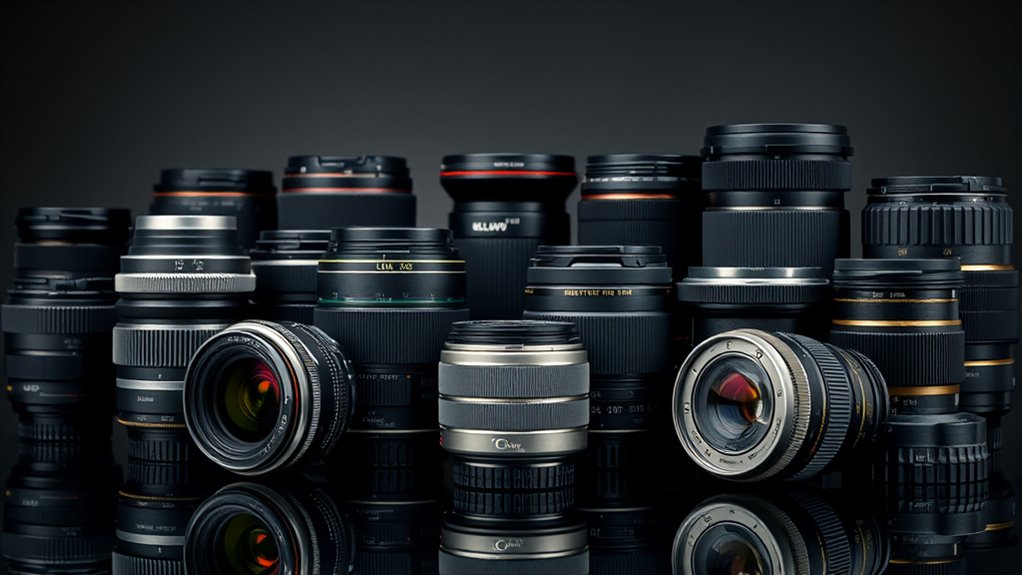

Choosing the right premium professional DSLR lenses can dramatically elevate your photography, offering unmatched clarity, speed, and build quality. The Nikon AF-S FX NIKKOR 200-500mm f/5.6E ED VR Lens stands out for its impressive zoom range, ideal for wildlife and sports. Meanwhile, the Canon RF 85mm f/1.2L USM DS delivers stunning portrait results with exceptional bokeh, but at a higher price point. The key tradeoffs include balancing maximum image quality against weight, cost, and versatility. Keep reading for a detailed breakdown of each lens to find your perfect match.

Get kitchen staples and gadgets delivered free with Prime
- Fast, free delivery on millions of items
- Prime Video, Amazon Music and more included
- Member-only deals all year
Key Takeaways
- Top-tier lenses offer exceptional image quality but often come with high price tags and increased weight.
- Zoom lenses like the Nikon 200-500mm excel for specialized photography such as wildlife, but may compromise on size and portability.
- Prime lenses such as the Canon RF 85mm f/1.2 provide superior bokeh and low-light performance, ideal for portrait work.
- Brand-specific lenses (Canon, Nikon, Sigma, Tamron) tend to perform best with their native camera systems, but third-party options can offer better value.
- Choosing between manual focus and autofocus depends on your shooting style; autofocus is generally more reliable for fast-paced scenarios.
| Nikon AF-S FX NIKKOR 200-500mm f/5.6E ED VR Lens (Renewed) |  | Best for Extended Telephoto Reach | Focal Length: 200-500mm | Maximum Aperture: f/5.6 | Lens Mount: Nikon F | VIEW ON AMAZON | See Our Full Breakdown |
| Sigma 150-600mm f/5-6.3 Contemporary DG OS HSM Lens for Nikon |  | Best for Lightweight Super-Telephoto Flexibility | Focal Length: 150-600mm | Maximum Aperture: f/5-6.3 | Minimum Aperture: f/22 | VIEW ON AMAZON | See Our Full Breakdown |
| Canon EF 50mm f/1.8 STM Lens for Canon EOS DSLR Cameras |  | Best for Portraits and Low Light | Focal Length: 50mm | Maximum Aperture: f/1.8 | Lens Construction: 6 elements in 5 groups | VIEW ON AMAZON | See Our Full Breakdown |
| Nikon AF-S FX NIKKOR 24-70mm f/2.8G ED Zoom Lens for Nikon DSLR Cameras |  | Best for Versatile Professional Zoom | Focal Length: 24-70mm | Maximum Aperture: f/2.8 | Sensor Compatibility: FX/Full Frame | VIEW ON AMAZON | See Our Full Breakdown |
| Canon RF 70-200mm f/2.8L IS USM Lens Bundle |  | Best for Professional Telephoto Zoom in Compact Form | Focal Length: 70-200mm | Maximum Aperture: f/2.8 | Image Stabilization: Yes, 5-stop Optical IS | VIEW ON AMAZON | See Our Full Breakdown |
| Tamron 70-200mm f/2.8 Di LD IF Macro Lens for Canon |  | Best Overall Telephoto Zoom for Versatility and Macro Capabilities | Focal Length: 70-200mm | Maximum Aperture: f/2.8 | Minimum Focus Distance: 0.95m | VIEW ON AMAZON | See Our Full Breakdown |
| Nikon AF-S DX NIKKOR 55-300mm f/4.5-5.6G ED Vibration Reduction Zoom Lens for Nikon DSLR Cameras |  | Best Value Telephoto Zoom with Stabilization | Focal Length: 55-300mm | Maximum Aperture: f/4.5-5.6 | Vibration Reduction: Yes | VIEW ON AMAZON | See Our Full Breakdown |
| Canon RF 85mm f/1.2L USM DS Lens with Adapter, Bag, and 64GB Card |  | Best Premium Portrait Lens with Exceptional Bokeh | Focal Length: 85mm | Aperture: f/1.2 | Lens Mount: RF | VIEW ON AMAZON | See Our Full Breakdown |
| EF 85mm f/1.8 Portrait Lens for Canon DSLR Cameras (Manual Focus) |  | Best Budget-Friendly Manual Portrait Prime | Focal Length: 85mm | Maximum Aperture: f/1.8 | Minimum Aperture: f/22 | VIEW ON AMAZON | See Our Full Breakdown |
| Tamron SP 70-200mm F/2.8 Di VC USD Telephoto Zoom Lens for Canon EF Cameras |  | Best Compact Telephoto Zoom with Image Stabilization | Focal Length: 70-200mm | Maximum Aperture: f/2.8 | Mount Type: Canon EF | VIEW ON AMAZON | See Our Full Breakdown |
| Canon EF 85mm f/1.8 USM Medium Telephoto Lens for Canon SLR Cameras |  | Best for Portraits and Low-Light Conditions | Focal Length: 85mm | Maximum Aperture: f/1.8 | Minimum Aperture: f/22 | VIEW ON AMAZON | See Our Full Breakdown |
| premium professional dslr lense | Focal Length | Maximum Aperture |
|---|---|---|
| Nikon AF-S FX NIKKOR 200-500mm | 200-500mm | f/5.6 |
| Sigma 150-600mm f/5-6.3 Contem | 150-600mm | f/5-6.3 |
| Canon EF 50mm f/1.8 STM Lens f | 50mm | f/1.8 |
| Nikon AF-S FX NIKKOR 24-70mm f | 24-70mm | f/2.8 |
| Canon RF 70-200mm f/2.8L IS US | 70-200mm | f/2.8 |
| Tamron 70-200mm f/2.8 Di LD IF | 70-200mm | f/2.8 |
| Nikon AF-S DX NIKKOR 55-300mm | 55-300mm | f/4.5-5.6 |
| Canon RF 85mm f/1.2L USM DS Le | 85mm | — |
| EF 85mm f/1.8 Portrait Lens fo | 85mm | f/1.8 |
| Tamron SP 70-200mm F/2.8 Di VC | 70-200mm | f/2.8 |
| Canon EF 85mm f/1.8 USM Medium | 85mm | f/1.8 |
More Details on Our Top Picks
Nikon AF-S FX NIKKOR 200-500mm f/5.6E ED VR Lens (Renewed)
This lens stands out for its impressive 200-500mm zoom range, making it ideal for wildlife and sports photographers who need to capture distant subjects. Compared with the 150-600mm Sigma, it offers better compatibility with Nikon cameras and a more consistent aperture, but it’s notably heavier and bulkier, which can be a challenge for handheld shooting. Its constant f/5.6 aperture provides decent low-light performance and pleasing background blur, while the vibration reduction system helps maintain sharpness at long focal lengths. However, the renewed condition may mean limited warranty or cosmetic issues, and it’s best paired with a tripod or stabilization system. This pick makes the most sense for photographers who prioritize reach and image stabilization over portability.Pros:- Excellent zoom range for distant subjects
- Constant f/5.6 aperture aids low-light shooting
- Effective vibration reduction for sharp images
Cons:- Relatively heavy and bulky for handheld use
- Requires tripod or stabilization for best results
Best for: Wildlife and sports photographers needing long reach and reliable stabilization on Nikon DSLR cameras
Not ideal for: Travel or street photographers who require lightweight gear for extended handheld use
- Focal Length:200-500mm
- Maximum Aperture:f/5.6
- Lens Mount:Nikon F
- Zoom Ratio:2.5x
- Image Stabilization:Yes
- Filter Size:9.5 centimeters
- Maximum Focal Length:50 centimeters
- Minimum Focal Length:20 centimeters
Our verdict“This lens is best suited for dedicated wildlife or sports shooters who need long reach and stabilization at the expense of portability.”
Sigma 150-600mm f/5-6.3 Contemporary DG OS HSM Lens for Nikon
This Sigma lens offers a versatile 150-600mm zoom range with a focus on portability, making it a compelling choice for those who want telephoto reach without the bulk of the Nikon 200-500mm. Compared to the Nikon lens, it’s lighter at 1930g, which can reduce fatigue during extended shoots, but its maximum aperture of f/6.3 at the telephoto end limits low-light performance somewhat. The water and oil repellent coating, combined with dust and splash resistance, enhances durability in outdoor conditions. Its optical stabilization provides steadiness for handheld shots, but the overall weight still demands a sturdy grip and careful handling. This lens makes the most sense for outdoor enthusiasts who need a flexible zoom with weather resistance, but those seeking the fastest apertures should look elsewhere.Pros:- Lightweight and easier to handle for long shoots
- Water and oil repellent coating simplifies maintenance
- Dust and splash proof for outdoor durability
Cons:- Heavy at 1930g, which can be tiring over time
- Maximum aperture of f/6.3 limits low-light performance
Best for: Wildlife and outdoor photographers prioritizing portability and weather resistance
Not ideal for: Low-light photographers or those requiring the fastest apertures at 600mm
- Focal Length:150-600mm
- Maximum Aperture:f/5-6.3
- Minimum Aperture:f/22
- Lens Mount:Nikon F
- Weight:1930g
- Focus Type:Auto Focus
- Minimum Focusing Distance:15 cm
- Lens Coating:Water and oil repellent
Our verdict“Ideal for outdoor shooters who need flexible telephoto reach with weather sealing and manageable weight.”
Canon EF 50mm f/1.8 STM Lens for Canon EOS DSLR Cameras
This lens makes the list for its affordable price and outstanding f/1.8 aperture, which excels at portraits and low-light scenarios. Compared with the more versatile 24-70mm f/2.8, it’s limited to a single focal length, reducing flexibility but offering a brighter aperture and smaller size. Its near-silent STM autofocus is a boon for videographers, and the compact design makes it easy to carry around. However, the lack of image stabilization means it demands steady hands or a tripod in challenging lighting. The build quality with a metal mount enhances durability, but the narrow focal range limits its use in wider or zoomed shots. This lens is perfect for photographers who focus on portraits or need a fast prime for dim environments, but it’s less suited for versatile day-to-day shooting.Pros:- Bright f/1.8 aperture for excellent low-light performance
- Near-silent STM autofocus ideal for video
- Compact and lightweight for portability
Cons:- Limited to 50mm focal length, less versatile for wider shots
- No image stabilization
Best for: Portrait and low-light photographers who prioritize a bright aperture and compact form
Not ideal for: Travelers or event shooters needing a zoom range for varied scenes
- Focal Length:50mm
- Maximum Aperture:f/1.8
- Lens Construction:6 elements in 5 groups
- Diagonal Angle of View:46°
- Closest Focusing Distance:1.15 ft / 0.35m
- Filter Size:49mm
- Max Diameter x Length:2.7 x 1.5 in / 69.2 x 39.3mm
- Weight:5.6 oz / 159g
Our verdict“This prime lens is an excellent choice for portrait and low-light photography, especially for those who value size and speed over zoom versatility.”
Nikon AF-S FX NIKKOR 24-70mm f/2.8G ED Zoom Lens for Nikon DSLR Cameras
This lens earns its place by offering exceptional image quality across a versatile zoom range suitable for everything from portraits to landscapes. Compared with the Canon RF 70-200mm f/2.8L, it provides a wider focal range in a single lens, but at the expense of increased weight and size, making it less convenient for all-day shooting. Its constant f/2.8 aperture ensures good low-light performance and depth of field control, while the advanced lens elements—ED glass, aspherical, and Nano Crystal Coat—minimize aberrations and flare. Despite its impressive optical performance, it’s quite heavy and expensive, which might deter casual or travel shooters. Still, for studio or event photographers who need sharpness and flexibility, this lens often becomes a workhorse.Pros:- Outstanding image quality with fine detail
- Great low-light performance with f/2.8 aperture
- Advanced coatings reduce flare and ghosting
Cons:- Heavy and bulky for handheld use
- High price point may be prohibitive
Best for: Professional photographers needing a flexible, high-quality all-around zoom lens for full-frame Nikon cameras
Not ideal for: Travel photographers seeking lightweight gear or casual shooters needing a kit lens
- Focal Length:24-70mm
- Maximum Aperture:f/2.8
- Sensor Compatibility:FX/Full Frame
- Minimum Focus Distance:1.2 feet
- Lens Elements:15
- Lens Groups:11
- Special Elements:3 ED, 3 aspherical, Nano Crystal Coat
Our verdict“This lens suits professionals demanding exceptional image quality and versatility, accepting its weight and cost as a tradeoff.”
Canon RF 70-200mm f/2.8L IS USM Lens Bundle
This Canon lens combines professional-grade optics with a retractable, compact design, making it a strong candidate for event, portrait, and sports photographers who need a reliable telephoto zoom. Its f/2.8 aperture ensures excellent background separation and performance in low light, while the 5-stop optical image stabilization reinforces sharpness in handheld shots. Compared to the Nikon 24-70mm, it offers more reach at 70-200mm, but its higher price and retractable design could impact long-term durability. The inclusion of a tripod mount ring and extra accessories adds value but also increases overall cost. This lens is ideal for shooters who value portability without sacrificing optical quality, but those on a strict budget might find it expensive.Pros:- Sharp, clear images with fast f/2.8 aperture
- Effective stabilization for handheld shooting
- Compact, lightweight, and retractable design
Cons:- Premium price may be restrictive for some users
- Retractable mechanism could impact long-term durability
Best for: Professional event, portrait, and sports photographers using Canon RF cameras needing portable zoom performance
Not ideal for: Travelers or casual users seeking a lightweight or budget-friendly telephoto option
- Focal Length:70-200mm
- Maximum Aperture:f/2.8
- Image Stabilization:Yes, 5-stop Optical IS
- Autofocus:Dual Nano USM motors
- Design:Retractable, compact
- Included Items:Lens, caps, hood, pouch, tripod ring, 64GB card
Our verdict“This lens offers a high-quality, portable telephoto zoom solution for professionals who prioritize portability and image stability, accepting its premium cost.”
Tamron 70-200mm f/2.8 Di LD IF Macro Lens for Canon
This Tamron 70-200mm f/2.8 distinguishes itself by combining a versatile focal range with macro capabilities, making it a strong contender against the Canon RF 70-200mm f/2.8L IS USM. Its constant f/2.8 aperture ensures excellent low-light performance across the zoom, while the macro feature adds creative flexibility. Compared to the Tamron SP 70-200mm F/2.8 Di VC USD, this model’s macro ability offers an extra dimension, though it remains relatively heavy and sizable, which can challenge handheld shooting. The premium price reflects its professional-grade optics and build quality but may be a barrier for casual users. Overall, this lens is best suited for photographers who need a versatile telephoto with macro potential, accepting the tradeoff of size and weight.
Pros:- Constant f/2.8 aperture for consistent low-light performance
- Macro capability with 1:3.1 magnification for close-up detail
- Optimized multi-coating reduces flare and ghosting
Cons:- Relatively large and heavy for handheld use
- Limited macro magnification compared to dedicated macro lenses
Best for: Professional photographers and serious hobbyists who want both zoom versatility and macro ability in one lens.
Not ideal for: Travelers or street photographers who prioritize lightweight gear and portability.
- Focal Length:70-200mm
- Maximum Aperture:f/2.8
- Minimum Focus Distance:0.95m
- Filter Size:77mm
- Magnification Ratio:1:3.1
- Mounts:Canon EF, Pentax KAF, Sony Alpha, Nikon F (FX)
Our verdict“This lens is ideal for professionals needing flexible zoom and macro functionality, despite its size and weight.”
Nikon AF-S DX NIKKOR 55-300mm f/4.5-5.6G ED Vibration Reduction Zoom Lens for Nikon DSLR Cameras
This Nikon 55-300mm lens offers a practical zoom range with built-in vibration reduction, making it a compelling choice for those who need extended reach without the high price of professional lenses like the Canon RF 85mm f/1.2L USM DS. Its effective image stabilization helps produce sharp images in lower light or handheld scenarios, though the narrower maximum aperture limits its performance in very dim conditions. The lens’s bulk and weight are comparable to standard kit lenses, yet it provides a much longer reach, which is advantageous for wildlife or sports photography. Being a refurbished product, it offers good value, but potential buyers should consider the reduced longevity and possible cosmetic wear. This lens makes the most sense for hobbyists or semi-professionals who want a reliable telephoto with stabilization at a lower cost.
Pros:- Effective image stabilization for sharper handheld shots
- Long zoom range suitable for distant subjects
- Includes original accessories and warranty as a refurbished item
Cons:- Refurbished status may affect long-term durability
- Maximum aperture of f/4.5-5.6 limits low-light performance
- Bulkier compared to typical kit lenses
Best for: Amateur photographers or hobbyists seeking an affordable telephoto zoom with stabilization for outdoor and sports photography.
Not ideal for: Professional photographers requiring fast apertures and top-tier build quality for critical work.
- Focal Length:55-300mm
- Maximum Aperture:f/4.5-5.6
- Vibration Reduction:Yes
- Filter Thread:58mm
- Lens Elements:2 ED Elements, HRI Element
- Autofocus:Silent Wave Motor (SWM)
Our verdict“This lens provides excellent value for hobbyists needing extended reach and stabilization on a budget.”
Canon RF 85mm f/1.2L USM DS Lens with Adapter, Bag, and 64GB Card
The Canon RF 85mm f/1.2L USM DS stands out for its stunning bokeh and exceptional optical quality, making it a clear choice for portrait and fashion photographers who prioritize background separation. Its bright f/1.2 aperture allows for superb low-light shooting and shallow depth of field, surpassing the Canon EF 85mm f/1.8 in aesthetic quality. The Defocus Smoothing coating enhances the creamy bokeh, though the lens’s size and weight are significant, especially when paired with an adapter on mirrorless bodies. Compared to the EF version, this RF lens offers improved optical coatings and weather sealing but at a higher cost, which could be a limiting factor for some. It’s best suited for professionals or advanced amateurs demanding the ultimate in portrait quality, with a willingness to invest in premium optics.
Pros:- Exceptional bokeh with Defocus Smoothing coating
- Bright f/1.2 aperture for low-light and shallow depth of field
- High-quality optics with minimal chromatic aberration
- Weather-sealed for durability
Cons:- Premium price may be prohibitive
- Heavy and large, less portable
- Light transmission slightly reduced due to coating
Best for: Portrait and fashion photographers using Canon RF-mount mirrorless cameras who want premium image quality and superb bokeh.
Not ideal for: Travel or street photographers who need lightweight, compact lenses for everyday use.
- Focal Length:85mm
- Aperture:f/1.2
- Lens Mount:RF
- Optical Elements:Aspherical, UD, Blue Spectrum Refractive, Air Sphere Coating
- Autofocus:USM (Ultrasonic Motor)
- Weather Sealing:Yes
Our verdict“This lens is perfect for professionals seeking the best portrait aesthetics, despite its size and cost.”
EF 85mm f/1.8 Portrait Lens for Canon DSLR Cameras (Manual Focus)
This Canon EF 85mm f/1.8 offers a compelling balance of optical quality and affordability, making it ideal for photographers comfortable with manual focus or seeking a lightweight portrait lens. Its high-quality optics produce sharp images with beautiful bokeh, comparable to more expensive autofocus models like the RF 85mm f/1.2L DS, but it relies solely on manual focus, which could be a challenge for fast-paced shooting or less experienced users. The lens’s compact size and relatively low price make it an attractive option for those who want a dedicated portrait lens without breaking the bank. However, the lack of autofocus limits its appeal for those accustomed to quick, autofocus-driven workflows. This lens suits hobbyists or students looking for quality results on a budget, willing to master manual focusing.
Pros:- High-quality optics with excellent image clarity
- Beautiful bokeh effects for portraiture
- Compact and lightweight for easy handling
- Affordable compared to autofocus counterparts
Cons:- No autofocus feature, challenging for dynamic scenes
- Requires precise manual focusing skills
- Limited versatility for spontaneous shooting
Best for: Enthusiast photographers who prefer manual focus and want an affordable, high-quality portrait lens for studio or controlled environments.
Not ideal for: Event or fast-paced photographers who rely on autofocus for quick subject capture.
- Focal Length:85mm
- Maximum Aperture:f/1.8
- Minimum Aperture:f/22
- Lens Mount:Canon EF/EF-S
- Lens Coating:Ultra Multi-Coating (UMC)
- Focus Type:Manual
Our verdict“This lens is excellent for dedicated portrait work by photographers comfortable with manual focus and seeking affordability.”
Tamron SP 70-200mm F/2.8 Di VC USD Telephoto Zoom Lens for Canon EF Cameras
This Tamron SP 70-200mm F/2.8 is notable for its compact form and advanced stabilization, making it a practical choice for professionals who need a portable yet fast telephoto lens. Its F/2.8 aperture rivals pricier options like the Canon RF 70-200mm f/2.8L IS USM, but it remains limited to Canon EF mounts, unlike the RF system. Its moisture-resistant construction adds durability for outdoor shoots, and the USD autofocus is both quick and quiet, comparable to Canon’s USM. However, the lens’s premium price may deter casual users, and its size, while smaller than some 70-200mm lenses, still requires consideration for travel or extended handheld use. Overall, this model is best suited for professionals who value portability and weather resistance without sacrificing aperture speed, accepting its mount restrictions.
Pros:- Fast F/2.8 aperture for low-light shooting
- Compact and lightweight design for portability
- Effective moisture-resistant construction
- Quiet, quick autofocus with USD technology
Cons:- Limited to Canon EF mounts
- Premium price point
- Not compatible with RF mount cameras
Best for: Professional or advanced amateur photographers using Canon EF cameras who need a portable, fast telephoto with stabilization.
Not ideal for: Canon RF mirrorless users or those seeking autofocus systems compatible with RF-mount bodies.
- Focal Length:70-200mm
- Maximum Aperture:f/2.8
- Mount Type:Canon EF
- Image Stabilization:Yes (VC)
- Autofocus:USD (Ultrasonic Silent Drive)
Our verdict“This lens is perfect for Canon EF users prioritizing portability, weather sealing, and fast aperture in a professional telephoto zoom.”
Canon EF 85mm f/1.8 USM Medium Telephoto Lens for Canon SLR Cameras
The Canon EF 85mm f/1.8 USM stands out for its exceptional portrait capabilities, thanks to a fast f/1.8 aperture that creates stunning background blur and performs well in dim lighting. Compared with the Canon RF 85mm f/1.2L USM, it offers a more affordable option with lighter weight and easier handling, though it lacks the ultra-premium build and slightly wider aperture of the RF model. Its quiet USM autofocus makes it ideal for candid portraiture and video, but the absence of image stabilization means you should avoid handheld shooting in very low light without a tripod. The lens’s compact size and minimal front element rotation are advantages for portability and filter use, but the fixed focal length limits versatility for broader shooting styles. This lens makes the most sense for professional portrait photographers or enthusiasts who prioritize sharpness and background separation without the need for zoom flexibility.
Pros:- Fast f/1.8 aperture ideal for low-light and portrait photography
- Quiet and quick autofocus with USM motor
- Sharp image quality with beautiful background blur
- Compact and lightweight design
Cons:- No image stabilization, risking blur in handheld low-light shots
- Fixed focal length limits flexibility for diverse shooting scenarios
Best for: Portrait photographers or professionals needing a lightweight lens for sharp, low-light portrait work.
Not ideal for: Photographers seeking zoom versatility or image stabilization for handheld shooting in varied conditions.
- Focal Length:85mm
- Maximum Aperture:f/1.8
- Minimum Aperture:f/22
- Lens Type:Prime Telephoto
- Lens Mount:Canon EF
- Filter Size:58mm
- Weight:15 ounces
- Closest Focusing Distance:2.8 feet
- Number of Diaphragm Blades:8
Our verdict“This lens suits portrait and low-light shooters who prioritize image quality and portability over zoom versatility.”

How We Picked
Our evaluation focused on performance, build quality, usability, and value. We prioritized lenses that deliver sharp, consistent images across various settings, with robust construction to withstand professional use. We also considered ease of handling, focusing speed, and compatibility with different camera bodies. Cost was a factor, but only when balanced against overall quality and features. The ranking reflects a combination of these factors, aiming to serve different professional needs—from wildlife to portrait photography—while highlighting what makes each lens unique.
| premium professional dslr lense | Maximum Aperture |
|---|---|
| Nikon AF-S FX NIKKOR 200-500mm | f/5.6 |
| Sigma 150-600mm f/5-6.3 Contem | f/5-6.3 |
| Canon EF 50mm f/1.8 STM Lens f | f/1.8 |
| Nikon AF-S FX NIKKOR 24-70mm f | f/2.8 |
| Canon RF 70-200mm f/2.8L IS US | f/2.8 |
| Tamron 70-200mm f/2.8 Di LD IF | f/2.8 |
| Nikon AF-S DX NIKKOR 55-300mm | f/4.5-5.6 |
| Canon RF 85mm f/1.2L USM DS Le | — |
| EF 85mm f/1.8 Portrait Lens fo | f/1.8 |
| Tamron SP 70-200mm F/2.8 Di VC | f/2.8 |
| Canon EF 85mm f/1.8 USM Medium | f/1.8 |
Factors to Consider When Choosing Premium Professional Dslr Lenses
When selecting a premium DSLR lens, understanding key factors can help you avoid costly mistakes and ensure you get the best tool for your specific needs. Beyond basic specifications, consider how the lens fits into your workflow, the environments you’ll shoot in, and your budget. Here are the main factors to keep in mind:
Optical Quality and Aperture
High-quality optics and wide maximum apertures are hallmarks of premium lenses, offering sharper images and better low-light performance. A lens with an f/1.2 or f/2.8 aperture provides more creative control over depth of field and allows shooting in dim conditions without a flash. However, larger apertures often come with increased cost and weight, so balance your needs for speed with portability and budget.
Focal Length and Versatility
The focal length determines what subjects you’ll most effectively shoot. Prime lenses (fixed focal length) excel in delivering sharpness and low-light performance, making them ideal for portraits or detail work. Zoom lenses, on the other hand, offer greater flexibility for varied scenarios like wildlife or event photography. Think about your typical subjects and choose a lens that minimizes the need for frequent lens changes.
Build Quality and Durability
Professional lenses must withstand demanding environments, so look for weather sealing, sturdy construction, and reliable focus mechanisms. A well-built lens minimizes maintenance and ensures longevity, especially if you work outdoors or in challenging conditions. However, increased durability often adds to the weight and cost, so weigh these factors against your portability requirements.
Size, Weight, and Handling
While larger, heavier lenses can deliver better optical performance, they may also cause fatigue during extended shoots. Consider how much weight you’re willing to carry and whether you prefer a more compact setup. Balance handling comfort with optical quality—sometimes investing in a slightly heavier lens is justified for critical work, but for travel or street photography, portability might take precedence.
Compatibility and Ecosystem
Ensure the lens is compatible with your camera body, including mount type and sensor size. Native lenses generally provide better autofocus and image stabilization performance, but high-quality third-party options can be a cost-effective alternative. Also, check if the lens supports your preferred accessories, such as filters or teleconverters, to extend its versatility.
Frequently Asked Questions
Is it worth investing in a prime lens over a zoom for professional work?
Prime lenses typically offer superior optical quality, larger apertures, and better low-light performance, making them excellent for portraiture and controlled environments. However, zoom lenses provide greater flexibility, allowing you to adapt to changing scenes without changing lenses, which can be crucial in fast-paced situations. The choice depends on your specific needs—if image quality and speed are paramount, primes are often the better choice; for versatility, zooms are more practical.
How important is weather sealing in a professional DSLR lens?
Weather sealing is vital if you frequently shoot outdoors or in unpredictable weather conditions. It protects the lens internals from dust, moisture, and light rain, reducing the risk of damage and the need for repairs. While sealed lenses tend to be more expensive and sometimes heavier, they provide peace of mind when working in challenging environments, ensuring your gear remains reliable across diverse shooting conditions.
Should I prioritize aperture size or zoom range in a professional lens?
This depends on your primary photography style. A larger aperture (like f/1.4 or f/2.8) enhances low-light capabilities and depth of field control, making it ideal for portraits or artistic shots. Conversely, a versatile zoom range allows you to cover more subjects without changing lenses, which is beneficial for event or wildlife photography. Balance your workflow needs with your budget—often, a good compromise is a lens with a wide aperture and a moderate zoom range.
Are third-party lenses a reliable choice for professional use?
Many third-party manufacturers like Sigma and Tamron produce lenses that rival or surpass OEM options in terms of optical quality and value. They often introduce innovative features and cost savings, making them attractive options for professionals. However, it’s essential to verify compatibility and check for consistent autofocus performance and build quality. Reading reviews and testing in real-world scenarios can help ensure they meet your standards for professional work.
When should I consider investing in a more expensive lens?
Investing in a higher-priced lens makes sense when your work demands the best possible image quality, durability, and performance. For example, if you shoot commercially, portraiture, or wildlife professionally, the extra investment pays off in sharper images, better low-light handling, and greater reliability. Conversely, if you’re a hobbyist or just starting out, a mid-range lens might satisfy your needs without the premium price tag, allowing you to build your kit gradually.
Conclusion
For most professionals, the Canon RF 85mm f/1.2L USM DS is the top choice for portrait work, thanks to its stunning bokeh and sharpness, fitting best for those specializing in portraits or studio photography. The Nikon AF-S FX NIKKOR 200-500mm f/5.6E ED VR offers outstanding zoom versatility for wildlife and sports, ideal for those needing reach and flexibility. Budget-conscious buyers or those new to professional gear might prefer the Canon EF 85mm f/1.8 USM as a cost-effective yet capable option. Overall, choose based on your specific shooting style, environment, and budget to get the best results in 2026.
Fall Picks
fall essentials
As an affiliate, we earn on qualifying purchases.