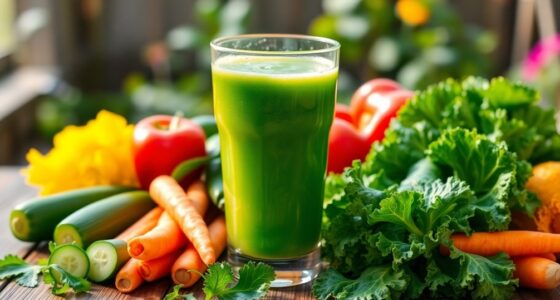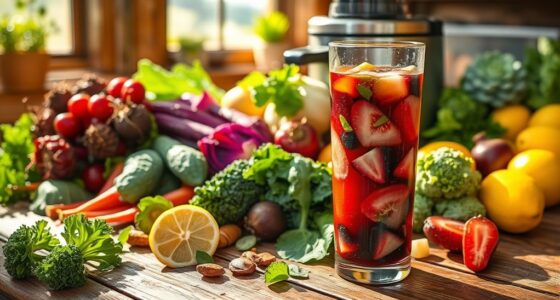
To support your bone health, focus on vegetable juices that provide key nutrients like calcium, magnesium, and vitamin K, which work together to strengthen your bones. Dark leafy greens such as spinach and kale are excellent calcium sources, while broccoli and herbs add magnesium and vitamin K. Incorporating these ingredients into your juices can boost your bone resilience and absorption. Keep exploring to discover how to optimize your diet and lifestyle for stronger, healthier bones.
Key Takeaways
- Dark leafy greens like spinach and kale provide high levels of calcium essential for bone strength.
- Carrots, citrus, and broccoli in vegetable juices enhance vitamin D and magnesium intake, supporting calcium absorption.
- Vitamin K-rich herbs and greens help activate proteins that regulate bone mineralization.
- Including nutrient-dense vegetables in juices boosts overall intake of calcium, magnesium, and vitamin K for bone health.
- Proper nutrient balance and lifestyle habits, such as exercise, optimize calcium utilization from vegetable juices.
Have you ever wondered what nutrients are essential for maintaining strong, healthy bones? The answer lies in a combination of vitamins and minerals that work together to keep your skeletal system in top shape. Among these, calcium plays a pivotal role, but it’s not just about how much calcium you consume; it’s also about how well your body absorbs it. Calcium absorption is a complex process influenced by other nutrients and your overall health. When your body effectively absorbs calcium, it can be incorporated into your bones, helping to keep them dense and resilient. This is especially important for osteoporosis prevention, a condition characterized by weak, brittle bones that are prone to fractures. Ensuring your diet provides adequate calcium and supports its absorption can considerably reduce your risk of developing osteoporosis as you age.
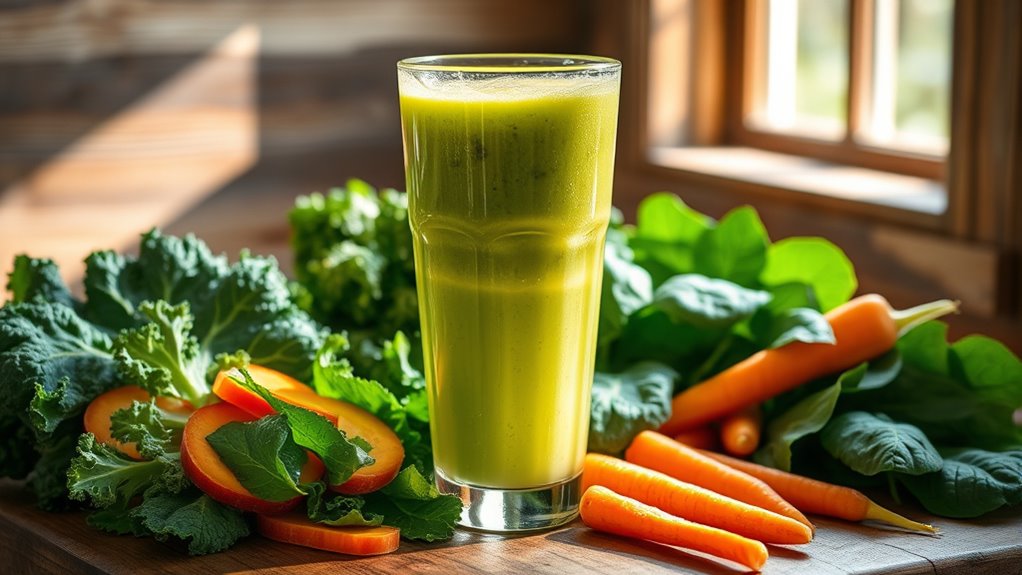
Vegetable juices are an excellent way to boost your intake of bone-friendly nutrients. Dark leafy greens like spinach, kale, and collard greens are rich in calcium, and drinking them in juice form can make it easier to incorporate these nutrients into your daily routine. However, calcium absorption isn’t just about consuming calcium-rich foods; it also depends on other factors such as vitamin D, which aids in calcium absorption from the intestines. Including ingredients like carrots or citrus fruits in your vegetable juice can help improve vitamin D levels, further supporting calcium uptake. Additionally, avoiding excessive intake of substances that hinder calcium absorption, such as caffeine or high levels of phosphorus, can make a difference in how well your body utilizes calcium. Incorporating nutrients like magnesium and vitamin K** into your vegetable juices—through ingredients like broccoli, Brussels sprouts, or herbs like parsley—can provide a natural boost to your bone health. Remember, combining nutrient-rich vegetable juices with a well-rounded diet and healthy lifestyle habits, like weight-bearing exercise, can make a meaningful difference in maintaining bone density and strength over time. Prioritizing these nutrients ensures your bones stay strong, reduces osteoporosis risk, and supports overall skeletal health** for years to come.

Nut Milk Maker Machine,10 in 1 Automatic Plant Based Milk Maker, Soy Milk Machine
【One-Touch Smart Control】With a simple and intuitive interface, the soy milk machine maker is easy to use for...
As an affiliate, we earn on qualifying purchases.
Frequently Asked Questions
Can Vegetable Juices Replace Calcium Supplements?
Vegetable juices can’t fully substitute calcium supplements because of lower calcium bioavailability and juicing nutrient loss. Juicing can help you consume more vegetables, but it often reduces calcium content and bioavailability compared to supplements. To support your bone health, it’s best to combine nutrient-rich vegetable juices with calcium-rich foods or supplements. This way, you guarantee your body absorbs enough calcium for strong bones and overall health.
Are There Any Risks of Overconsuming Bone Nutrients in Juices?
Yes, overconsuming bone nutrients in juices can pose risks. Excess intake of calcium or vitamin K, for example, can lead to nutrient overload, causing kidney stones or interfering with mineral absorption. You should enjoy vegetable juices in moderation and balance them with other nutrient sources to avoid these risks. Always check your intake levels and consult a healthcare professional if you’re unsure about your nutrient consumption.
Which Vegetables Offer the Highest Vitamin D Content?
You won’t find many vegetables naturally high in vitamin D, but some options can help boost your intake. Vitamin D-rich vegetables include certain mushroom varieties like maitake and UV-exposed shiitake, which are among the best plant sources. Leafy greens like spinach and kale contain small amounts, but mushrooms are your best bet for a significant vitamin D boost. Incorporate these into your diet to support your bone health naturally.
How Does Juice Preparation Affect Nutrient Retention?
Think of your juice as a delicate treasure chest—how you prepare it directly impacts its treasures. When you use gentle methods like cold pressing, you preserve more nutrients, maintaining nutrient stability and ensuring the vitamins and minerals stay potent. Conversely, exposure to heat or prolonged storage can erode these nutrients, harming juice preservation. So, handle your vegetables with care to maximize their health benefits and keep your juice vibrant and nutritious.
Can Vegetable Juices Improve Bone Health in Osteoporosis Patients?
Vegetable juices can support your bone health by helping improve bone density and nutrient absorption. When you include nutrient-rich vegetables like kale, spinach, and carrots, you supply calcium, magnesium, and vitamin K, which are essential for strong bones. Drinking these juices regularly may help prevent osteoporosis progression, especially if combined with a balanced diet and adequate sunlight. However, always consult your healthcare provider for personalized advice.

KIDISLE 32oz Automatic Soy Machine for Homemade Almond, Oat, Coconut, Soy, Plant Based Milks and Non Dairy Beverages with Delay Start/Keep Warm/Self-Cleaning/Boil Water, Black
【Versatile 8-in-1 Functionality】: This Nut Milk Maker offers eight different functions, from crafting nut milk and oat milk...
As an affiliate, we earn on qualifying purchases.
Conclusion
By including vegetable juices rich in calcium, magnesium, and vitamin K, you’re gently nurturing your bones without much fuss. These nutrients subtly support your skeletal strength, helping you stay active and confident. Think of it as giving your bones a quiet boost, ensuring they remain resilient over time. Making these small, tasty choices can softly pave the way for a healthier, more balanced future—without demanding too much effort.

MAGETANG 7 in 1 Nut Milk Maker Machine 28oz Automatic Milk Maker for Homemade Coconut, Oat, Soy, Plant-Based Milk, Juice with 18H Delay Start/6H Keep Warm/Self Cleaning (Cream)
【Healthy&Nutrient-rich】: Say goodbye to carton milk, Enjoy rich, creamy, and additive-free, handmade milk made from nuts, grains, beans,...
As an affiliate, we earn on qualifying purchases.

KIDISLE 8 in 1 Nut Milk Maker Blender, 32oz Homemade Soy, Almond, Oat, Coconut, Plant Based and Non Dairy Beverages, Automatic Soybean Machine With Delay Start/Keep Warm/Boil Water, Cream
【Versatile 8-in-1 Functionality】: This Nut Milk Maker offers eight different functions, from crafting nut milk and oat milk...
As an affiliate, we earn on qualifying purchases.

Cindy thoroughly researches juicing trends, techniques, and recipes to provide readers with practical advice and inspiration. Her writing style is accessible, engaging, and designed to make complex concepts easy to understand. Cindy’s dedication to promoting the advantages of juicing shines through her work, empowering readers to make positive changes in their lives through the simple act of juicing.