To be sugar-smart with fruit juices, check labels carefully for added sugars like corn syrup or concentrates, even in “100% fruit” labels. Diluting juice with water or sparkling water cuts sugar while still enjoying flavor. Choosing minimally processed or whole fruits offers fiber’s benefits and prevents blood sugar spikes. If you want more tips on making smarter choices and reducing sugar intake, keep exploring ways to enjoy fruit while staying healthy.

Get kitchen staples and gadgets delivered free — and shop member deals
- Fast, free delivery on millions of items
- Access to Prime Big Deal Days deals on October 6–7
- Prime Video, Amazon Music and more included
Key Takeaways
- Read labels carefully to identify and avoid added sugars like “sugar,” “corn syrup,” or “concentrates.”
- Opt for minimally processed or “100% fruit” juices without added sweeteners.
- Dilute fruit juice with water or sparkling water to reduce sugar intake while maintaining flavor.
- Prefer whole fruits over juice for fiber benefits that slow sugar absorption.
- Make fruit-infused water with fresh slices to enjoy natural sweetness without added sugars.

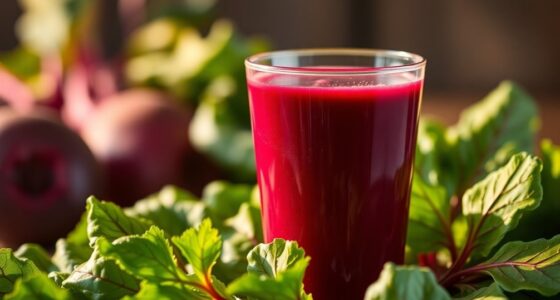
Have you ever wondered how much sugar is really in your favorite fruit juices? It’s a common question, especially when you’re trying to make healthier choices. Many people assume that fruit juices are a natural way to enjoy fruit’s sweetness, but the truth is, most store-bought options contain a significant amount of added sugars. These added sugars aren’t part of the fruit’s natural sweetness; instead, they’re added during processing to make the juice taste sweeter and more appealing. While fruit naturally contains sugars like fructose, these are often overshadowed by the extra sugars that manufacturers add to enhance flavor and prolong shelf life. Being aware of this distinction is a vital step toward making smarter decisions about your beverage choices.
Many store-bought fruit juices contain added sugars, not just the fruit’s natural sweetness.
To better manage your sugar intake, start by reading labels carefully. Even if a juice claims to be 100% fruit, it can still contain added sugars, which bump up the total sugar content unnecessarily. Look for labels that specify no added sugars or check the ingredient list for words like “sugar,” “corn syrup,” or “fruit juice concentrates,” which all indicate extra sweetening. When shopping, opt for juices that highlight natural ingredients and avoid those with long lists of unrecognizable additives. Remember, the goal is to enjoy the natural sweetness that fruit offers without the artificial boost from added sugars.
Another effective strategy is to dilute fruit juices with water or sparkling water. This simple trick reduces the overall sugar concentration while still allowing you to enjoy the flavor of the fruit. For example, mixing a small amount of juice into a larger glass of water can satisfy your taste buds without overloading your system with sugar. You can also experiment with making your own fruit-infused water by adding slices of fresh fruit, which delivers the natural sweetness you crave without any added sugars. This approach not only cuts down on sugar but also helps you stay hydrated and enjoy a variety of flavors.
Additionally, choosing fruit juices that are minimally processed and contain no added sugars can make a significant difference. Understanding the different types of juices helps you select options that are closer to their natural state, providing better health benefits and less sugar intake. Lastly, consider eating whole fruits instead of drinking juice whenever possible. Whole fruits contain fiber, which slows down the absorption of sugars and keeps you feeling full longer. This natural fiber also helps your body process the sugars more gradually, preventing spikes in blood sugar levels. If you do choose juice, stick to small portions and pair it with a protein or healthy fat, like nuts or yogurt, to further stabilize blood sugar fluctuations. By making these mindful choices, you can enjoy the natural sweetness of fruit while minimizing the intake of added sugars, ultimately supporting your overall health and well-being.
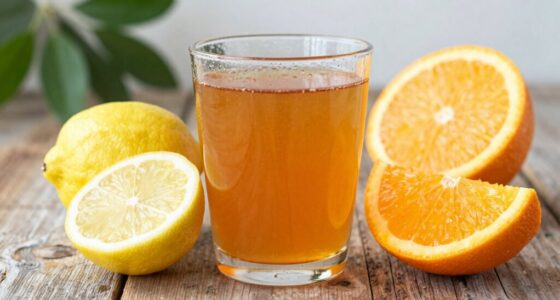
100% fruit juice with no added sugar
As an affiliate, we earn on qualifying purchases.
As an affiliate, we earn on qualifying purchases.
Frequently Asked Questions
Are Natural Fruit Juices Healthier Than Store-Bought Options?
Natural fruit juices are generally healthier than store-bought options because they often use natural preservation methods and organic certifications, ensuring fewer additives and preservatives. When you choose fresh, homemade juices or those with organic labels, you get more nutrients and fewer processed ingredients. Store-bought juices might contain added sugars and artificial preservatives, so it’s better to opt for natural, organically certified options for a healthier choice.
How Can I Tell if a Juice Is High in Added Sugars?
You might think a juice is healthy, but it could be loaded with added sugars. To find out, check the ingredient labels—look for words like “syrup” or “glucose.” Also, compare sugar percentages; if a juice has more than 10 grams per serving, it’s likely high in added sugars. Being vigilant helps you choose options with less sugar and better health benefits.
What Are Some Low-Sugar Alternatives to Fruit Juices?
You can try herbal teas, infused water, or sparkling water with fresh fruit slices as low-sugar alternatives. These options have a lower sugar content comparison to traditional fruit juices and still deliver flavor. To enhance taste without added sugars, use flavor enhancement techniques like adding a splash of lemon, lime, or a few berries. These choices keep your beverage invigorating and satisfying without the sugar spike.
Does Diluting Juice Reduce Its Sugar Content Effectively?
Sure, diluting juice is like giving it a spa day—more water, less sugar. By doing so, you benefit from sugar reduction and stretch every sip. Dilution benefits include lowering sugar content without sacrificing flavor, making it a clever way to enjoy your favorite drinks responsibly. Just remember, the more you dilute, the less sweet it becomes, and your taste buds might thank you for this sneaky, sugar-cutting trick.
How Does Fruit Juice Consumption Impact Dental Health?
Drinking fruit juice can harm your dental health by increasing the risk of tooth decay and enamel erosion. The natural sugars and acids in juice feed bacteria that produce acids, which wear down your enamel over time. To protect your teeth, it’s best to limit juice intake, rinse with water afterward, and avoid brushing immediately after drinking, since the acids can soften your enamel and make it more vulnerable.
Conclusion
Now that you know how to craft your fruit juices wisely, imagine pouring a vibrant, sun-kissed glass that’s just the right balance of sweetness and invigorating. With smarter sugar strategies, you’ll enjoy the natural burst of flavor without the guilt or sugar crash. Every sip becomes a revitalizing reminder that you’re nourishing your body while delighting your senses. Cheers to making smarter choices—your taste buds and health will thank you for it.
NFL season / tailgating Picks
team gear
As an affiliate, we earn on qualifying purchases.


![A Visual Guide To Europe’s Most Popular Olive Oil Varieties, From Koroneiki To Picual [MAP]](https://thejuiceryworld.com/wp-content/uploads/2026/10/a-visual-guide-to-europe-s-most-popular-olive-oil-varieties-from-koroneiki-to-pi-featured-260x140.jpg)