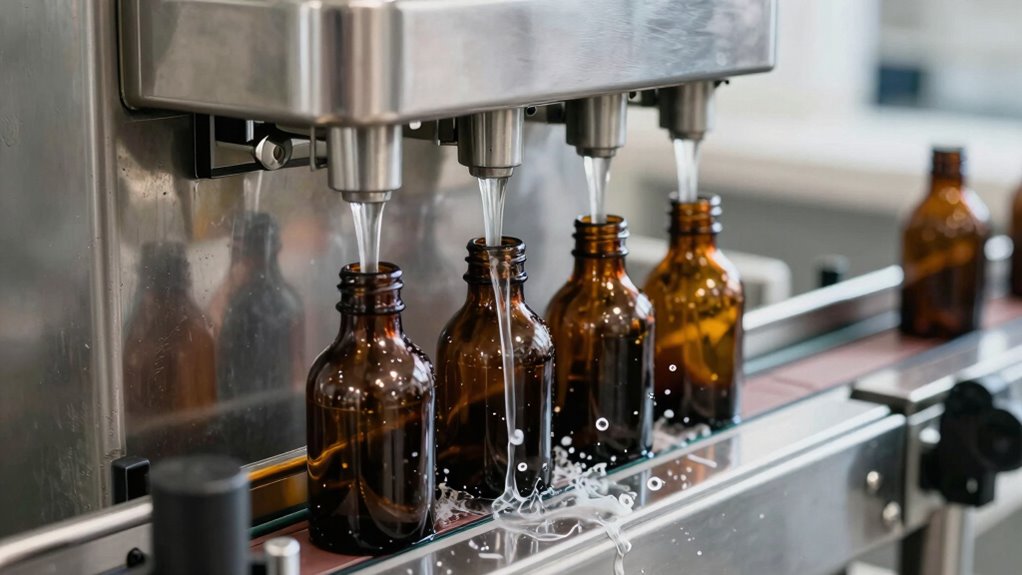

If you ignore the viscosity of your liquids in bottle filling machines, messy fills and spills happen. Thick liquids flow slowly and need longer fill times, while thin liquids can splash or overfill if set too fast. Not adjusting for viscosity causes inconsistent fills, wasting product and frustrating customers. To avoid this, you need to properly calibrate your machine for your liquid’s thickness. Keep this in mind—more details on preventing viscosity mistakes are just ahead.

Get kitchen staples and gadgets delivered free with Prime
- Fast, free delivery on millions of items
- Prime Video, Amazon Music and more included
- Member-only deals all year
Key Takeaways
- Ignoring liquid viscosity leads to improper flow control, resulting in overflows or underfills.
- Viscous liquids require increased fill valve open time or specialized pistons for accurate filling.
- Low viscosity liquids can splash or spill if filling speeds aren’t adjusted appropriately.
- Failing to account for viscosity variations causes inconsistent fills and messy bottles.
- Properly adjusting filling parameters for viscosity ensures cleaner, more precise bottle fills.
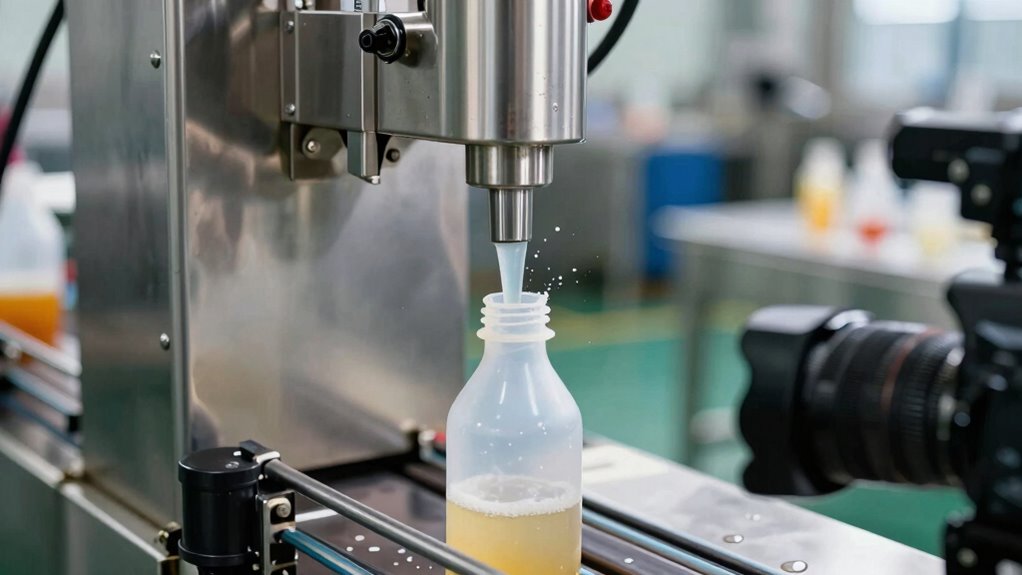
Have you ever wondered how bottles are filled quickly and accurately in large-scale production? It’s a complex process that relies heavily on the right equipment and precise control. One of the most critical factors influencing this process is liquid viscosity. If you don’t consider how thick or thin your product is, you risk compromising filling accuracy, which can lead to messy spills, waste, and customer complaints. Understanding how liquid viscosity affects the filling process is essential if you want to keep your operation running smoothly and efficiently. Proper flow regulation ensures that each bottle is filled uniformly, reducing waste and improving product quality.
Properly adjusting for liquid viscosity ensures accurate, efficient filling and reduces waste and customer complaints.
When a liquid has high viscosity, it’s thicker and flows more slowly. This means that standard filling techniques designed for thinner liquids might not work effectively. If your machine isn’t calibrated for the specific viscosity of your product, you could end up overfilling or underfilling bottles. Overfilling causes spillage and waste, while underfilling can lead to customer dissatisfaction and potential regulatory issues. Achieving ideal filling accuracy requires adjusting your machine’s settings based on the liquid’s viscosity. For example, increasing the fill valve’s opening time or using specialized pistons can help control the flow rate for thicker products.
On the other hand, low-viscosity liquids flow easily, which might tempt operators to set faster fill cycles. But rushing the process can cause splashing and inconsistent fills, especially if the machine isn’t equipped to handle rapid flow rates. In such cases, slower, more controlled fills ensure accuracy and prevent messes. The key is to match your filling parameters to the liquid’s viscosity—this minimizes variation and ensures each bottle is filled precisely to the desired level.
Many manufacturers overlook the importance of adjusting for liquid viscosity, assuming a one-size-fits-all approach works. But that’s a mistake. If you don’t account for viscosity, you risk losing control over your filling accuracy, leading to spills, product loss, and unhappy customers. Modern filling machines often come with adjustable settings or sensors that monitor flow rates and viscosity in real-time. Using these features helps maintain consistency, even as product formulations change or vary batch to batch.
bottle filling machine viscosity adjustment
As an affiliate, we earn on qualifying purchases.
As an affiliate, we earn on qualifying purchases.
Frequently Asked Questions
How Can Viscosity Variations Affect Overall Production Speed?
Viscosity variations can considerably reduce your production speed by affecting viscosity consistency and fill precision. When the liquid’s viscosity isn’t stable, your filling machine may slow down to prevent errors, causing delays. Inconsistent viscosity leads to uneven fills, requiring rework and downtime. To keep production flowing smoothly, make sure your liquids maintain a stable viscosity, enabling your machine to operate at ideal speed and deliver precise, consistent fills every time.
What Maintenance Practices Prevent Viscosity-Related Filling Issues?
You should regularly perform cleaning protocols to remove residue buildup that can alter viscosity, ensuring consistent fills. Additionally, calibration procedures are crucial—they help you adjust machine settings to accommodate viscosity changes, preventing messy fills. By maintaining a routine of thorough cleaning and precise calibration, you prevent viscosity-related issues from disrupting your production flow and maintain high-quality, accurate filling processes.
Are There Specific Sensors to Detect Viscosity Inconsistencies?
Yes, there are specific sensors designed for viscosity monitoring that you can integrate into your filling machines. These sensors detect viscosity inconsistencies in real-time, allowing you to make immediate adjustments. By incorporating sensor integration, you guarantee accurate fills and minimize messes caused by viscosity fluctuations. Regularly check and calibrate these sensors to maintain ideal performance, helping you achieve consistent, clean fills and reduce waste.
How Does Temperature Control Impact Fluid Viscosity During Filling?
Your bottle filling process hinges on perfect temperature regulation, which is vital because even a slight fluctuation can turn your fluid into a chaotic mess. Temperature control directly impacts viscosity stability, ensuring the liquid flows smoothly without spills or interruptions. By maintaining consistent temperatures, you prevent viscosity changes that cause messy fills, making your operation more efficient and your products consistently professional. Think of temperature regulation as the secret weapon for flawless filling!
Can Adjustable Settings Compensate for High-Viscosity Liquids?
Yes, adjustable settings can help compensate for high-viscosity liquids. By using viscosity adjustment features, you can fine-tune the flow rate and pressure to match the liquid’s consistency. This guarantees a cleaner, more precise fill, reducing spillage and mess. Always monitor the liquid’s viscosity and adjust the machine settings accordingly, maintaining ideal flow and preventing issues caused by inconsistent liquid viscosity.
Conclusion
If you ignore the viscosity details, your filling process becomes a wild roller coaster, leaving your bottles splattered and your reputation shaken. But when you fine-tune your machine to match your product’s thickness, it’s like guiding a gentle river—smooth, steady, and flawless. Don’t let viscosity mistakes turn your operation into a messy storm. Instead, master the flow, and watch your bottles fill like a crystal-clear stream—clean, precise, and perfectly crafted every time.
Fall Picks
fall essentials
As an affiliate, we earn on qualifying purchases.