
For small batch work, “enough” sanitation means reliably meeting industry standards to guarantee your bottles are thoroughly cleaned, sanitized, and safe. You should use a combination of rinsing, washing, and disinfecting tailored to your needs, emphasizing effective removal of residues and microbes. Your equipment must deliver consistent, reliable sterilization without over-complicating the process. Keep in mind, achieving this balance is key—and there’s more to discover on how to optimize your sanitation approach.

Get kitchen staples and gadgets delivered free with Prime
- Fast, free delivery on millions of items
- Prime Video, Amazon Music and more included
- Member-only deals all year
Key Takeaways
- The process must meet industry standards for cleanliness and safety, ensuring effective removal of microbes and residues.
- Use adjustable cycles and precise controls to ensure consistent, thorough sanitization tailored to small batch needs.
- Equipment should deliver reliable sterilization without excessive complexity, maintaining safety and compliance.
- Proper protocols, including rinsing and sanitizing, are essential to prevent contamination and ensure product safety.
- Incorporate environmentally responsible practices to achieve effective sanitation while minimizing waste and environmental impact.

For small batch work, you need to understand what “enough” really means. It’s not just about running bottles through a quick rinse; it’s about achieving a level of cleanliness that meets industry standards. In many cases, this involves using a combination of cleaning methods—such as rinsing, washing, and sanitizing—tailored to your specific needs. A good bottle sanitizing machine should provide effective industrial cleaning, removing residues, microbes, and other contaminants that can compromise your product. Even if you’re not processing large quantities, the risk of contamination remains, making thorough sanitation non-negotiable. Proper sanitation practices are essential to ensure safety and compliance, especially in sensitive applications like veterinary sterilization.
Effective small-batch sanitization requires thorough, industry-standard cleaning methods to ensure safety and prevent contamination.
When considering veterinary sterilization, the emphasis on complete eradication of pathogens becomes even more critical. Small batch work doesn’t mean cutting corners—your equipment needs to uphold the same safety standards as larger operations. The right machine will ensure that every bottle, regardless of batch size, is sterilized to prevent cross-contamination and protect end-users. It’s a matter of maintaining quality, safety, and compliance, especially when dealing with sensitive products like medicines or veterinary supplies. Understanding the industry standards for sterilization can help guide your choice of equipment and procedures.
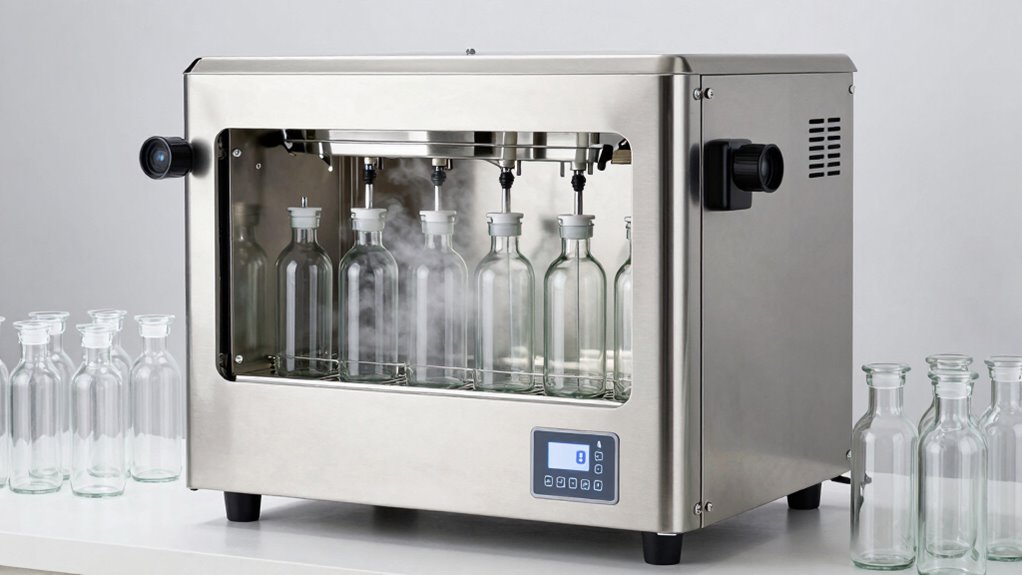
You might wonder if smaller batches require less rigorous cleaning. The answer is no. In fact, the focus should be on precision and consistency. Many small-scale operations benefit from compact, easy-to-use sanitizing machines that deliver industrial cleaning power without excessive complexity. These machines often feature adjustable cycles, temperature controls, and effective disinfectant delivery, ensuring each bottle receives adequate treatment. What counts as “enough” is a sanitization process that consistently meets safety standards, eliminates potential hazards, and maintains product quality. Employing proper sterilization protocols can further ensure your process remains reliable and compliant with regulations. Ensuring your process is both effective and environmentally responsible can further enhance your operation’s sustainability and reputation. Incorporating environmentally responsible methods can also help reduce waste and minimize environmental impact.
Additionally, understanding the importance of biodiversity in the context of sustainable practices can help ensure your sanitation methods contribute to environmentally responsible operations. Ultimately, achieving proper sanitation for small batch work isn’t about quantity; it’s about quality and confidence. Your equipment must provide reliable sterilization, whether for veterinary sterilization, industrial cleaning, or other specialized needs. When you choose a bottle sanitizing machine that’s fit for small batches, you’re investing in safety, compliance, and peace of mind that your products are safe for consumers or patients.
small batch bottle sanitizing machine
As an affiliate, we earn on qualifying purchases.
As an affiliate, we earn on qualifying purchases.
Frequently Asked Questions
How Often Should I Calibrate My Bottle Sanitizing Machine?
You should calibrate your bottle sanitizing machine regularly to guarantee peak machine accuracy. Typically, calibration frequency depends on usage, but doing it monthly or after any maintenance or repairs is a good rule of thumb. Regular calibration helps prevent inconsistencies in sanitization, maintaining safety standards. Keep an eye on performance, and if you notice any irregularities, calibrate immediately to keep your machine running accurately.
What Types of Bottles Are Compatible With Different Sanitizing Machines?
You need to check your bottle sanitizing machine’s compatibility with different bottle materials like glass, plastic, or stainless steel. Most machines work well with glass and certain plastics, but compatibility issues can arise with specialty or thin plastics. Always consult your machine’s manufacturer guidelines to avoid damage or ineffective sanitizing. Ensuring compatibility prevents problems and guarantees your bottles get properly sanitized without compromising their material integrity.
Can Small Batch Machines Handle Different Bottle Shapes and Sizes?
You’ll be amazed at what small batch sanitizing machines can handle! They often boast incredible bottle shape flexibility and size adaptability, making it possible to sanitize everything from tiny sample bottles to large, uniquely shaped containers. While some machines might have limits, many are designed to effortlessly accommodate different shapes and sizes, saving you time and hassle. You won’t believe how versatile these compact machines truly are!
What Is the Typical Lifespan of a Small Batch Sanitizing Machine?
A small batch sanitizing machine typically lasts 5 to 10 years with proper maintenance. Its lifespan depends on sanitizing effectiveness and how often you perform maintenance. Regular cleaning, replacing worn parts, and checking nozzles or filters help extend its life. If you keep up with maintenance frequency, you guarantee the machine stays efficient, and you get the most out of your investment, maintaining safe, sanitized bottles for years.
Are There Eco-Friendly Sanitizing Options Available for Small Batches?
Imagine a bottle sparkling clean, not at the earth’s expense. You can choose eco-friendly options like biodegradable disinfectants and solar-powered sanitizers for small batches. These solutions reduce chemical waste and harness renewable energy, making your process greener. They’re effective yet gentle on the environment, ensuring your bottles are sanitized while supporting sustainability. With these choices, you actively protect the planet without compromising cleanliness or quality.
Conclusion
So, if you think a quick rinse or a splash of sanitizer will cut it, think again! For small batches, investing in the right bottle sanitizing machine isn’t just smart—it’s the difference between sparkling, germ-free bottles and a total contamination catastrophe. Don’t leave your success to chance; go all in with thorough, reliable sanitization. Trust me, your reputation—and your customers—will thank you for choosing equipment that’s truly enough to keep your quality sky-high!
NFL season / tailgating Picks
team gear
As an affiliate, we earn on qualifying purchases.