Boiling is a highly effective way to sterilize bottles, as it kills bacteria, viruses, and fungi in just 5-10 minutes, making it a trusted routine for ensuring your baby’s safety. Chemical sanitizers can also work quickly and conveniently, especially when stove access is limited, but they require proper use and rinsing. Both methods can be effective if done correctly; exploring your options further helps you choose the best for your needs.
Key Takeaways
- Boiling effectively kills bacteria, viruses, and fungi by immersing bottles in boiling water for 5-10 minutes.
- Sanitizing solutions quickly disinfect bottles without heat, ideal for on-the-go or when stove access is limited.
- Boiling is a simple, proven method suitable for routine cleaning, but requires thorough pre-cleaning of bottles.
- Sanitizers are convenient and fast but must be used according to instructions to ensure proper disinfection.
- Combining both methods—cleaning, then boiling or sanitizing—maximizes sterilization and ensures safety for baby’s health.
Sterilizing bottles is an essential step in ensuring your baby’s health and safety, as it effectively kills germs and bacteria that can cause illness. When it comes to sterilization techniques, you need to choose methods that thoroughly eliminate harmful microorganisms while fitting easily into your daily routine. Proper hygiene practices are also indispensable in preventing infections, especially since babies have developing immune systems. By adopting the right sterilization methods, you can give your little one the safest feeding environment possible.
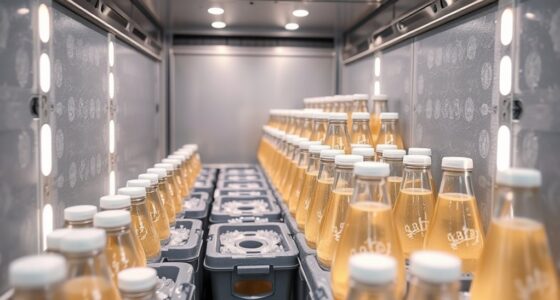
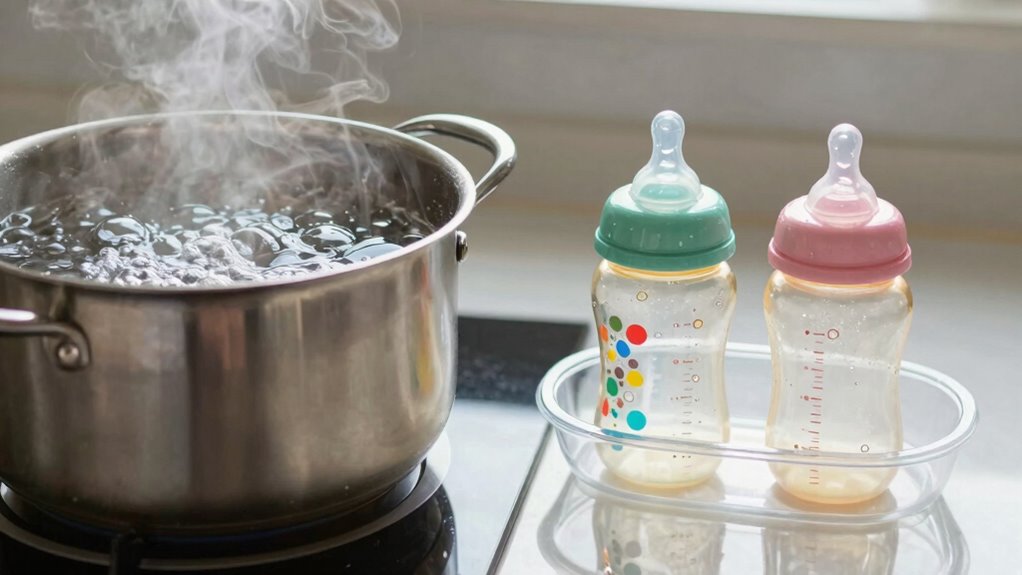
Boiling is one of the most traditional and straightforward sterilization techniques. It involves immersing bottles, nipples, and other accessories in boiling water for about 5 to 10 minutes. This method is highly effective at destroying bacteria, viruses, and fungi. It’s simple, requires no special equipment beyond a pot and stove, and is trusted by many parents worldwide. However, it’s important to guarantee all items are thoroughly cleaned beforehand, as dirt and milk residue can shield germs from the boiling process. Proper hygiene practices also mean regularly sanitizing your kitchen utensils and storage areas to prevent recontamination after boiling. Keep in mind that boiling doesn’t sterilize in the strictest medical sense but is sufficient for routine baby bottle cleaning, especially if done consistently. Additionally, maintaining proper ventilation during boiling can help prevent moisture buildup and mold growth in your storage areas.
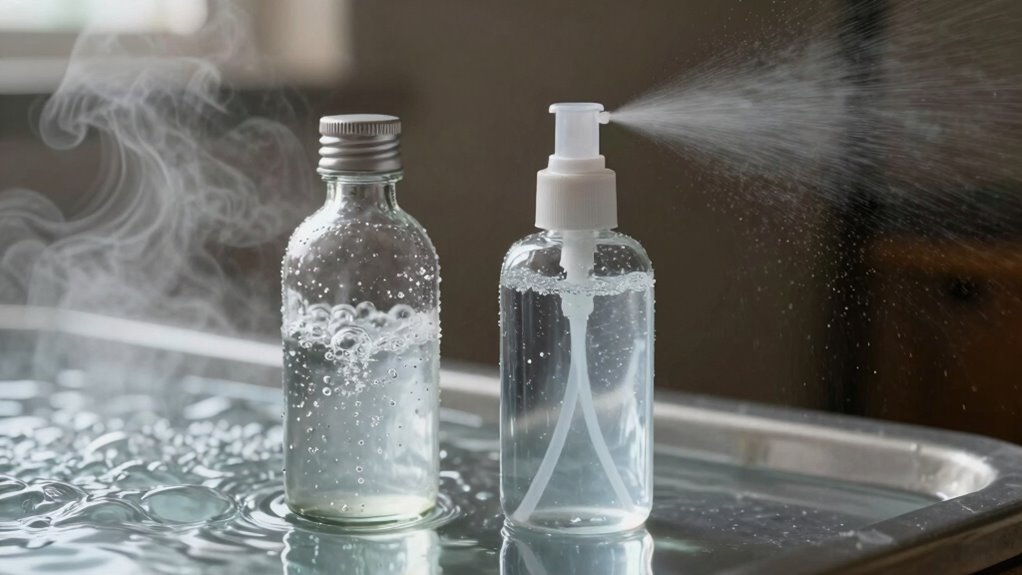
On the other hand, sanitizers, especially chemical sterilizing solutions or microwave sterilizers, offer a convenient alternative. Chemical sterilizing solutions are designed to kill germs without the need for boiling water, making them a good choice if you’re short on time or don’t have access to a stove. You simply immerse the bottles and accessories in the solution for the recommended period, rinse with sterile water if necessary, and store them properly. Microwave sterilizers are quick and effective, using steam to eliminate bacteria and viruses within minutes. These methods are particularly useful when traveling or when you want a quick, reliable sterilization process. Still, it’s essential to follow manufacturer instructions carefully to guarantee effectiveness, and always keep hygiene practices in mind by washing your hands before handling sterilized items.
While both boiling and sanitizers can effectively sterilize bottles, your choice should depend on your lifestyle, convenience, and comfort level. Whichever method you select, consistency is key to maintaining hygiene practices and preventing the spread of germs. Regularly sterilizing bottles after each use creates a safe feeding environment, reducing your baby’s risk of infection. Remember, the goal isn’t just to sterilize but to keep your baby’s feeding gear as clean and germ-free as possible, safeguarding their health and well-being every day.
Frequently Asked Questions
How Long Should Bottles Be Sterilized for Maximum Safety?
You should sterilize bottles for at least 5 minutes to guarantee maximum safety. Follow the sterilization duration recommended by safety guidelines, whether you’re boiling or using sanitizers. Boiling bottles for 5-10 minutes effectively kills germs, while sanitizers often require specific contact times, typically around 2-5 minutes. Always check manufacturer instructions and safety guidelines to make sure your sterilization process is thorough and safe for your baby.
Can Sterilization Methods Harm Bottle Materials or Baby Health?
You might find it surprising, but sterilization methods can impact your bottle materials and baby health. Over time, high heat from boiling can degrade certain plastics, risking chemical exposure. Sanitizers with harsh chemicals may leave residues that aren’t safe for infants. To guarantee material safety, choose sterilization options compatible with your bottles, and always rinse thoroughly. Being cautious helps protect your baby from potential harm caused by improper sterilization.
Are There Specific Sanitizers Recommended for Different Bottle Types?
You should choose sanitizers that are compatible with your bottle material, such as those labeled safe for plastic, glass, or silicone bottles. Always read the sanitizer’s instructions to guarantee compatibility, avoiding harsh chemicals that could damage the bottle or leave residues. Using the right sanitizer for your bottle type ensures effective sterilization without compromising material integrity or your baby’s health.
How Often Should Bottles Be Sterilized During Daily Use?
You should sterilize bottles daily to guarantee safety and reduce contamination risks. Frequency concerns are valid, so make it a routine, especially after each use or if your baby gets sick. Follow safety precautions by thoroughly cleaning bottles before sterilizing, using the recommended methods like boiling or sanitizing solutions. This consistent approach keeps bottles safe, clean, and ready for use, giving you peace of mind and protecting your baby’s health.
Is Microwave Sterilization as Effective as Boiling or Chemical Sanitizers?
You might find microwave sterilization quite convenient, but it’s not always as thorough as boiling or chemical disinfectants. While microwave methods can reduce germs effectively, they may miss some bacteria if not done properly. Chemical disinfectants are reliable and proven, but require careful use. For ideal safety, stick with boiling water or approved sanitizers, and use microwave sterilization as a quick, supplementary step if needed.
Conclusion
Ultimately, choosing between boiling and sanitizers depends on your desire for diligent, dependable delivery. Boiling boldly banishes bacteria with basic, budget-friendly brilliance, while sanitizers swiftly strike with sensational, chemical solutions. Decide based on your dedication to dirt-free, disease-free bottles—delivering safety, stability, and serenity. Stay steadfast in your sterilization strategy, securing your baby’s health with confidence and care. Because when it comes to cleanliness, commitment and consistency create the clearest, cutest, and safest start.