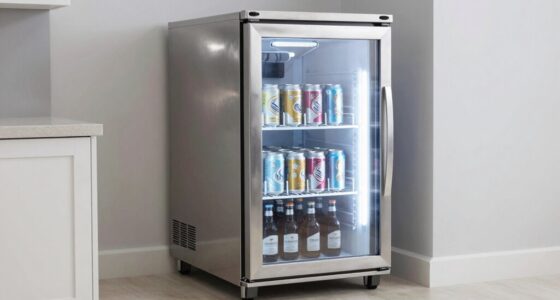
To effectively ship fresh juice and keep it safe, you need to maintain a proper cold chain. This involves using reliable packaging materials like insulated boxes and gel packs to regulate temperature, along with advanced temperature monitoring devices that provide real-time data. Proper handling during transit and storage prevents temperature fluctuations that can spoil your product. Continuing with these best practices will help you guarantee your fresh juice stays delicious and safe upon arrival.

Get kitchen staples and gadgets delivered free with Prime
- Fast, free delivery on millions of items
- Prime Video, Amazon Music and more included
- Member-only deals all year
Key Takeaways
- Maintain a consistent cold temperature, typically between 0°C to 4°C, to preserve juice freshness and prevent spoilage.
- Use insulated packaging with gel packs or refrigerants to regulate temperature during transit.
- Implement continuous temperature monitoring devices for real-time tracking and early breach detection.
- Ensure proper handling and partner with experienced logistics providers to prevent cold chain disruptions.
- Regularly inspect and calibrate monitoring equipment to maintain accuracy and safeguard product quality.
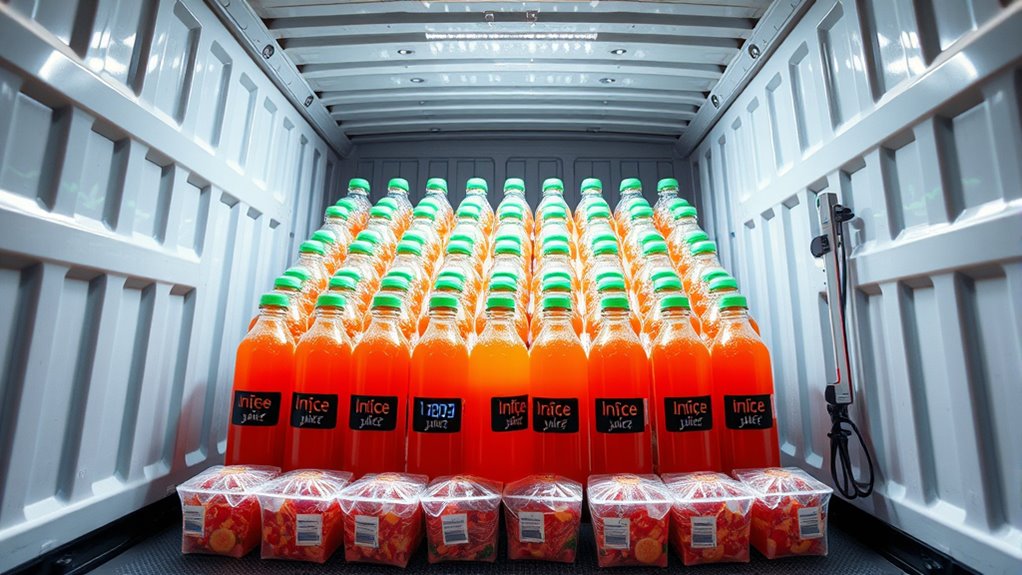
Have you ever wondered how temperature-sensitive products like vaccines, pharmaceuticals, and perishable foods stay safe during transportation and storage? The key lies in understanding the cold chain, especially when shipping fresh juice. Maintaining the right temperature throughout the entire process ensures your product remains fresh, flavorful, and safe for consumers. To achieve this, temperature monitoring plays a vital role. It involves using advanced devices that track the temperature in real-time, providing you with immediate data on the product’s condition. This way, you can quickly identify if the cold chain has been compromised and take corrective action before the juice reaches your customer. Additionally, recent AI discoveries have enhanced the accuracy and efficiency of monitoring systems, further securing the integrity of the cold chain.
Packaging materials are equally crucial in preserving the freshness of your juice. The right packaging not only protects against physical damage but also helps regulate temperature. Insulated boxes, gel packs, and refrigerants are common choices that work together to create a thermal barrier, slowing down heat transfer and keeping the product within the desired temperature range. When selecting packaging materials, consider their insulating properties, durability, and compatibility with your shipping environment. High-quality packaging can extend the window during which your juice remains fresh, giving you more flexibility during transit.
Proper temperature monitoring combined with effective packaging materials simplifies the challenge of maintaining the cold chain. For example, installing temperature data loggers inside your packaging allows you to continuously record conditions during transit. This data helps you verify that the juice has stayed within safe temperature limits, ensuring quality upon arrival. Additionally, employing packaging materials with superior insulation reduces the risk of temperature fluctuations caused by external factors such as hot weather or delays in transit. This careful combination of tools and materials keeps your product safe and preserves its quality from start to finish.
Furthermore, understanding the importance of packaging materials and temperature monitoring encourages proactive management of your supply chain. Regularly inspecting packaging components and calibration of temperature sensors can prevent issues before they occur. It’s also wise to partner with reliable carriers experienced in cold chain logistics, who understand how to handle temperature-sensitive shipments properly. By integrating these practices, you ensure your fresh juice remains at optimal conditions, satisfying customer expectations and complying with safety standards.
insulated shipping boxes for juice
As an affiliate, we earn on qualifying purchases.
As an affiliate, we earn on qualifying purchases.
Frequently Asked Questions
How Long Can Fresh Juice Stay in the Cold Chain Before Spoilage?
You can typically keep fresh juice in the cold chain for about 1 to 2 weeks before spoilage risks increase. During this period, the cold temperature slows microbial growth, preserving the juice’s shelf life. However, once the cold chain is broken or temperatures rise, spoilage accelerates, reducing freshness and safety. To guarantee quality, maintain consistent cold temperatures and monitor storage duration carefully.
What Are the Most Cost-Effective Cold Storage Options for Small Producers?
Imagine your small juice operation thriving—cost-effective refrigeration becomes your secret weapon. You can opt for compact, energy-efficient mini-fridges or insulated cold storage boxes, perfect for small-scale needs. These options are budget-friendly, easy to maintain, and keep your juice fresh without breaking the bank. Investing in reusable ice packs or portable cooling units also helps maintain ideal temperatures, ensuring quality while saving costs. Your small-scale cold storage just got smarter and more affordable.
How Do Temperature Fluctuations Affect Juice Quality During Transit?
Temperature fluctuations can critically harm your juice’s quality during transit, leading to spoilage or fermentation. Maintaining temperature stability is vital, so you should invest in reliable packaging solutions that insulate and regulate heat. Use insulated containers and cold packs to minimize fluctuations, ensuring your juice stays fresh. Consistent temperature control preserves flavor, nutrients, and overall quality, giving your customers the best product possible upon arrival.
Are There Eco-Friendly Alternatives to Traditional Refrigeration Methods?
Thinking about eco-friendly cooling options? You can choose biodegradable insulators and renewable cooling methods to reduce environmental impact. These alternatives effectively maintain temperature without relying on traditional refrigeration, lowering carbon footprints. Biodegradable insulators break down naturally, while renewable cooling harnesses sustainable energy sources like solar power. By switching to these sustainable solutions, you protect the planet and keep your fresh juice pristine during transit, proving that eco-conscious choices can be both effective and environmentally responsible.
What Certifications Ensure Cold Chain Integrity for Juice Shipments?
You should look for certifications like GMP standards and HACCP compliance to guarantee cold chain integrity for your juice shipments. GMP standards guarantee that manufacturing processes meet quality and safety requirements, while HACCP compliance addresses critical control points to prevent contamination. These certifications demonstrate that your shipping methods adhere to strict safety protocols, maintaining freshness and quality from source to consumer. Always verify suppliers and carriers hold these credentials for ideal cold chain assurance.
Conclusion
By understanding the cold chain, you guarantee fresh juice stays safe and high-quality from farm to fridge. Many believe that maintaining constant temperature is unnecessary, but studies show temperature fluctuations can cause spoilage and bacterial growth. So, trust the science: a reliable cold chain isn’t just a good idea—it’s essential for delivering fresh, healthy juice. Keep the cold chain intact, and your product remains safe, tasty, and valuable to your customers.
Halloween Picks
halloween
As an affiliate, we earn on qualifying purchases.