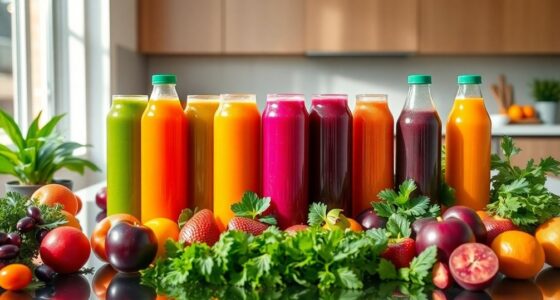
To save money on juicing without losing flavor, focus on seasonal, local produce, which is cheaper and tastes better. Buy in bulk to reduce costs and store extras properly. Incorporate affordable ingredients like carrots, apples, and cucumbers, and use frozen options when out of season. Planning your shopping and minimizing waste also keeps expenses down. Keep exploring these tips to discover even more ways to enjoy delicious, budget-friendly juices.
Key Takeaways
- Shop for seasonal, locally grown produce at farmers’ markets or discount stores to maximize freshness and savings.
- Buy produce in bulk and store properly to reduce costs and minimize waste.
- Use affordable ingredients like carrots, apples, and cucumbers to create flavorful, budget-friendly juices.
- Incorporate frozen berries and other frozen produce to save money and enjoy out-of-season flavors.
- Plan your juicing schedule and portion sizes to prevent waste and keep expenses predictable.
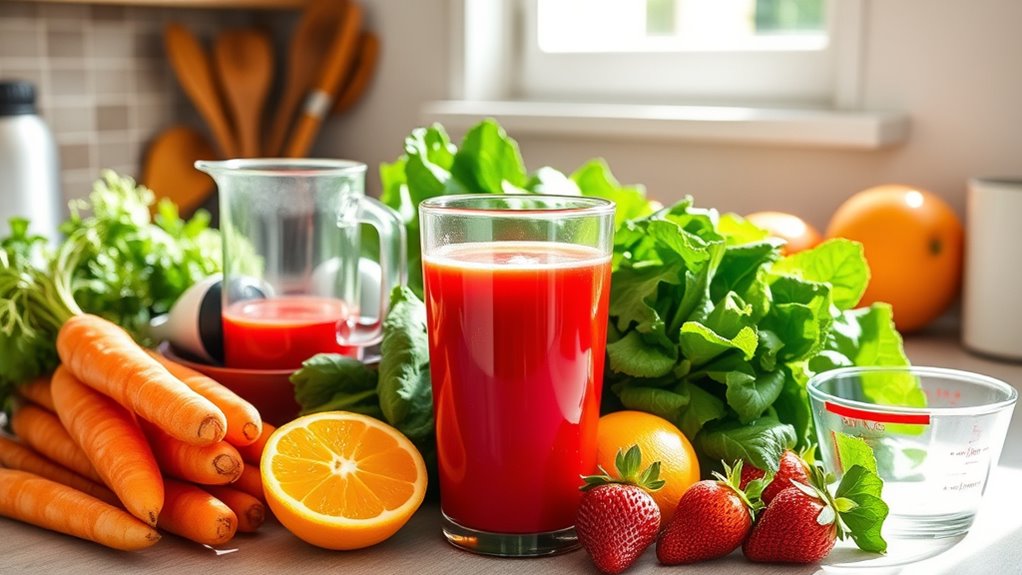
Ever wondered how to enjoy fresh, nutritious juices without overspending? If you’re looking to make healthy juicing a regular habit without breaking the bank, it’s all about smart shopping and planning. One of the best juicing budget tips is to focus on affordable produce that delivers flavor and nutrients without a hefty price tag. Seasonal fruits and vegetables are your best friends—they tend to be cheaper and taste better when they’re in season, so plan your shopping around what’s available locally. Check out local farmers’ markets or discount grocery stores where you can often score fresh, affordable produce. Bulk buying is another savvy move; buying large quantities of inexpensive produce and storing it properly means you can juice more without constantly visiting the store.
Smart shopping for seasonal, local, and bulk produce keeps your juice fresh and budget-friendly.
To stretch your dollar further, consider incorporating more budget-friendly ingredients like carrots, apples, and cucumbers into your recipes. These items are usually inexpensive and versatile. Carrots, for example, are sweet, nutritious, and can be bought in larger bags at a lower cost per pound. Apples are not only affordable but also add a natural sweetness, reducing the need for added sugars or costly flavor enhancers. Cucumber adds a revitalizing taste and is usually inexpensive, especially during peak season. Combining these ingredients in your juices creates delicious, well-rounded flavors while keeping your costs down.
Another tip is to be flexible with your recipes. Instead of sticking to specific ingredients, use what’s affordable and available. If strawberries are out of season and pricey, swap them for frozen berries, which are often cheaper and equally nutritious. Frozen produce also lasts longer, reducing waste and the need for frequent shopping trips. Additionally, consider growing your own herbs or small vegetable patches if space allows. Fresh herbs like mint or basil can elevate your juices and are inexpensive to maintain in the long run.
Incorporating cost-effective ingredients and exploring different sources of produce can further enhance your savings while maintaining a diverse and flavorful juice selection. Finally, be mindful of portion sizes and use your produce wisely. Juicing can be economical if you juice only what you need and use leftover pulp creatively—add it to smoothies, baking, or compost it to avoid waste. Staying organized and planning your weekly juicing schedule helps prevent impulse buys and keeps your expenses predictable. Combining these juicing budget tips with a focus on affordable produce allows you to enjoy vibrant, flavorful juices every day without draining your wallet. With a little planning and flexibility, you’ll find that healthy, delicious juices are well within reach—without sacrificing flavor or your budget.

Qcen Juicer Machine, 800W Centrifugal Juicer Extractor with Wide Mouth 3” Feed Chute for Fruit Vegetable, Easy to Clean, Stainless Steel, BPA-free (Black)
Upgraded 800W Motor – Centrifugal juicer machine with upgraded 800W high speed motor, more efficient and powerful than…
As an affiliate, we earn on qualifying purchases.
As an affiliate, we earn on qualifying purchases.
Frequently Asked Questions
What Are the Best Affordable Juicing Ingredients?
You should focus on affordable, seasonal produce like carrots, apples, and oranges, which pack great flavor and nutrients. Buying in bulk helps you save even more, especially with versatile ingredients like spinach and beets. Look for local farmers’ markets or sales to find fresh, budget-friendly options. Incorporating these ingredients into your juicing routine guarantees you enjoy delicious, nutritious drinks without overspending.
How Can I Reduce Waste When Juicing?
Want to cut waste and maximize your juice? Start by saving fruit peelings—many are rich in nutrients and can be used in baking, smoothies, or compost. Don’t toss the pulp; instead, repurpose it in muffins, soups, or as a fiber boost. By harnessing every part of your produce, you not only save money but also discover new flavors and textures, making your juicing more sustainable and delicious.
Are Homemade Juices as Nutritious as Store-Bought?
Homemade juices are just as nutritious as store-bought ones because you control ingredient quality and nutrient retention. When you juice at home, you use fresh, high-quality ingredients, which preserve more vitamins and minerals. Store-bought juices often undergo pasteurization, reducing nutrient levels. So, by making your own juice, you make certain of maximum health benefits without sacrificing flavor, keeping your drinks both nutritious and delicious.
What Are Cost-Effective Juicing Equipment Options?
You can save money by choosing budget blenders or manual juicers, which are affordable and effective. Budget blenders work well for smoothies and blended juices without breaking the bank, while manual juicers are perfect for fresh citrus and small fruit servings. Both options provide cost-effective solutions, helping you enjoy healthy juices without sacrificing quality or flavor. Consider your juicing needs to select the most suitable, budget-friendly equipment.
How Long Can I Store Fresh Juice Safely?
You can store fresh juice safely for up to 24-48 hours if you minimize juice oxidation. To keep it fresh, use airtight storage containers, preferably glass or BPA-free plastic, and fill them to the brim to limit air exposure. While it’s tempting to store juice longer, oxidation causes nutrient loss and off-flavors. For best taste and health benefits, consume your juice within a day of juicing.

Consciot CB08 11-Piece Blender for Kitchen and Personal Size, Blend Shakes and Smoothies, Frozen Drinks, Baby Food, Spreads & More, 3 Portable To-Go Cups & 2 Spout Lids & 1 Solid Lid, 900 Peak Watts
【Robust Full Copper Motor】 – A maximum 900W high-horsepower motor with a speed up to 25000 RPM enables…
As an affiliate, we earn on qualifying purchases.
As an affiliate, we earn on qualifying purchases.
Conclusion
By choosing budget-friendly ingredients, you can enjoy delicious, nutritious juices without breaking the bank. Did you know that over 70% of Americans spend less than $50 a month on fresh produce? This shows that with smart shopping and simple recipes, you can maximize flavor and health on any budget. So, keep experimenting with affordable fruits and veggies—you’ll find that saving money doesn’t mean sacrificing taste. Cheers to flavorful, budget-conscious juicing!

5 PCS Large Fruit Containers for Fridge – Leakproof Food Storage Containers with Removable Colander – Dishwasher & microwave safe Produce Containers Keep Fruits, Vegetables, Berry, Meat Fresh longer
5 packs : You will get 5 fridge storage containers with colander size from 300 ml to 4200…
As an affiliate, we earn on qualifying purchases.
As an affiliate, we earn on qualifying purchases.

Amazon Grocery, Triple Berry Mix, 16 Oz, Frozen (Previously Happy Belly, Packaging May Vary).
One 16 ounce bag of Frozen Triple Berry Mix (Blueberries, Blackberries & Raspberries).
As an affiliate, we earn on qualifying purchases.
As an affiliate, we earn on qualifying purchases.

Cindy thoroughly researches juicing trends, techniques, and recipes to provide readers with practical advice and inspiration. Her writing style is accessible, engaging, and designed to make complex concepts easy to understand. Cindy’s dedication to promoting the advantages of juicing shines through her work, empowering readers to make positive changes in their lives through the simple act of juicing.