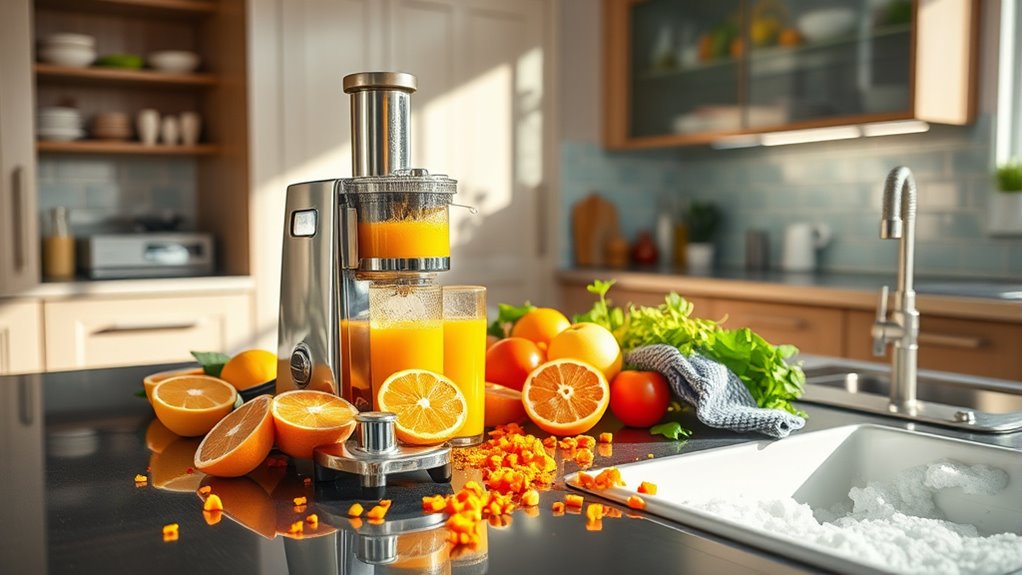

To streamline your juicing workflow, organize ingredients in clear containers for quick access and prep ingredients in advance at a dedicated station. Keep your workspace clean by regularly clearing debris and wiping surfaces, and maintain your equipment with thorough post-use cleaning and periodic checks. Use proper lighting and arrange tools to minimize movement. Following these steps helps make sure of efficiency, hygiene, and consistent results—continue further to discover how to optimize every stage for smooth juicing sessions.

Get kitchen staples and gadgets delivered free — and shop member deals
- Fast, free delivery on millions of items
- Access to Prime Big Deal Days deals on October 6–7
- Prime Video, Amazon Music and more included
Key Takeaways
- Organize ingredients in visible, accessible containers and pre-wash or pre-cut for quick retrieval.
- Maintain the juicer regularly by cleaning parts and checking for wear to ensure optimal performance.
- Set up a dedicated prep station with sharp knives and chopping boards for efficient ingredient preparation.
- Keep the workspace tidy by clearing debris, emptying pulp, and wiping surfaces during and after juicing.
- Arrange tools and ingredients logically, ensure proper lighting, and streamline movement for a smooth workflow.
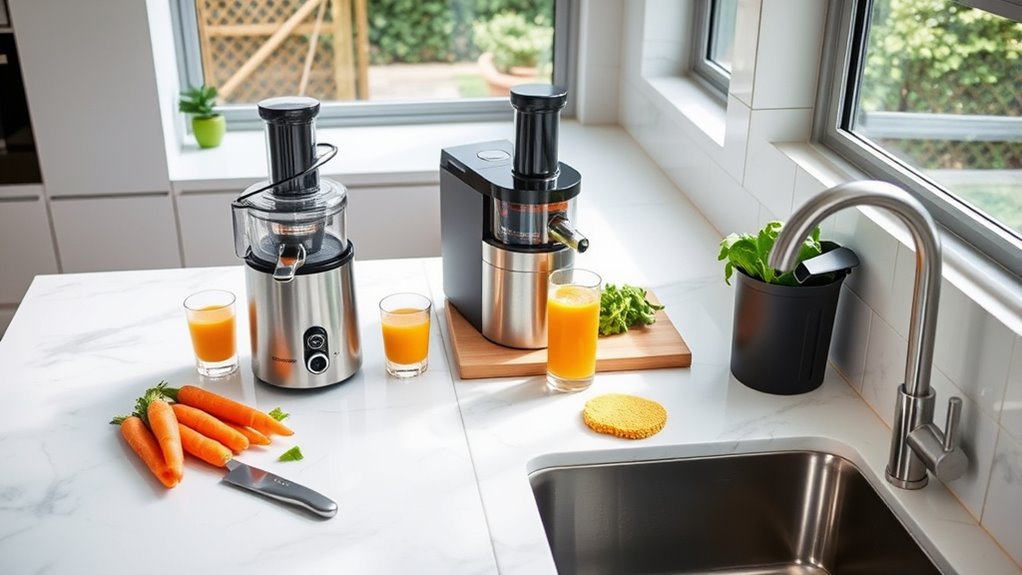
Creating an efficient kitchen workflow for juicing can make your process faster and more enjoyable. One of the first steps is organizing your ingredient storage. When your ingredients—fruits, vegetables, and herbs—are well-organized and within easy reach, you save time and reduce frustration. Use clear containers or bins to keep everything visible and sorted by type or frequency of use. Store perishables in the fridge in a way that allows quick access, and consider pre-washing or pre-cutting some ingredients if you juice regularly. This way, you can jump straight into juicing without rummaging through cluttered shelves or frantically searching for that last carrot or handful of spinach.
Organize your ingredient storage for faster, frustration-free juicing sessions.
Equally important is maintaining your equipment properly. Regular equipment maintenance prevents breakdowns and ensures your juicer performs at its best. After each use, clean the parts thoroughly to avoid pulp buildup and residue that can affect flavor and machine longevity. Check the blades, filter, and seals periodically, replacing worn or damaged parts to keep everything running smoothly. Keeping your juicer in top shape minimizes downtime and keeps your workflow seamless. When your equipment is well-maintained, you won’t waste time troubleshooting or cleaning up after a malfunction, allowing you to focus on the juicing process itself. Additionally, understanding the importance of contrast ratio can help you optimize your workspace lighting for better visibility and efficiency.
Streamlining your ingredient prep is the next step. Set up a dedicated prep station where you can wash, peel, and chop ingredients efficiently. Use sharp knives and cutting boards assigned solely for juicing ingredients to speed up the process and avoid cross-contamination. Prepping ingredients in batches can also help reduce ongoing prep time during your juicing sessions. When everything is prepped and ready, you can move quickly from one ingredient to the next without delay.
As you move through the workflow, keep your workspace clean and organized. Clear away debris, empty pulp containers, and wipe down surfaces regularly. This not only keeps your workspace hygienic but also makes the process more pleasant and less cluttered. When it’s time to finish, a quick clean-up of your juicer and tools ensures you’re ready for the next session. Properly storing your cleaned equipment in designated spots helps maintain order and speeds up your setup for future juicing.
electric juicer with easy clean features
As an affiliate, we earn on qualifying purchases.
As an affiliate, we earn on qualifying purchases.
Frequently Asked Questions
How Do I Choose the Best Juicer for My Needs?
To choose the best juicer for your needs, consider the different juicer types like centrifugal or masticating, based on your preferences. Think about noise levels—if you want a quieter option, masticating juicers usually operate more quietly. Also, evaluate how much juice you need and your budget. By weighing these factors, you’ll find a juicer that fits your lifestyle, making juicing easier and more enjoyable.
What Are the Safety Precautions During Juicing?
During juicing, you should always prioritize food allergy awareness and juice ingredient safety. Keep knives sharp and use a stable cutting board to prevent accidents. Wash your hands before handling ingredients, and thoroughly clean fruits and vegetables to remove pesticides or contaminants. Always separate allergenic ingredients, and stay attentive to any food allergy symptoms. Using safety gloves and proper equipment helps you avoid injuries and guarantees a safe, healthy juicing process.
How Long Can Fresh Juice Be Stored Safely?
Did you know fresh juice usually stays good for 24 to 48 hours? Proper juice storage is key to spoilage prevention. Keep your juice in an airtight container and refrigerate it promptly at or below 40°F. Avoid storing it for longer than two days, as nutrients decline and bacteria can develop. Always check for changes in smell, color, or taste before drinking to verify safety.
Are There Tips to Reduce Juice Waste?
To reduce juice waste, focus on juice preservation techniques like using airtight containers and refrigerating promptly. Plan your juicing sessions to make only what you’ll consume within a day or two. You can also repurpose leftover pulp in smoothies or baking, minimizing waste. Staying organized and mindful of portion sizes helps; this way, you maximize your juice and minimize waste, making your juicing process more efficient and eco-friendly.
How Can I Prevent Cross-Contamination During Cleaning?
Sure, because nothing says “fun” like cross-contamination, right? To prevent it, you follow strict sanitization protocols and always wash your storage containers thoroughly between uses. Use separate brushes and sponges for different tasks, and never reuse contaminated tools. By staying vigilant with these steps, you keep your juice safe and your kitchen free from unwanted surprises—because no one wants a side of bacteria with their juice.
Conclusion
By mastering this kitchen workflow, you’ll make juicing quicker and more enjoyable. Efficient prep, blending, and clean-up can save you up to 30 minutes each session. Did you know that over 60% of home juicers report increased energy and better health? So, keep your workspace organized, follow these steps, and enjoy fresh, nutritious drinks without the hassle. Happy juicing!
Halloween Picks
halloween
As an affiliate, we earn on qualifying purchases.