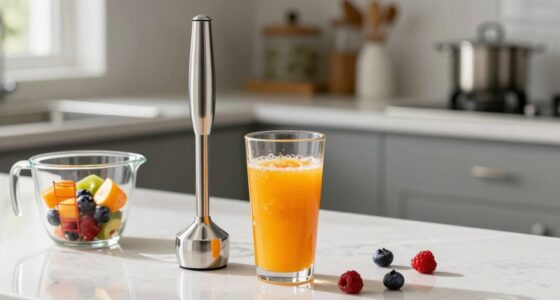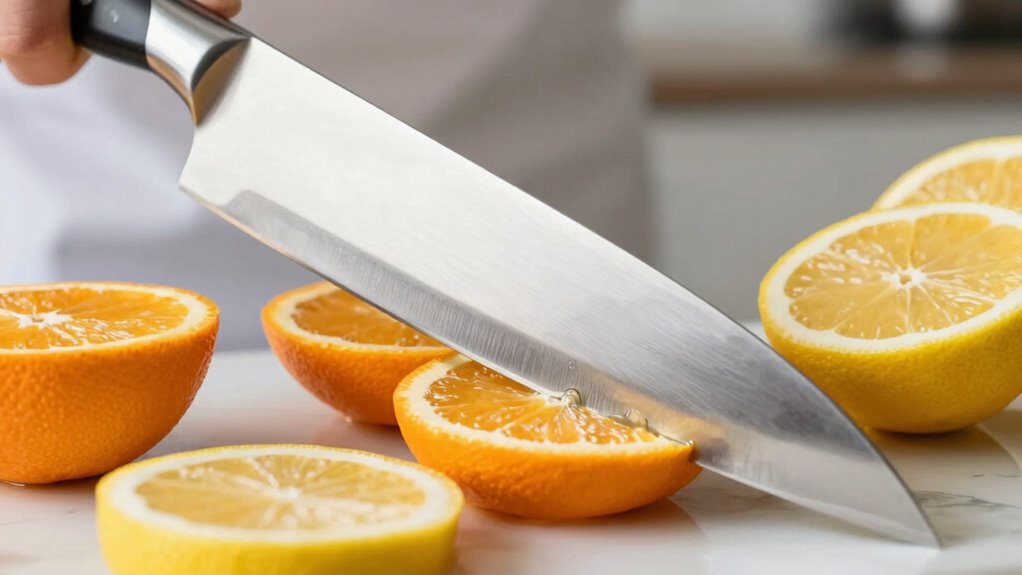

For faster, more efficient juicing prep, choose a chef knife with a curved, broad blade. This shape allows you to rock back and forth easily, making slicing smooth and quick. The broad surface provides better control over delicate fruits and soft produce, reducing effort and fatigue. Plus, a well-designed knife improves safety and consistency. If you’re curious about how proper knife shapes and maintenance can boost your prep, keep exploring these helpful tips.

Get kitchen staples and gadgets delivered free with Prime
- Fast, free delivery on millions of items
- Prime Video, Amazon Music and more included
- Member-only deals all year
Key Takeaways
- Curved, broad blades facilitate rocking motions, enabling faster, smoother slicing of fruits and vegetables.
- A wide, sharp blade increases surface contact, reducing cutting time and effort.
- Knife shapes that promote ergonomic handling improve control for quick, precise cuts.
- Properly maintained, sharp blades minimize force needed, speeding up prep tasks.
- Handles designed for comfort and control enhance speed during repetitive juicing prep.
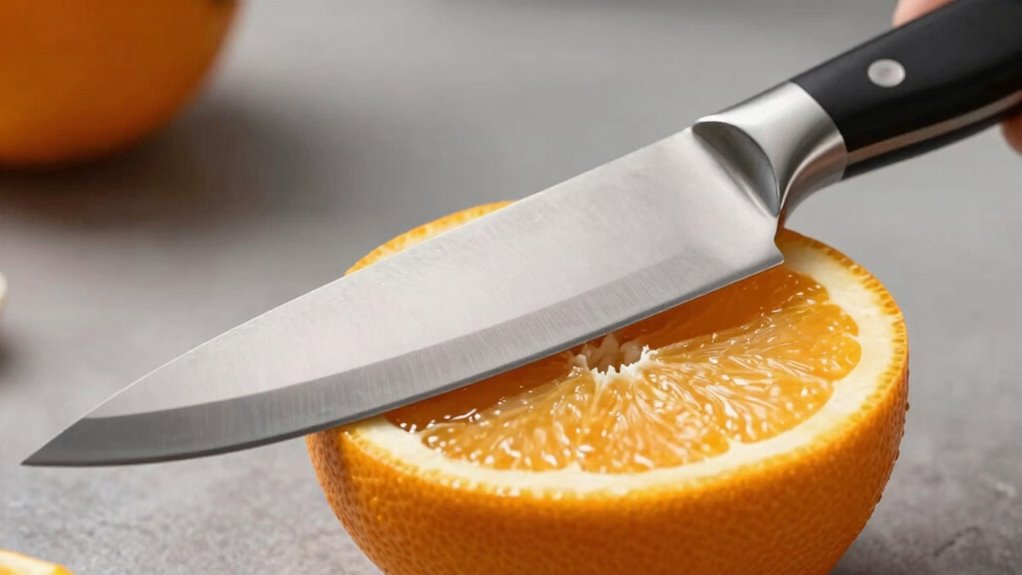
Are you wondering which chef knives are best suited for juicing prep? When it comes to preparing fresh fruits and vegetables for juicing, the shape of your knife can greatly impact your efficiency and safety. The right knife makes slicing smoother and faster, helping you get the most out of your produce without risking injury. Choosing a knife with an ideal shape isn’t just about speed; it’s also about maintaining good knife maintenance habits and guaranteeing juicing safety. A well-designed knife can reduce effort, minimize mess, and keep your ingredients uniform for better extraction.
Choosing the right chef knife shape enhances safety, efficiency, and precision in juicing prep.
For juicing prep, a chef’s knife with a curved, broad blade tends to be ideal. The curved shape allows you to rock the knife back and forth easily, which speeds up slicing and chopping. This motion is natural and requires less force, reducing fatigue during meal prep or juice-making sessions. The broad blade also offers a good surface area for control, so you can handle delicate fruits like berries or softer produce with precision. When you’re slicing through apples, carrots, or celery, the shape helps you maintain a consistent cut, which is essential for even juicing and maximizing yield. Additionally, understanding the importance of knife maintenance ensures your tools stay sharp and safe for continuous use. Proper knife maintenance is key to keeping your tools performing at their best. Regularly sharpening your knife guarantees clean cuts, which is vital for juicing safety. Dull blades tend to slip, increasing the risk of accidents or injury. Maintaining sharpness with a whetstone or a professional sharpener is crucial for optimal performance. Keep your knives sharp with a whetstone or a professional sharpener, and always wash and dry them immediately after use to prevent rust and corrosion. Proper storage, such as in a knife block or on a magnetic strip, also helps preserve the blade’s edge and prevents damage that could compromise your safety or the quality of your cuts. Moreover, selecting the right blade shape can enhance your cutting speed and comfort, especially during repetitive tasks. Additionally, choosing a comfortable handle design can improve grip and reduce hand fatigue during extended prep sessions. Focusing on ergonomic designs and handle comfort can significantly improve your overall control and reduce strain during prolonged use.
Juicing safety isn’t just about the knife’s shape; it’s about how you handle it. Always use a stable cutting surface and keep your fingers tucked in to avoid slips. A sharp, well-maintained knife will require less force, making your cuts safer and more controlled. When you’re slicing soft fruits, a gentle, steady motion is safer and more effective than forcing the knife through. Remember, a good shape for juicing prep not only makes your work faster but also reduces the risk of accidents. Proper knife maintenance and safety practices go hand-in-hand with choosing the right shape, ensuring you can prep your ingredients confidently and efficiently.
As an affiliate, we earn on qualifying purchases.
Frequently Asked Questions
What Is the Best Blade Material for Juicing Prep Knives?
For juicing prep knives, high-carbon stainless steel is your best choice because it balances durability and corrosion resistance. Focus on knife ergonomics for comfort during extended use, and look for a blade with the right thickness—too thick can slow you down, and too thin might be fragile. A well-crafted blade guarantees precise cuts, making your prep faster and more efficient, especially when dealing with fruits and vegetables.
How Do Handle Designs Affect Cutting Speed and Comfort?
Handle designs directly impact your cutting speed and comfort. Ergonomically shaped handles improve grip stability, allowing you to cut more precisely and efficiently. When your handle fits naturally in your hand, it reduces fatigue and increases control, making prep work faster. Choose handles with textured surfaces or contoured grips to guarantee a secure hold, especially during extended use. Comfortable, well-designed handles help you work more smoothly and confidently.
Are Serrated Knives Better Than Straight-Edged Ones for Juicing Prep?
Serrated knives aren’t the best for juicing prep—they cut through fruits and vegetables unevenly, wasting precious juice and risking accidents. Straight-edged knives slice smoothly and precisely, making your prep faster and safer. Prioritize kitchen safety by storing knives properly and handling them with care. This way, you avoid slips, cuts, and messes, ensuring your juicing process stays efficient and enjoyable. Sharp, straight blades are your best weapon for quick, safe prep.
How Often Should I Sharpen My Chef Knife for Optimal Performance?
You should sharpen your chef knife every 20 to 30 uses or when you notice it’s dulling. Regular knife maintenance keeps your cuts precise and safe. Use proper sharpening techniques, like honing with a whetstone or honing rod, to maintain the edge. Avoid over-sharpening, which can wear down the blade. Consistent upkeep guarantees your knife stays sharp, making your juicing prep faster and more efficient.
Can I Use a Paring Knife for Juicing Prep Tasks?
A paring knife can handle fruit peeling and vegetable slicing, but it’s not the best choice for juicing prep. As the saying goes, “A jack of all trades is a master of none.” While it’s handy for small tasks, a chef’s knife offers a broader blade for faster, more efficient cutting. For quicker fruit peeling and slicing, a larger, sharper chef’s knife will serve you better.
Conclusion
Choosing the right chef knife shape is like selecting the perfect brush for a masterpiece—you’ll find that a well-suited shape glides through your prep with ease, making each cut feel effortless. As you become more familiar with your knife’s form, your efficiency blossoms, turning mundane tasks into almost dances of precision. With the right blade in hand, your juicing prep transforms into a smooth, flowing process—almost like the gentle ripples of a calm lake after a breeze.
Columbus Day / Indigenous Peoples' Day Picks
long weekend sales
As an affiliate, we earn on qualifying purchases.