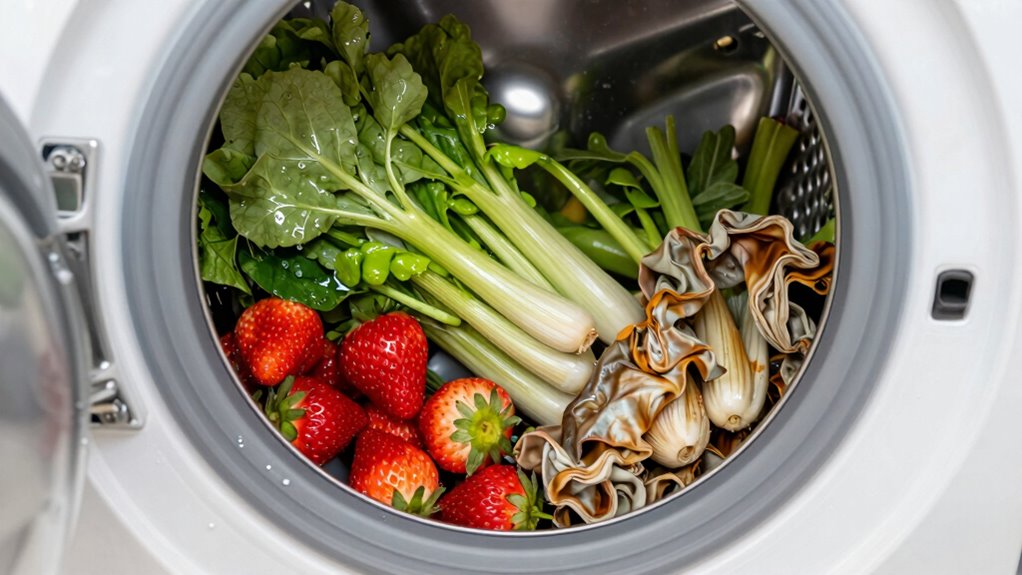
To wash produce at home effectively, spray or rinse with water or vinegar solutions for a quick clean without over-soaking. Over-soaking can cause produce to lose flavor, texture, and nutrients, and promote mold growth. Use a salad spinner or towel to dry produce thoroughly, preventing spoilage. Balancing thorough cleaning with proper drying is key to keeping your fruits and vegetables fresh and safe. Learn more tips to avoid over-soaking and keep your produce at its best.

Get kitchen staples and gadgets delivered free with Prime
- Fast, free delivery on millions of items
- Prime Video, Amazon Music and more included
- Member-only deals all year
Key Takeaways
- Proper washing uses quick rinses or sprays, not prolonged soaking, to remove contaminants without damaging produce.
- Over-soaking can leach nutrients, alter texture, and promote mold growth on fruits and greens.
- Using a salad spinner or towel ensures thorough drying after washing, preventing spoilage.
- Vinegar solutions are effective when used briefly, avoiding extended exposure that can degrade produce quality.
- Clear differentiation exists between effective cleaning and over-soaking, which can harm produce’s flavor and shelf life.
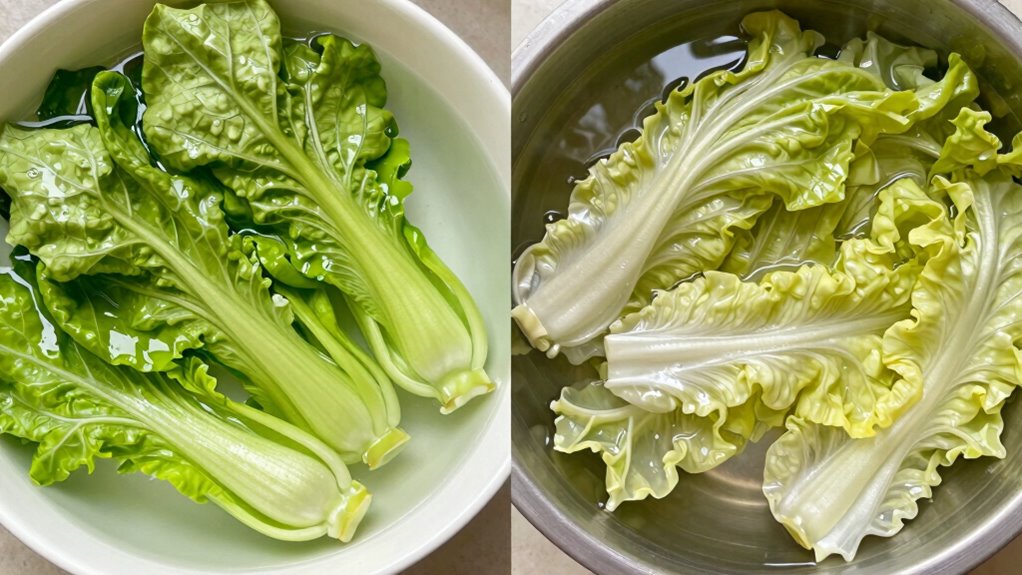
Ever wondered how to guarantee your fruits and vegetables are thoroughly clean before eating? It’s a common concern, especially when you want to remove dirt, bacteria, and pesticides. You might have heard of using handheld sprayers and vinegar solutions to make your produce safer and fresher. These tools and solutions can be effective when used correctly, but it’s important to find a balance between cleaning and over-soaking. Over-soaking your produce can lead to loss of flavor, texture, and nutrients, and sometimes even promote mold growth if not dried properly.
Using handheld sprayers is one of the easiest ways to rinse your produce efficiently. They give you controlled, direct water streams that can remove surface dirt and residues without excessive soaking. When combined with vinegar solutions—typically a mix of water and a small amount of vinegar—you can enhance the cleaning process. Vinegar acts as a natural disinfectant and helps break down waxes and pesticide residues. To use this method effectively, fill a spray bottle with a vinegar solution, spray your fruits and vegetables thoroughly, and then rinse with cold water. This method prevents you from immersing your produce in water for too long, reducing the risk of over-soaking.
Use handheld sprayers with vinegar solutions for quick, effective produce cleaning without over-soaking.
However, it’s important not to leave your produce in vinegar solutions for extended periods. Soaking fruits and vegetables for too long can cause textural changes and diminish flavor. Plus, some produce, like berries or leafy greens, can absorb excess moisture, leading to spoilage or mold if not dried properly afterward. Proper drying methods, such as using a salad spinner or a clean towel, help remove residual moisture and prevent mold growth. Additionally, choosing the right drying method can ensure your produce stays fresh longer. Instead, aim for a quick spray or rinse, ensuring all surfaces are covered, then dry your produce with a clean towel or use a salad spinner. This approach keeps your produce fresh and maintains its quality.
Another tip is to avoid using harsh chemicals or leaving produce in vinegar solutions overnight. The goal is to remove surface contaminants without damaging the produce or compromising its taste. Using a gentle vinegar solution and a thorough rinse with cold water strikes the right balance. Remember, the key is to clean efficiently without crossing into over-soaking territory. If you’re concerned about pesticides or bacteria, a vinegar spray followed by a quick rinse can be just enough. Overdoing it can lead to unnecessary spoilage or loss of nutrients, so it’s best to keep your produce washing routine simple, quick, and effective. Proper air circulation and drying methods are also essential to prevent mold growth after rinsing.
produce spray bottle for cleaning
As an affiliate, we earn on qualifying purchases.
As an affiliate, we earn on qualifying purchases.
Frequently Asked Questions
Can Produce Washers Remove Pesticides Effectively?
Produce washers can help reduce pesticide residues but may not remove all chemical residues completely. Using effective washing techniques, like scrubbing and soaking, can improve results. However, some pesticides are absorbed into produce, making them harder to eliminate. To maximize safety, combine washing with peeling or choosing organic options when possible. Remember, thorough washing is a helpful step but might not fully eliminate all pesticides.
What Are the Best Natural Solutions for Produce Washing?
Did you know that studies show natural alternatives can markedly improve produce safety? For effective produce washing, use solutions like a mixture of vinegar and water or baking soda and water. These natural options help remove dirt and pesticides without harmful chemicals. They’re safe, affordable, and easy to prepare, making them ideal for maintaining produce safety at home. Always rinse thoroughly afterward for the best results.
How Long Is Too Long to Soak Produce?
You shouldn’t soak produce for more than 5-10 minutes, as extended soaking can damage its texture and lead to nutrient loss. The soaking duration matters because too long can make produce soggy or mushy, especially delicate items like berries or leafy greens. For best results, rinse thoroughly, then soak briefly to remove dirt and pesticides without compromising quality. Keep it under 10 minutes to maintain freshness and ideal produce texture.
Are There Risks of Soaking Produce Overnight?
Yes, soaking produce overnight poses risks like bacterial growth and produce texture alteration. When you leave produce submerged for too long, bacteria can multiply, increasing your risk of illness. Additionally, prolonged soaking can cause produce to become mushy or lose its crispness. To stay safe and maintain quality, it’s best to limit soaking to a few minutes and rinse thoroughly afterward, avoiding overnight soaking altogether.
Should I Wash Organic Produce Differently?
Think of organic produce as delicate gems that need gentle handling. You should wash organic produce with extra care, using soft washing techniques that remove dirt and pesticides without stripping natural layers. Rinse thoroughly under cool water, and consider using a brush for firm-skinned items. Since organic handling often involves fewer chemicals, gentle washing guarantees you preserve their natural goodness while making them safe to eat.
Conclusion
By now, you see how essential proper produce washing is for safe, fresh meals. Remember, the goal isn’t just to clean but to avoid over-soaking, which can damage your fruits and vegetables. Are you truly protecting your health if you’re not mindful of the washing process? Next time, take a moment to find that perfect balance—clean enough to remove contaminants, but gentle enough to preserve your produce’s quality. Your health and taste buds will thank you.
NFL season / tailgating Picks
team gear
As an affiliate, we earn on qualifying purchases.