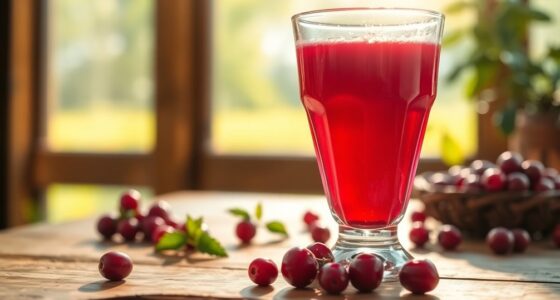
If you use a citrus juicer improperly or pick fruit that’s overripe or stored too long, you may extract bitter compounds from the peel and pith, giving your juice a harsh edge. Applying too much pressure or breaking through the pith releases bitter oils, while overprocessing can worsen the bitterness. Choosing ripe, fresh fruit and using gentle techniques helps, but there’s more to discover about avoiding bitterness and perfecting your juicing method.

Get kitchen staples and gadgets delivered free with Prime
- Fast, free delivery on millions of items
- Prime Video, Amazon Music and more included
- Member-only deals all year
Key Takeaways
- Overpressing or pressing too hard releases bitter oils from the peel and pith.
- Juicing through white pith increases the extraction of bitter compounds.
- Using overripe or stored citrus enhances bitterness in the juice.
- Excessive oxidation during juicing or storage accelerates flavor degradation and bitterness.
- Incorporating too much peel or pith during juicing introduces a harsh, bitter edge.
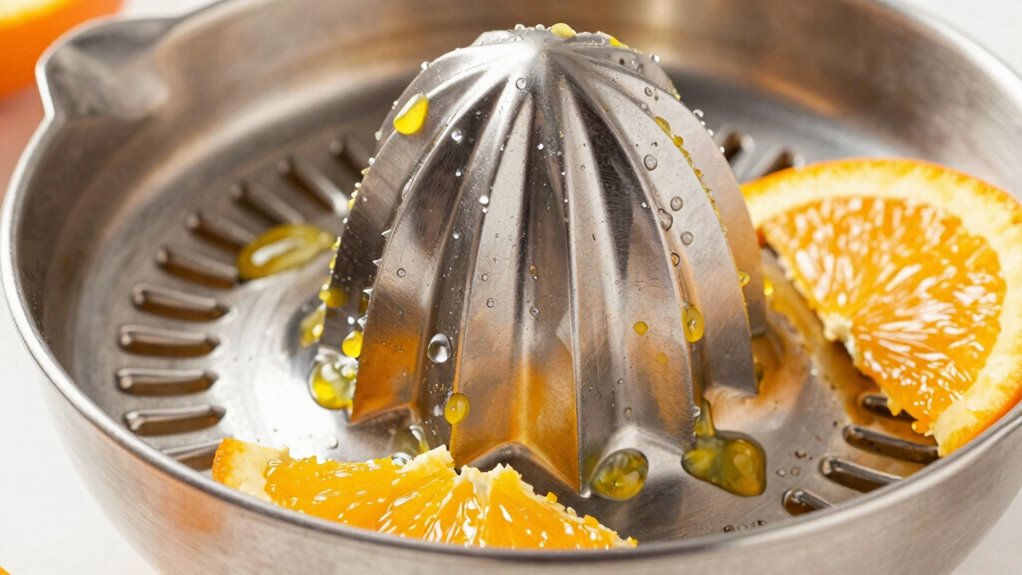
Citrus juicers are popular tools for extracting fresh juice, but they can sometimes introduce bitterness into your drink. This bitterness often surprises people who expect a smooth, sweet burst of citrus flavor. To prevent this, you need to understand how juicing techniques and flavor enhancement play a role in the final taste. When you use a citrus juicer, especially if you’re not careful with your approach, you risk extracting bitter compounds from the peel or pith, which can overpower the natural sweetness of the fruit. This is why proper technique is essential for achieving optimal flavor. The key is to refine your juicing techniques so you can maximize flavor without the harsh, bitter edge.
One way to improve flavor enhancement is to be mindful of how much of the pith and peel you include. The white layer beneath the peel, called the pith, contains compounds that can taste bitter when juiced. When you press too hard or use a juicing method that grinds through the pith, bitterness can quickly develop. To avoid this, you should peel your citrus fruits carefully, removing as much of the white pith as possible before juicing. This simple step makes a significant difference in the overall taste of your juice, allowing the natural sweetness and acidity to shine through. Additionally, selecting citrus varieties with naturally lower bitterness can further improve your results.
Your juicing techniques also matter. If you use a manual citrus press, squeeze gently to prevent breaking the pith or overextracting bitter oils. When using an electric juicer, choose one with adjustable settings to control pressure, and avoid over-processing the fruit. Additionally, rolling the fruit on the countertop before juicing helps to break down the membranes, releasing more juice and flavor without needing to apply excessive force. This technique preserves the fruit’s delicate sugars and acids, contributing to a better-tasting juice. Being aware of the oxidation process can also help in maintaining the fresh flavor and reducing bitterness. Moreover, choosing juicing equipment that minimizes oxidation can help preserve the fruit’s natural qualities. Proper storage and handling can also impact the presence of bitterness, as exposure to air and improper storage can accelerate flavor degradation.
Another aspect of juicing techniques that impacts bitterness involves the timing and storage of your citrus. Juicing fruits that are overly ripe or stored for too long can increase the likelihood of bitterness. Use fresh, ripe citrus for the best flavor, and try to consume your juice promptly after extraction to preserve its natural sweetness. If you plan to store it, keep it refrigerated and consume within a day or two to prevent flavor degradation. Paying attention to fruit ripeness ensures you get the most vibrant, flavorful juice possible. Properly selecting and storing citrus can significantly improve the overall quality of your juice and help avoid bitterness that stems from poor handling.
As an affiliate, we earn on qualifying purchases.
Frequently Asked Questions
How Does Juicer Type Affect Bitterness in Citrus Juice?
Your juicer type directly impacts bitterness because of juicer efficiency and pulp control. Manual hand-press juicers typically extract less bitter oils, offering better pulp control, which reduces bitterness. In contrast, high-speed electric juicers can over-extract, releasing bitter compounds from the peel and pulp. Choosing a juicer with adjustable pulp control helps you manage bitterness, ensuring a smoother, less harsh citrus juice.
Can Adjusting Juicing Methods Reduce Bitterness?
Yes, adjusting your juicing methods can reduce bitterness. Focus on flavor balancing by limiting the amount of pulp you include, as excess pulp can release bitter compounds. Use gentle juicing techniques to avoid breaking down bitter membranes, and consider straining the juice to remove residual pulp. These steps help create a smoother, sweeter taste, making your citrus juice more enjoyable without harsh edges.
Does Fruit Ripeness Influence Bitterness Levels?
Your fruit’s ripeness dramatically impacts bitterness—unripe fruit can taste like a bitter storm! When fruit is perfectly ripe, it offers a balanced flavor with less harshness, thanks to the pulp influence that enhances sweetness. Overripe fruit might become overly sweet or ferment, altering the flavor balance and possibly increasing bitterness. So, choosing ripe fruit guarantees a smoother, sweeter juice, minimizing that unpleasant harsh edge.
Are Certain Citrus Varieties Naturally Less Bitter?
Yes, some citrus cultivars are naturally less bitter due to genetic factors. You’ll find varieties like Valencia oranges and Meyer lemons tend to have milder flavors, making them ideal if you’re sensitive to bitterness. These differences are rooted in the plant’s genetics, which influence the balance of sugars and bitter compounds. So, choosing specific citrus cultivars can help you enjoy sweeter, less harsh-tasting juice without extra effort.
How Does Storage Impact Citrus Bitterness?
Storing citrus properly can reduce bitterness. Keep your citrus at a cool storage temperature, ideally around 45-48°F, to slow down the breakdown of bitter compounds. Use packaging materials like perforated plastic bags or mesh produce bags to allow airflow, which helps maintain freshness and prevent the fruit from over-ripening. Avoid storing citrus in warm or airtight containers, as these conditions can accelerate bitterness development and spoilage.
Conclusion
So, next time your citrus juice tastes unexpectedly harsh, remember it might be the bitterness from over-juicing or using the wrong type of citrus. Adjust your technique, choose ripe fruits, and avoid squeezing too aggressively. After all, isn’t enjoying fresh juice about savoring its natural sweetness? With a little care, you can enjoy perfectly smooth, flavorful citrus every time—no harsh edges included. Ready to perfect your juicing game?
Columbus Day / Indigenous Peoples' Day Picks
long weekend sales
As an affiliate, we earn on qualifying purchases.