
When a juicer claims to be “easy to clean,” it’s worth scrutinizing its materials and design. Look for stainless steel or BPA-free plastic that resist stains and odors, and check if parts are dishwasher-safe and simple to disassemble. Avoid models with intricate components or hard-to-reach crevices, which can make cleanup tricky. If you’re curious about how to pick the best, more tips are just ahead to help you make an informed choice.

Get kitchen staples and gadgets delivered free — and shop member deals
- Fast, free delivery on millions of items
- Access to Prime Big Deal Days deals on October 6–7
- Prime Video, Amazon Music and more included
Key Takeaways
- Verify if the juicer is made from dishwasher-safe, non-porous materials like stainless steel or BPA-free plastic.
- Check for simple, tool-free disassembly of parts to facilitate quick cleaning.
- Review user feedback on cleaning routines and any reported difficulties.
- Assess if innovative features like self-cleaning cycles or integrated brushes are included.
- Examine product instructions and claims to ensure they align with real-world ease of maintenance.
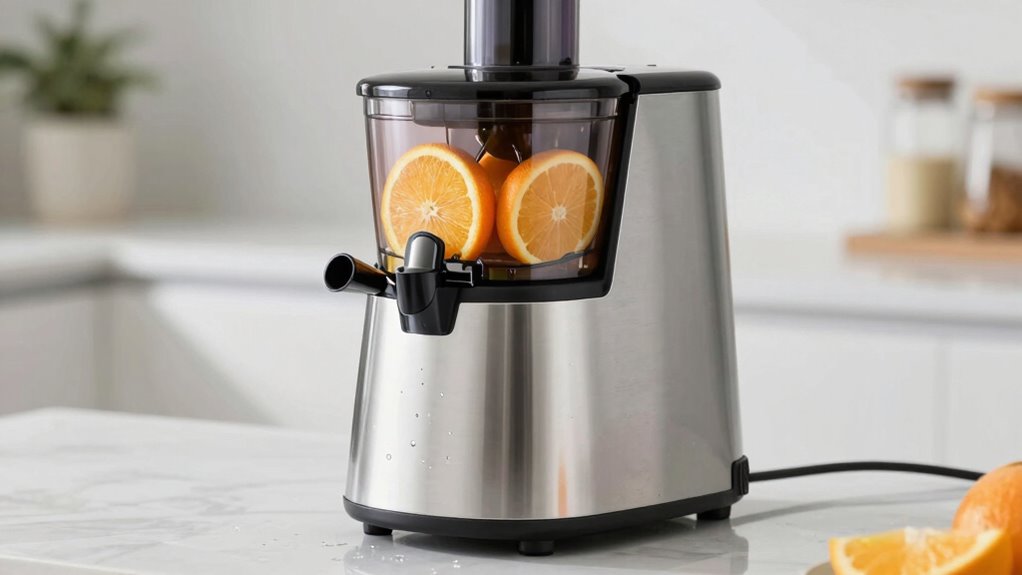
When it comes to juicers, nobody wants to spend extra time cleaning complicated parts. That’s why the “easy to clean” claim catches your eye. You probably imagine a machine that simplifies your routine, letting you enjoy fresh juice without the hassle of scrubbing for hours afterward. But before you get too excited, it’s worth taking a closer look at what this claim really means. Not all juicers are created equal, and some features that seem promising at first glance may not hold up in daily use.
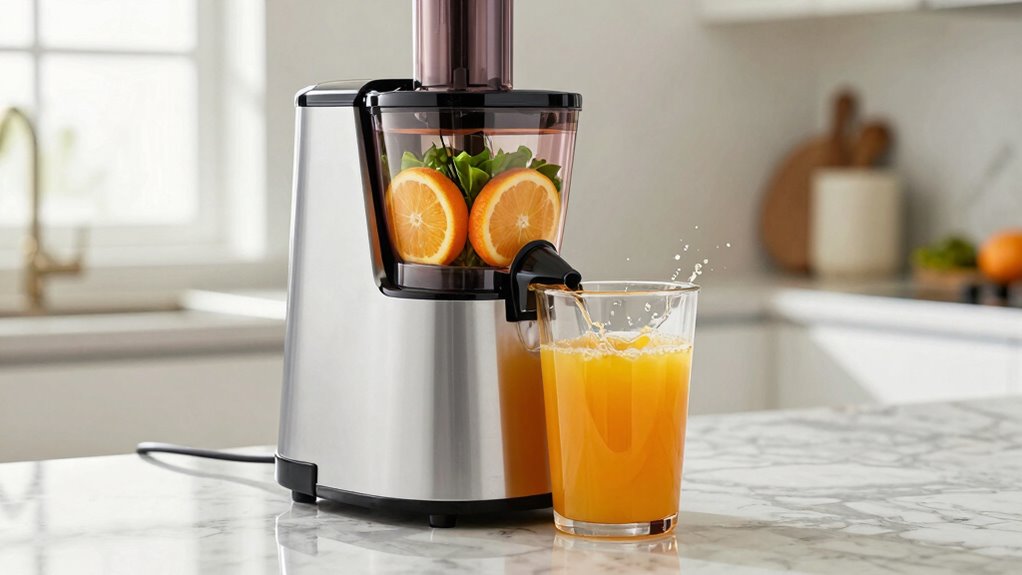
One of the key factors behind an easy-to-clean juicer is its juicer material. Materials like stainless steel or high-quality BPA-free plastic are common choices. Stainless steel, for instance, not only looks sleek but also resists staining and odors, making cleanup less of a chore. Plastic parts, if made from durable and dishwasher-safe materials, can *dramatically* reduce the time you spend cleaning. Conversely, juicers with many small or intricate parts—like fine mesh filters or multiple attachments—may look promising but can complicate cleaning routines. When shopping, consider how accessible and straightforward the parts are for rinsing or scrubbing. The simpler the design and the fewer the crevices, the *less* time you’ll need to spend cleaning.
Choose durable, dishwasher-safe materials and simple designs to make cleaning your juicer quick and effortless.
Another important aspect is the cleaning frequency. While some juicers are designed for quick daily rinses, others might require more thorough cleaning after each use. If you’re someone who makes juice every day, it pays to choose a model that minimizes cleaning time, enabling you to stick with your routine without feeling overwhelmed. The more often you juice, the more critical it becomes that the juicer’s parts are easy to disassemble and clean. Look for features such as removable, dishwasher-safe components and smooth surfaces that don’t trap pulp or residue. This way, your cleaning process remains quick and manageable, and you’re more likely to use the juicer regularly. Additionally, understanding material durability can help you select a model that withstands frequent cleaning without degradation. Regular maintenance and proper cleaning techniques can also prevent bacterial buildup and extend the lifespan of your appliance. Investing in a juicer with easy-to-clean features can also help extend the lifespan of the appliance, ensuring it remains functional and attractive over time.
Furthermore, choosing a juicer with innovative cleaning features—like self-cleaning cycles or integrated brushes—can further streamline the process, especially for those with busy lifestyles. In the end, an “easy to clean” juicer claim isn’t just about how quickly you can wipe it down. It’s about the combination of juicer material, design, and your cleaning frequency. A well-made juicer with quality materials and thoughtful design can save you time and frustration, making your juicing experience more enjoyable. So, when evaluating these claims, dig a little deeper. Check the product details, user reviews, and maintenance instructions to ensure the juicer truly lives up to its promise of being easy to clean. That way, you’ll get a device that fits seamlessly into your lifestyle, letting you focus on enjoying fresh, healthy juice every day.
As an affiliate, we earn on qualifying purchases.
Frequently Asked Questions
How Long Does It Typically Take to Clean an Easy-To-Clean Juicer?
Cleaning your easy-to-clean juicer usually takes about 5 to 10 minutes, depending on how often you use it. You should regularly wash juicer accessories, like the pulp container and blades, after each use. Establishing a cleaning schedule helps prevent buildup and guarantees your juicer stays in top shape. Quick rinses after juicing and occasional deep cleaning make the process faster, often keeping cleanup under ten minutes.
Are There Specific Cleaning Products Recommended for These Juicers?
Think of cleaning your juicer as tending a garden—using the right tools guarantees its longevity. For these appliances, avoid cleaning myths like harsh chemicals; instead, opt for gentle, non-abrasive products. Mild dish soap and warm water usually suffice, helping preserve product durability. Specialized brushes also make cleaning easier without damaging parts. This way, your juicer stays efficient, clean, and ready for many more healthy blends.
Can Dishwasher-Safe Juicers Handle High-Temperature Cycles?
Dishwasher-safe juicers can typically handle high-temperature cycles, but you should check the manufacturer’s guidelines to guarantee material compatibility. High temperatures can impact juicer durability over time, especially if parts aren’t designed for such conditions. If your juicer’s materials are heat-resistant and labeled dishwasher-safe, you can confidently use high-temperature cycles. Otherwise, hand washing remains the safest option to preserve your juicer’s longevity.
How Often Should I Deep-Clean My Juicer?
You should deep-clean your juicer every 1-2 weeks, depending on how often you use it. Regular cleaning of juicer accessories prevents buildup and guarantees ideal performance. If you juice daily, consider deep-cleaning weekly; for occasional use, biweekly might suffice. Always follow the manufacturer’s instructions for cleaning frequency, and don’t forget to thoroughly clean all parts to avoid lingering residues that can affect juice quality and hygiene.
Do Easy-To-Clean Juicers Maintain Performance After Multiple Washes?
Easy-to-clean juicers generally maintain their performance after multiple washes if you follow proper cleaning frequency. Regular cleaning prevents residue buildup, which can affect juicer durability and efficiency. Most models are designed to withstand frequent cleaning, so their performance stays consistent over time. Just make certain you don’t skip deep cleaning sessions and use gentle brushes to keep all parts in top condition, extending your juicer’s lifespan.
Conclusion
While many juicers boast about being easy to clean, only a few truly live up to that promise. Did you know that a staggering 60% of users report spending more time cleaning their juicers than enjoying their freshly made juice? Before you buy, make sure to check reviews and understand the cleaning process. An easy-to-clean juicer can save you time and hassle, making your juice moments more enjoyable and less of a chore.
Halloween Picks
halloween
As an affiliate, we earn on qualifying purchases.