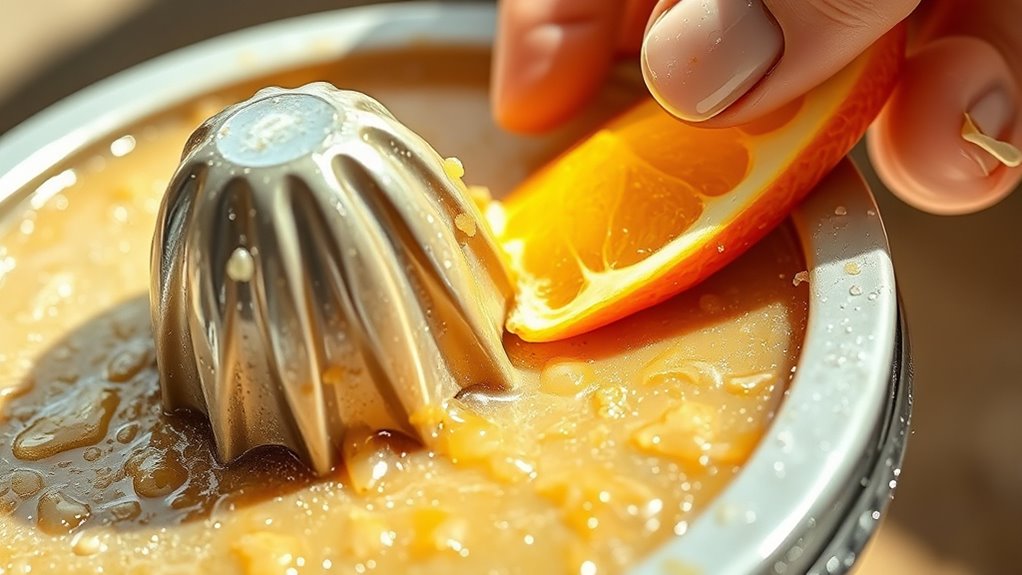

To clean sticky juicers, start by disassembling the parts and soaking them in a warm water and vinegar solution for about 10 minutes. Use a sponge sprinkled with baking soda to gently scrub away citrus oils and pulp. Wipe the exterior with a lemon-soaked cloth for fresh scent and odor removal. Make sure to dry everything thoroughly to prevent mold. Keep your juicer spotless; more citrus degreasing tricks could make your cleaning routine even easier.
Key Takeaways
- Use a baking soda paste on sticky areas to gently scrub away citrus oils and pulp residues.
- Soak juicer parts in a vinegar and water solution for 10 minutes to dissolve stubborn citrus grease.
- Immediately rinse components after juicing to prevent citrus residues from hardening and becoming sticky.
- Wipe external surfaces with a lemon juice damp cloth to naturally cut through citrus oils and eliminate stickiness.
- Dry all parts thoroughly after cleaning to prevent moisture buildup and future sticky buildup.
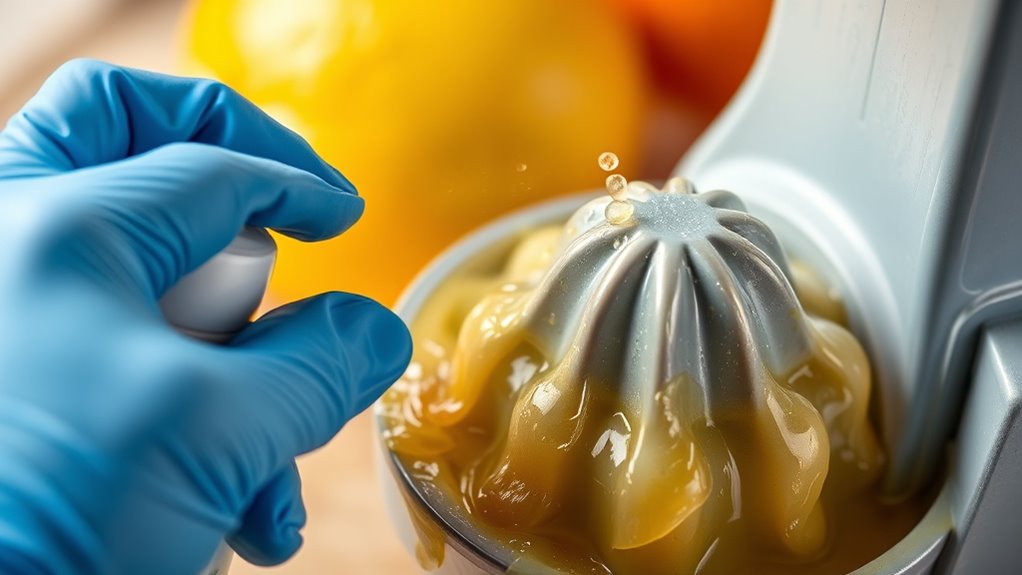
Have you ever wondered how to effectively clean a sticky juicer? It’s a common problem, especially if you tend to juice citrus fruits regularly. Sticky residues not only make your appliance look unsightly but can also affect its performance over time. Proper juicer maintenance involves more than just rinsing after use; it requires a strategic approach to remove stubborn grime. Citrus cleaning tips are especially useful since citrus juices tend to leave behind oils and sticky pulp that cling stubbornly to the surfaces. The good news is, with a few simple tricks, you can keep your juicer clean and functioning smoothly.
Discover simple citrus cleaning tips to keep your juicer spotless and performing at its best.
Start by disassembling your juicer carefully. Remove all parts, including the filter, pulp container, and any detachable blades. Rinsing these parts immediately after juicing helps prevent the buildup of sticky substances. Fill a basin with warm water and add a few drops of mild dish soap. Submerge the components and let them soak for a few minutes. This initial step loosens up the citrus residues and makes scrubbing easier. For tougher spots, sprinkle some baking soda directly onto a soft sponge or brush. Baking soda acts as a gentle abrasive and is excellent for breaking down sticky citrus oils without damaging your appliance. When scrubbing, pay close attention to corners and crevices where pulp and oils tend to accumulate.
If the residues are particularly stubborn, don’t hesitate to use a mixture of vinegar and water. Vinegar is a natural degreaser that cuts through citrus oils and dissolves sticky residues effectively. Mix equal parts white vinegar and warm water, then soak the parts for about 10 minutes. After soaking, scrub gently with a soft brush or sponge. Rinse thoroughly with warm water to remove any remaining vinegar smell and residues. To keep your juicer fresh and odor-free, wipe down the exterior with a damp cloth soaked in lemon juice or a citrus-based cleaner. This not only cleans but also leaves a pleasant citrus scent, reinforcing those citrus cleaning tips. Additionally, incorporating robotics technology in appliances like juicers is an emerging trend that can improve cleaning efficiency and maintenance.
Once all parts are thoroughly cleaned, dry them completely before reassembling. Moisture can promote mold or bacteria growth, so a thorough air drying or wiping with a clean towel is essential. Regular maintenance, including these citrus cleaning tips, extends your juicer’s lifespan and ensures it operates efficiently. By incorporating these simple steps into your juicer maintenance routine, you’ll prevent sticky build-up and keep your appliance in top shape for all your fresh juice needs. Keep your juicer clean, and it will reward you with better juice quality and longer durability.
Frequently Asked Questions
Can I Use Baking Soda to Clean Sticky Juicers?
Yes, you can use baking soda to clean sticky juicers. It’s a popular juicer cleaning tip because baking soda effectively breaks down residue and grease. If you run out of baking soda, consider alternatives like vinegar or lemon juice, which also work well for citrus degreasing. Apply a paste of baking soda and water, scrub gently, then rinse thoroughly. This keeps your juicer clean and ready for the next use.
How Often Should I Clean My Juicer for Optimal Performance?
You should clean your juicer after every use to maintain ideal performance. Regular juicer maintenance prevents buildup and ensures it works efficiently. Stick to consistent cleaning schedules, especially if you juice frequently, to avoid sticky residues. Use citrus degreasing tricks for tough spots. By cleaning your juicer promptly and regularly, you extend its lifespan and keep it functioning smoothly, making your juicing experience hassle-free and more enjoyable.
Are There Eco-Friendly Citrus Degreasers Available?
Imagine you’re cleaning your juicer after a busy weekend, and you want an eco-friendly solution. Yes, plenty of plant-based degreasers are available, like biodegradable cleaning products made from natural ingredients. These options effectively cut through citrus residues while being gentle on the environment. Look for brands that specify biodegradable cleaning and plant-based degreasers on their labels, ensuring you’re choosing a safe, sustainable way to keep your juicer spotless.
Can Citrus Acids Damage Juicer Components?
Citrus acids can damage juicer components if you’re not careful, especially if they aren’t compatible with your juicer’s materials. To guarantee citrus acid safety, check your juicer’s manufacturer guidelines for material compatibility. Usually, plastic and stainless steel handle citrus acids well, but some plastics may degrade over time. Always dilute citrus juice and avoid prolonged contact to protect your juicer’s longevity.
What Should I Do if Citrus Residue Persists After Cleaning?
If citrus residue persists after cleaning, you should try additional cleaning techniques to remove residual buildup. Use a mixture of baking soda and water to scrub stubborn spots gently, or soak removable parts in warm soapy water. Rinse thoroughly and dry. Regular maintenance prevents future buildup, ensuring your juicer stays clean and efficient. Don’t hesitate to repeat these steps if necessary to keep your juicer in prime condition.
Conclusion
Now, next time your juicer gets sticky, try the citrus trick—you’ll find it cuts through grease and residue effortlessly. Some say citrus’s natural acids break down stubborn oils better than commercial cleaners, and research supports its effectiveness. So, not only is it eco-friendly and affordable, but it’s also surprisingly powerful. Give it a shot, and enjoy a clean, squeaky juicer without harsh chemicals. Your kitchen routine just got a whole lot easier!

Cindy thoroughly researches juicing trends, techniques, and recipes to provide readers with practical advice and inspiration. Her writing style is accessible, engaging, and designed to make complex concepts easy to understand. Cindy’s dedication to promoting the advantages of juicing shines through her work, empowering readers to make positive changes in their lives through the simple act of juicing.