If you prioritize nutrient preservation, vibrant colors, and smoother juice, a cold-pressed juicer suits your lifestyle, though it takes more time and costs more. If you’re after quick, easy clean-up and affordability, a centrifugal juicer works better, even if some nutrients are lost. Think about your balance of health, convenience, and budget before choosing. Keep exploring to find out how each option can fit seamlessly into your daily routine.
Key Takeaways
- Cold-pressed juicers preserve more nutrients and produce clearer, pulp-free juice, ideal for health-conscious users prioritizing quality.
- Centrifugal juicers are faster, more affordable, and easier to clean, suited for busy mornings and beginner users.
- Cold-pressed machines require longer preparation time but offer superior juice appearance and nutritional retention.
- Centrifugal juicers operate quickly, making them better for those valuing convenience and quick results over maximum nutrient preservation.
- Your choice depends on lifestyle priorities: opt for cold-pressed if quality and nutrients matter most; choose centrifugal for speed and simplicity.
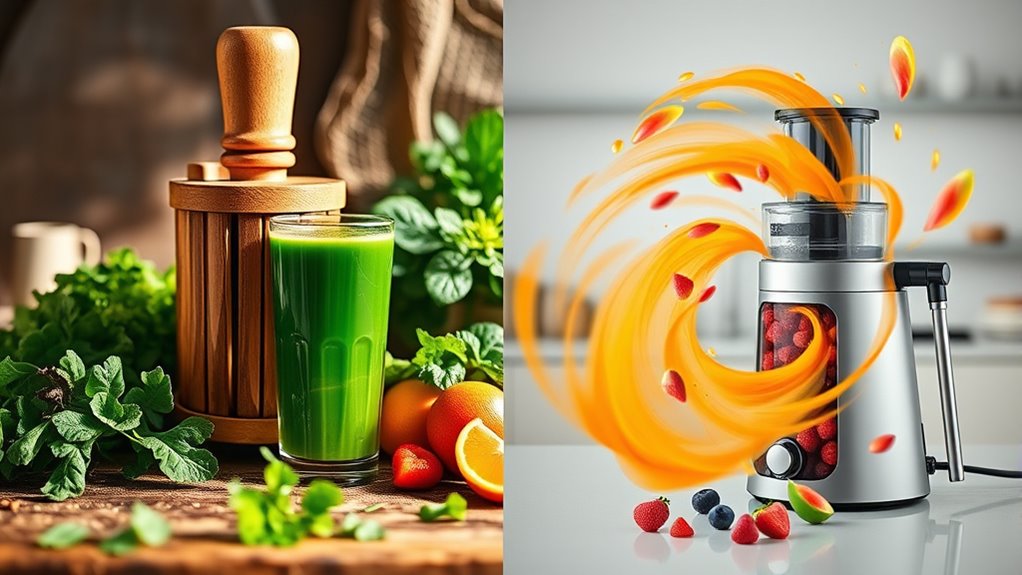
When choosing between cold-pressed and centrifugal methods, understanding their differences can help you select the best option for your needs. Both techniques process fruits and vegetables into juice, but they do so in very different ways, impacting the final product’s quality. If you prioritize nutrient retention, cold-pressed juicers often come out ahead. Because they operate slowly and apply minimal heat, they preserve more of the natural vitamins, enzymes, and antioxidants found in produce. This means your juice retains more of its original nutritional value, making it a healthier choice if you’re looking to maximize health benefits. Additionally, cold-pressed juicers tend to produce juice with superior clarity. Their gentle extraction process results in a smoother, more visually appealing beverage, with less pulp and separation, which many find more enjoyable to drink. Moreover, cold-pressed methods tend to maintain the color accuracy of the juice, enhancing its visual appeal and making it more appetizing.
In contrast, centrifugal juicers work at high speeds, using rapidly spinning blades to shred produce, then separating juice from pulp through centrifugal force. This process is faster and more convenient, especially if you need a quick morning boost. However, the high-speed operation generates heat, which can degrade some delicate nutrients, reducing the overall nutrient retention in your juice. The juice produced by centrifugal machines often appears less clear, with more pulp and foam, which can be less appealing if you prefer a smooth, clean look. The increased pulp content might also mean you’re getting slightly less juice yield compared to cold-pressed machines, although this depends on the produce used.
While centrifugal juicers are more affordable and easier to clean, they might not be the best choice if your priority is nutrient density and juice clarity. Cold-pressed juicers tend to be pricier and require more effort to clean, but they give you a product that’s richer in nutrients and more visually appealing. If you’re someone who enjoys the full benefits of fresh juice and prefers a clear, pulp-free beverage, cold-pressed is likely your best bet. On the other hand, if convenience and speed are more important, or if you’re just starting out, centrifugal juicers can still provide healthy juice, albeit with some compromises on nutrient retention and clarity. Ultimately, your choice depends on your lifestyle, budget, and what qualities you value most in your juice.
Frequently Asked Questions
Which Type of Juicer Is Easier to Clean?
You’ll find centrifugal juicers easier to clean because of their simpler design and fewer parts, making maintenance simplicity a big plus. Cold-pressed juicers often have more components, which can take more time and effort to clean thoroughly. If quick cleaning is important to you, a centrifugal juicer is the way to go. Plus, you’ll appreciate how less time-consuming it is to keep it in tip-top shape.
Are Cold-Pressed Juices More Nutritious Than Centrifugal?
Cold-pressed juices generally have more nutritional content and health benefits than centrifugal juices because they retain more vitamins, enzymes, and nutrients due to the gentle extraction process. This method minimizes heat and oxidation, preserving the juice’s freshness and nutritional value. If you prioritize maximum health benefits and nutrient retention, cold-pressed juices are the better choice for you, offering a richer, more nutritious drinking experience.
How Long Do Cold-Pressed Juices Last?
Cold-pressed juices typically last 3 to 5 days when stored properly. To maximize their juice shelf life, keep them refrigerated at or below 40°F and always seal the container tightly. Avoid exposing your juice to light or heat, which can spoil it faster. For the freshest taste and maximum nutrients, drink your cold-pressed juice within this timeframe and follow storage tips like keeping it upright and cold.
Do Centrifugal Juicers Produce More Juice Than Cold-Pressed?
Centrifugal juicers typically produce more juice than cold-pressed models, with some yielding up to 20% more. You’ll notice that centrifugal juicers tend to produce wetter pulp, indicating higher juice extraction efficiency. If maximizing juice yield is your goal, especially for quick, large batches, a centrifugal juicer might be the better choice. However, cold-pressed juicers often give you drier pulp, meaning they extract more nutrients but with less immediate volume.
Which Juicer Is More Energy-Efficient?
Centrifugal juicers are generally more energy-efficient because they operate quickly, reducing juicing time and power consumption. Their fast juicing speed means you spend less energy per use, making them ideal if you’re mindful of electricity costs. Plus, they tend to produce more kitchen noise due to their high-speed spinning. If efficiency and quick results matter, a centrifugal juicer could be the better choice for your lifestyle.
Conclusion
Ultimately, choosing between cold-pressed and centrifugal juicers depends on what matters most to you—nutrition, convenience, or budget. If you prioritize maximum nutrients and minimal heat, go cold-pressed. If you want quick results and ease of use, centrifugal might suit you better. Consider your lifestyle, your goals, and your preferences. Whichever you choose, remember that your health benefits most when you enjoy the process and make fresh juice a part of your daily routine.

Cindy thoroughly researches juicing trends, techniques, and recipes to provide readers with practical advice and inspiration. Her writing style is accessible, engaging, and designed to make complex concepts easy to understand. Cindy’s dedication to promoting the advantages of juicing shines through her work, empowering readers to make positive changes in their lives through the simple act of juicing.