
Many people wrongly assume that any paint labeled “non-toxic” is safe for decorating glass bottles used to hold food or drinks. In reality, most decorative paints aren’t food safe and can contaminate your items if they leach chemicals. To keep your bottles safe, you need to use paints specifically marked as “food safe” or “food grade,” and seal them well. Keep going to discover how to choose the right coatings and protect your health.

Get kitchen staples and gadgets delivered free with Prime
- Fast, free delivery on millions of items
- Prime Video, Amazon Music and more included
- Member-only deals all year
Key Takeaways
- Not all paints labeled “non-toxic” are safe for food contact; verify they are explicitly labeled “food safe” or “food grade.”
- Applying a food-grade sealant over painted glass prevents chipping and leaching, ensuring ongoing safety.
- Always check ingredient lists and manufacturer’s instructions to confirm paints are suitable for food-contact surfaces.
- Proper curing and testing small areas help ensure the paint won’t leach harmful substances into food or drinks.
- Compatibility with glass and adherence to food safety standards are essential, regardless of the decorative technique used.
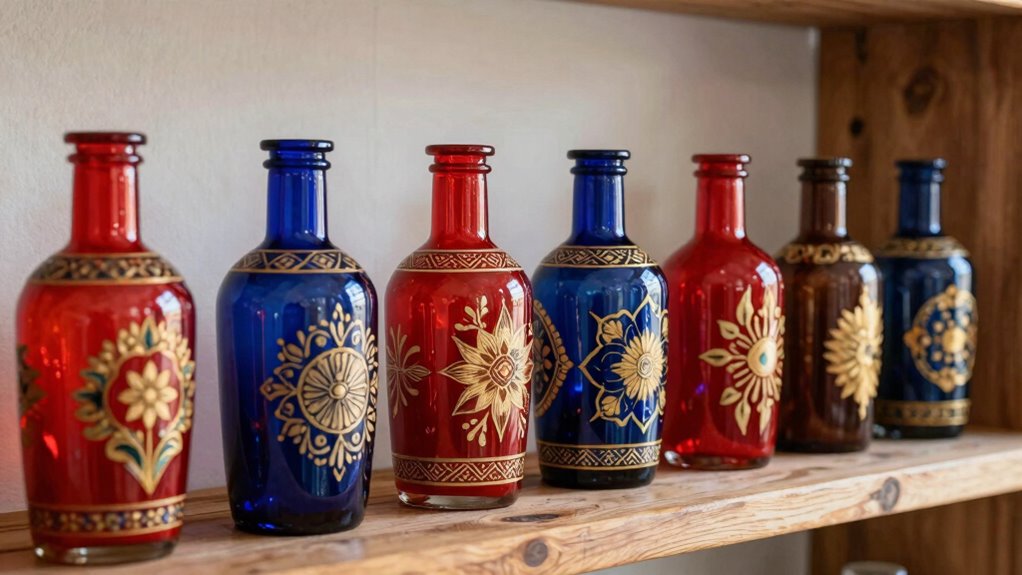
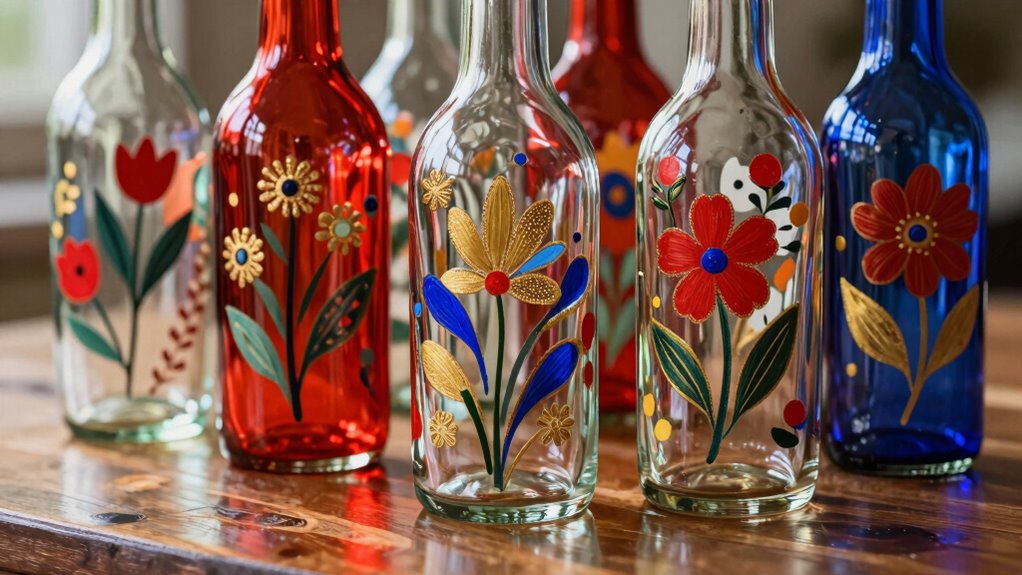
Painted glass bottles transform simple containers into stunning pieces of art that can brighten up any space. When you decide to decorate glass bottles, one of the most important considerations is guaranteeing your paints and coatings are food safe, especially if you plan to use them for storage or display in kitchens or dining areas. Many people assume that all paints labeled as “non-toxic” are automatically food grade, but that’s a misconception. You need to look specifically for food grade coatings designed for items that come into contact with food or drink. These coatings are formulated to be non-leaching and safe for prolonged contact, giving you peace of mind that your decorative bottles won’t pose health risks.
Ensure your painted glass bottles are food safe with non-leaching, food grade coatings for safe storage and display.
Using the right decorative techniques is essential for achieving the look you want while maintaining safety. You might opt for hand-painting with fine brushes, stenciling intricate designs, or even employing decoupage to add patterns and textures. Whatever methods you choose, always verify that your paints are compatible with glass and safe for food contact if the bottles will be used for storing consumables. Applying a food grade sealant over your artwork can further ensure safety and durability, especially if the bottles will be washed or handled frequently. This extra step helps prevent chipping or peeling of paint, which could otherwise expose unsafe materials.
When you’re shopping for paints, look for labels that specify “food safe” or “food grade.” Not all decorative paints are suitable for bottles that will hold food or beverages, so check the ingredients and manufacturer’s instructions carefully. Some paints contain solvents or chemicals that are safe for craft projects but not for items that come into contact with food. If you’re unsure, testing a small patch and waiting for it to cure can help you assess whether the coating is suitable for your intended use. Additionally, understanding the differences between DLP vs. LCD technology can influence the type of project you undertake, especially if you decide to incorporate printed or textured effects.
Incorporating decorative techniques like layering colors, adding metallic accents, or creating textured finishes can make your painted bottles truly eye-catching. Just remember to always prioritize safety by using food grade coatings and sealants where necessary. This way, you can enjoy your beautifully decorated glass bottles without worry, knowing they’re both stunning and safe for everyday use. Whether you’re making a centerpiece or a thoughtful gift, choosing the right materials and techniques ensures your project remains both beautiful and food-safe.
As an affiliate, we earn on qualifying purchases.
Frequently Asked Questions
Are Painted Glass Bottles Suitable for Hot Liquids?
You shouldn’t use painted glass bottles for hot liquids because they typically lack thermal resistance, making them prone to cracking or breaking when exposed to high temperatures. While they may look attractive, their aesthetic durability can suffer with frequent heat exposure. To keep your beverages safe and your bottles looking good, opt for unpainted, heat-resistant glass bottles designed specifically for hot liquids.
Can Painted Glass Bottles Be Recycled?
You can recycle painted glass bottles, but beware of recycling processes and chemical safety. For example, imagine a small artist’s studio that tosses colorful bottles into the curbside bin. While the glass itself is recyclable, paints and coatings may contain chemicals that hinder recycling or cause contamination. Always check local guidelines, as some places require special disposal to ensure hazardous paints don’t jeopardize the chemical safety of recycling facilities.
Do Painted Glass Bottles Contain Harmful Chemicals?
Painted glass bottles may contain harmful chemicals that can leach into food or drinks, especially if the paint isn’t food-safe. You should watch out for paint durability, as peeling or cracking can increase chemical leaching risk. Always check if the paint is labeled as food-safe before using painted bottles for consumables. If unsure, it’s safest to avoid painted bottles for food storage to prevent potential health risks.
How Long Does the Paint Last on Glass Bottles?
Think of the paint on your glass bottles as a delicate dance that lasts for years. Generally, the paint’s durability can range from several months to a few years, depending on the quality and care you give it. Exposure to sunlight, moisture, and frequent handling can cause the paint to peel over time. To extend its lifespan, avoid harsh cleaning and keep your bottles in a cool, dry place.
Are There Any Health Risks in Using Painted Bottles for Food?
Using painted bottles for food can pose health risks if you fall for food safety misconceptions. Many assume the paint is food-safe, but it often isn’t designed for ingestion or contact with food. Also, paint durability varies; if it chips or peels, it can contaminate your food. Always verify that the paint is specifically labeled food-safe and durable enough to withstand washing to avoid health hazards.
Conclusion
Remember, the devil is in the details. Painted glass bottles might look charming, but if you ignore food-safe rules, you risk health hazards. Always verify that the paint is food-safe before repurposing bottles for storage or display. Don’t put all your eggs in one basket—make safety your top priority. When it comes to painted bottles, better safe than sorry. After all, an ounce of prevention is worth a pound of cure.
Halloween Picks
halloween
As an affiliate, we earn on qualifying purchases.