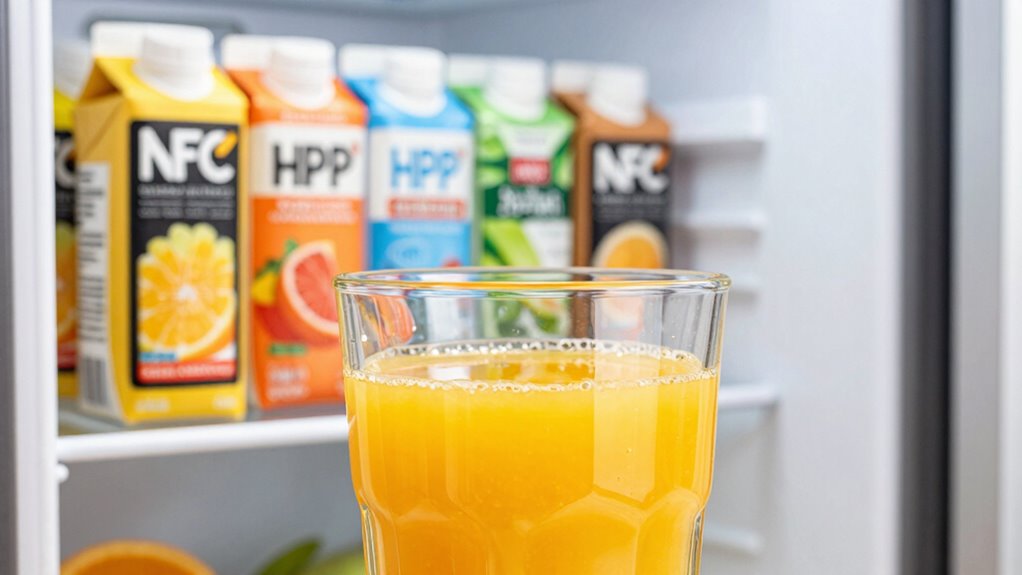

To decode juice labels like NFC, HPP, and from concentrate, look for clear terms on the packaging. NFC stands for “Not From Concentrate,” meaning the juice is pressed directly from fresh fruit with minimal processing, preserving flavor and nutrients. HPP, or “High-Pressure Processing,” uses pressure instead of heat to keep the juice fresh without added chemicals. “From concentrate” indicates water was removed and later added back, which can affect flavor and nutrients. Keep exploring to understand these labels better.

Get kitchen staples and gadgets delivered free — and shop member deals
- Fast, free delivery on millions of items
- Access to Prime Big Deal Days deals on October 6–7
- Prime Video, Amazon Music and more included
Key Takeaways
- Check labels for terms like NFC, HPP, or from concentrate to understand processing and sourcing methods.
- NFC indicates juice pressed directly from fresh fruit with minimal processing, preserving natural flavor and nutrients.
- HPP uses high pressure to kill bacteria without heat, maintaining flavor, color, and nutrients.
- From concentrate involves removing water during processing and re-adding it before bottling, which may affect flavor and nutrients.
- Sourcing labels such as organic or local reveal environmental impact and quality standards.

Have you ever looked at a juice label and felt overwhelmed by the confusing terms and claims? You’re not alone. The beverage industry uses a lot of technical language to describe how juices are made, preserved, and sourced, which can make choosing the right product tricky. Understanding these terms helps you make smarter choices based on what’s most important—whether it’s juice preservation techniques or fruit sourcing practices.
Take NFC, for example. It stands for “Not From Concentrate,” meaning the juice is pressed directly from fresh fruit and packaged with minimal processing. This method often retains more of the fruit’s natural flavor and nutrients, making it a popular choice if you want a juice closest to fresh-squeezed. NFC juices usually undergo less heat treatment, preserving the vibrant taste and some vitamins. Knowing this helps you identify juices that prioritize fruit sourcing and juice preservation, ensuring you’re getting a product that stays true to the fruit’s original qualities.
NFC juices are pressed directly from fresh fruit, preserving natural flavor and nutrients with minimal processing.
Then there’s HPP, or High-Pressure Processing. This method uses intense pressure to kill bacteria and extend shelf life without relying on heat or chemical preservatives. Because it’s a cold process, HPP helps maintain the juice’s fresh flavor, vibrant color, and nutrient content better than traditional pasteurization. If you see HPP on a label, you’ll know the juice has been preserved using advanced technology that focuses on juice preservation, ensuring safety without sacrificing quality. It’s also a method that can help retain natural nutrients, making it a healthier choice for consumers seeking nutritional value.
When it comes to fruit sourcing, some labels specify whether the fruit used is organic, local, or imported. This information can tell you a lot about the quality and environmental impact of the juice. Juices made from locally sourced or organic fruit often have a smaller carbon footprint and fewer pesticides, aligning with your health and sustainability priorities. Conversely, some brands use fruit sourced from multiple countries, which might affect flavor consistency and transparency. Decoding these sourcing claims helps you choose products that match your values and preferences. Being aware of sourcing practices can help you better understand the environmental and quality implications behind your juice choices.
Finally, from concentrate refers to juice that’s been processed to remove water, which can be stored more easily and transported efficiently. Before bottling, water is added back in, but this process can sometimes diminish the juice’s natural flavor and nutrients. Understanding this helps you decide whether you prefer juice made from concentrate or not, based on your taste and nutritional expectations. Additionally, concentrate processing can sometimes involve added sugars or additives, further influencing your choice.
As an affiliate, we earn on qualifying purchases.
Frequently Asked Questions
Are Juice Terms Standardized Across All Brands?
Juice terms aren’t fully standardized across all brands, so you might notice differences in labels and packaging materials. While some terms like “NFC” (not from concentrate) are widely recognized, others can vary in meaning, affecting juice flavor and quality. Always check labels carefully, as brands may use different terminology or packaging materials that influence your perception of freshness and authenticity. Your best bet is to stay informed and compare labels closely.
Do Different Countries Use the Same Juice Terminology?
Think of international labeling as a patchwork quilt—each country stitches its own unique patterns. Yes, different countries do use varied juice terminology, influenced by cultural differences and local standards. What’s called “NFC” in one place might have a different label elsewhere. You need to stay alert and understand these regional nuances, because without this awareness, decoding juice labels becomes like trying to read a foreign map without a legend.
How Do Juice Terms Impact Nutritional Value?
Juice terms influence flavor preservation and nutritional retention. For example, HPP retains more nutrients and flavor compared to from concentrate juices, which might lose some nutrients during processing. NFC juices often preserve the fresh taste and nutrients better by minimizing processing. Understanding these terms helps you choose options that maximize nutritional value and flavor, ensuring you get the most health benefits and enjoyable taste from your juice choices.
Are There Any Safety Concerns With Certain Juice Processes?
You might wonder if certain juice processes pose safety concerns. Generally, processes like HPP (High Pressure Processing) preserve flavor and guarantee additive safety without using heat, reducing microbial risks. While some methods involve additives, reputable brands maintain strict safety standards. Always check labels for added preservatives or sweeteners. Overall, choosing juices from trusted sources minimizes safety worries, letting you enjoy flavor preservation and additive safety confidently.
Can Juice Labels Be Misleading Despite Clear Terminology?
Yes, juice labels can be misleading despite clear terminology. Some brands add flavor additives to enhance taste, which might not be obvious from the label. Processing methods like HPP or concentrating can also be used to extend shelf life without necessarily indicating quality differences. Always read ingredient lists carefully, and be cautious of labels that emphasize “natural” or “fresh” without transparency about added flavors or processing techniques.
Conclusion
Now that you know what NFC, HPP, and from concentrate really mean, you can make smarter choices when buying juice. Don’t let confusing labels keep you from enjoying a healthy, delicious drink. Remember, understanding these terms empowers you to choose products that align with your values and health goals. Next time you shop, trust your knowledge and pick the juice that truly satisfies your needs—because you deserve to make informed, confident decisions.
NFL season / tailgating Picks
team gear
As an affiliate, we earn on qualifying purchases.