
To fix a too-bitter juice with apple, carrot, and pear, start by adding a splash of lemon juice or a small pinch of salt to balance the flavors and reduce bitterness. You can also incorporate naturally sweet ingredients like extra apple or pear juice, or blend in fresh fruit pieces for added sweetness. For a subtle flavor boost, try a teaspoon of honey or a hint of ginger. Keep experimenting to find the perfect taste—there’s more to discover if you keep going.
Key Takeaways
- Add naturally sweet apple or pear juice or blended pieces to balance bitterness.
- Incorporate a small amount of honey or maple syrup to mellow harsh flavors subtly.
- Splash in lemon juice or a pinch of salt to brighten and reduce bitterness effectively.
- Enhance flavor with warm spices like cinnamon or fresh ginger for added depth.
- Use natural flavor enhancers such as vanilla extract or coconut water to improve overall taste.
If your freshly squeezed juice turns out too bitter, don’t worry—there are simple ways to balance the flavor. One of the most effective methods is to introduce natural sweetness, which naturally enhances the overall taste without overpowering the juice’s original flavor profile. When working with apple, carrot, and pear juice, you have some handy options to achieve flavor balancing and make your drink more enjoyable.
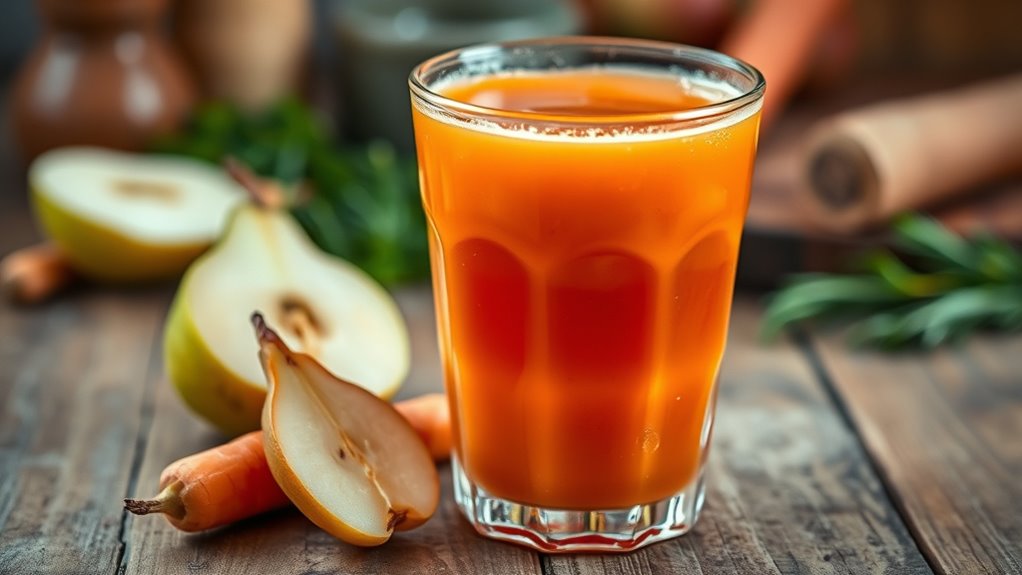
Start by considering the ingredients you already have. Apples and pears are naturally sweet fruits, so adding a little extra apple or pear juice can help counteract bitterness. If you’re juicing fresh fruit, you might want to blend in some apple or pear pieces directly into your mixture. This not only adds natural sweetness but also provides fiber and nutrients, enriching your juice’s health benefits. If you’re using store-bought juice, opt for unsweetened varieties of apple or pear juice—these tend to be less processed and free from added sugars, making them ideal for flavor balancing.
Using fresh or unsweetened apple and pear pieces boosts natural sweetness and nutrition.
Another trick to reduce bitterness is to add a touch of honey or maple syrup. While these are not entirely natural, in moderation, they can provide a gentle sweetness that complements the fruit flavors. Just a teaspoon or two should be enough to mellow out any harshness. Be careful not to overdo it; the goal is to enhance the natural sweetness without making your juice overly sugary.
You can also incorporate a small pinch of salt or a splash of lemon juice. Salt acts as a flavor enhancer and can diminish bitterness, while lemon juice introduces a bright, tangy note that can mask any bitter undertones. Lemon’s acidity can also brighten the overall flavor, making your juice taste fresher and more balanced. When adding lemon, start with a few drops and taste as you go, so you don’t overpower the other flavors.
If you’re looking for a more subtle approach, try adding a small piece of fresh ginger or a dash of cinnamon. These spices can add complexity and help mask bitterness without overwhelming the natural fruit flavors. Ginger, in particular, adds a spicy warmth that pairs beautifully with apple, carrot, and pear, helping to achieve better flavor balancing overall.
Additionally, experimenting with flavor enhancers such as vanilla extract or a splash of coconut water can also help improve the taste by adding depth and sweetness in a natural way.

Mott's 100% Original Apple Juice, 8 Fl Oz Bottles, 24 Count (4 Packs Of 6), 2 Servings Of Fruit, 100% Fruit Juice, Gluten-free, Caffeine-free, Kosher, Contains No Artificial Colors Or Sweeteners
One 6-pack of 8 fluid ounce bottles
As an affiliate, we earn on qualifying purchases.
As an affiliate, we earn on qualifying purchases.
Frequently Asked Questions
Can Adding Honey Reduce Bitterness Without Affecting Flavor?
Yes, adding honey sweetness can reduce bitterness without substantially affecting flavor preservation. Honey’s natural sweetness helps balance out the bitterness, making the juice more palatable. Just add a small amount at a time, tasting as you go, to avoid overpowering the original flavors. This way, you achieve a smoother, sweeter juice while maintaining the natural taste of apples, carrots, and pears.
What Is the Best Way to Prevent Bitterness During Juicing?
Think of your juice as a garden needing gentle care. To prevent bitterness, you should focus on proper fruit blending, balancing sweet and tart flavors. Use fresh, ripe produce and avoid overprocessing. Store your juice in airtight containers to preserve freshness and minimize oxidation. These steps help keep bitterness at bay, ensuring your juice remains delicious and vibrant. Proper technique and storage are your best tools for a perfectly balanced, revitalizing drink.
Are There Specific Apple Varieties That Are Less Bitter?
Yes, certain apple varieties like Fuji, Gala, and Honeycrisp are less bitter and ideal for juicing. These apples naturally have higher sugar content and milder flavors, which help reduce bitterness in your juice. When selecting apples for juice, opt for these varieties to achieve a sweeter, more balanced taste. Using less tart apple varieties is a simple way to enhance bitterness reduction in your juice.
How Long Should I Let Juice Sit Before Tasting for Bitterness?
Think of your juice as a fine wine; it needs time to develop its full flavor. Let it sit for about 15-20 minutes during juice storage before tasting for bitterness. This allows the flavors to meld and any sharpness to mellow. If it’s still too bitter, give it a gentle stir and wait a few more minutes. Patience helps your juice reach its perfect balance of sweetness and flavor.
Does Adding a Pinch of Salt Help Balance Bitterness?
Adding a pinch of salt can help balance bitterness by providing salty enhancement, which makes the flavors more harmonious. It works by masking some of the bitter notes, making the juice taste smoother and more appealing. Just start with a small pinch, taste, and adjust if needed. Salt enhances overall flavor, so a little goes a long way in improving the juice’s taste without overpowering it.

Fresh Ginger Root for Cooking, Juicing, and Tea by Nine Shani (3 lb)
Fresh Ginger Root: Find good-quality, fresh ginger roots for cooking, making tea, or juicing.
As an affiliate, we earn on qualifying purchases.
As an affiliate, we earn on qualifying purchases.
Conclusion
Remember, even the sharpest flavors can be softened with a gentle touch. Just like a garden needs tending, your juice benefits from a little balance. When you add a touch of sweetness or a splash of water, you’re nurturing harmony in every glass. Don’t let bitterness overshadow the natural goodness—think of it as a storm that clears to reveal the sunshine. With patience and care, your perfect blend will shine brighter than ever.

Iberia 100% Lemon Juice, 32 Ounce (Pack of 3)
100% LEMON JUICE: Iberia 100% lemon juice makes it easy to add delicious lemon flavor to dipping sauces,…
As an affiliate, we earn on qualifying purchases.
As an affiliate, we earn on qualifying purchases.

Wholesome Yum Zero Sugar Honey Substitute (Keto) – Natural Sugar Free Honey Alternative With Monk Fruit & Allulose – Zero Net Carbs, Non GMO, Gluten Free, No Aftertaste (11 oz)
TASTE, SMELL, & CONSISTENCY JUST LIKE HONEY. Wholesome Yum sugar-free honey substitute is sweet, aromatic, thick, gooey, and…
As an affiliate, we earn on qualifying purchases.
As an affiliate, we earn on qualifying purchases.

Cindy thoroughly researches juicing trends, techniques, and recipes to provide readers with practical advice and inspiration. Her writing style is accessible, engaging, and designed to make complex concepts easy to understand. Cindy’s dedication to promoting the advantages of juicing shines through her work, empowering readers to make positive changes in their lives through the simple act of juicing.