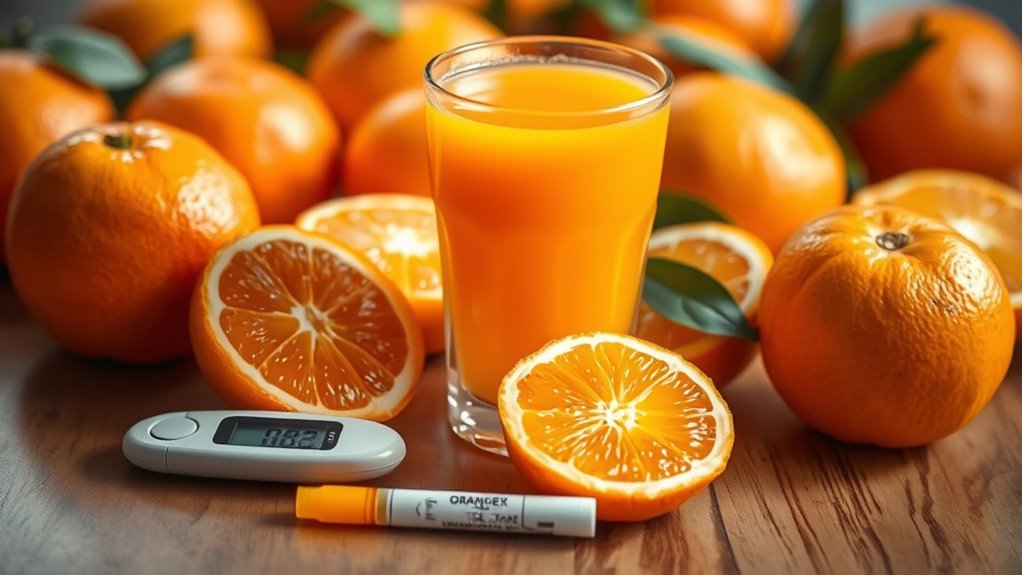

Drinking 100% fruit juice can cause rapid blood sugar spikes because of its high natural sugar content and lack of fiber. This quick digestion may lead to an energy surge followed by a crash and can trigger increased insulin responses over time. Choosing juices with less sugar or some pulp can help slow this process. To understand how different factors influence your blood sugar, keep exploring how juice impacts your health.
Key Takeaways
- 100% fruit juice contains natural sugars that can cause rapid blood glucose spikes.
- Processing often removes fiber, which normally slows sugar absorption and moderates glycemic response.
- Juices with higher sugar content lead to faster digestion and more significant blood sugar fluctuations.
- Consuming smaller portions and choosing juices with pulp can help reduce glycemic impact.
- Awareness of glycemic index and digestion rate aids in making healthier juice choices.
Many people assume that 100% fruit juice is a healthy choice, but its glycemic impact can vary considerably. When you drink fruit juice, you’re consuming a liquid that contains natural sugars, primarily fructose and glucose. The amount of sugar content in different juices can differ widely depending on the type of fruit and processing methods. For example, apple and grape juices tend to have higher sugar concentrations compared to citrus or berry juices. This sugar content markedly influences how quickly your body processes the beverage. The digestion rate of the sugars in juice determines how rapidly your blood glucose levels rise after consumption.
Since fruit juice is in liquid form, your body absorbs its sugars more quickly than it does from whole fruit. The digestion rate for juice sugars is relatively fast because the fibrous part of the fruit, which slows digestion, is often removed during processing. Without fiber, the sugars enter your bloodstream rapidly, causing a quick spike in blood glucose levels. This rapid absorption can be problematic, especially if you’re managing conditions like diabetes or insulin resistance. You might notice that after drinking a glass of juice, your energy levels surge initially, but then you could experience a crash as blood sugar drops.
The speed at which sugars are digested influences not only your immediate energy but also your long-term health. Fast digestion rates can lead to increased insulin responses, which, over time, might contribute to insulin sensitivity issues. Conversely, juices with lower sugar content or those that retain some fiber can slow digestion, leading to more gradual increases in blood sugar. This slower digestion rate is preferable for sustained energy and better blood sugar control.
It’s important to recognize that even 100% fruit juice, which is often marketed as a healthy alternative to soda, can have a substantial impact on your blood sugar levels depending on its sugar content and how quickly those sugars are digested. If you’re concerned about glycemic response, opt for juices that are lower in sugar and have some pulp or fiber remaining, as these can help moderate the digestion rate. Always consider portion size, as larger servings can lead to a more rapid increase in blood glucose. Being mindful of these factors helps you make smarter choices about consuming fruit juice, balancing enjoyment with health considerations. Additionally, educating yourself on glycemic index can help you select better options for managing blood sugar levels.
Frequently Asked Questions
Does Drinking 100% Fruit Juice Affect Long-Term Blood Sugar Control?
Drinking 100% fruit juice can impact your long-term blood sugar control by causing fluctuations and affecting your insulin response. While it provides nutrients, the natural sugars can spike your blood sugar levels, leading to increased fluctuations over time. If you’re mindful and consume it in moderation, it may not markedly affect your management. However, regular intake could challenge your blood sugar stability, so monitor your response and consult your healthcare provider.
How Does the Fiber Content in Whole Fruit Compare to Juice?
You’ll find that whole fruit contains about 3 grams of fiber per serving, while juice often loses most of that fiber during processing. Fiber retention is markedly impacted by pulp influence; pulp-rich fruit retains more fiber, which slows sugar absorption and helps regulate blood sugar levels. When you choose whole fruit over juice, you’re getting more fiber, aiding digestion and providing sustained energy.
Are There Specific Fruits That Have a Lower Glycemic Impact?
Some fruits have a lower glycemic impact, especially low GI fruits like berries, cherries, and apples. You should look for fruits with a low fruit glycemic index to keep blood sugar stable. These options cause slower digestion and a gentler rise in blood sugar levels. Incorporating low GI fruits into your diet can help manage your glucose levels better, making them a smart choice for those concerned about glycemic impact.
Can 100% Fruit Juice Be Included in a Diabetic Diet?
Is it a wolf in sheep’s clothing? You can include fruit juice in a diabetic diet, but with caution. Opt for fruit juice substitutes like smoothies or whole fruits to reduce sugar spikes. Keep juice portion sizes small—no more than 4 ounces—and balance it with protein or fiber. This way, you enjoy the flavor without letting blood sugar run wild, turning a potential threat into a manageable treat.
How Does Storage or Processing Affect the Glycemic Index of Juice?
Storage effects and processing methods can raise the glycemic index of juice. When you store juice for long periods or at high temperatures, it may cause starches to break down, increasing sugar levels. Pasteurization and other processing techniques can also alter the natural sugars and fiber, making it more quickly absorbed. To minimize these effects, choose fresh, minimally processed juice and store it properly in cool, airtight containers.
Conclusion
As you consider including 100% fruit juice in your diet, remember it’s like walking a tightrope—balance is key. Just like a tightrope walker adjusts each step carefully, monitoring your blood sugar levels helps you enjoy the sweetness without the wobble. Studies show moderate intake has a manageable glycemic impact, so savor your juice mindfully. With awareness, you can enjoy its vibrant flavor while keeping your health on steady footing.

Cindy thoroughly researches juicing trends, techniques, and recipes to provide readers with practical advice and inspiration. Her writing style is accessible, engaging, and designed to make complex concepts easy to understand. Cindy’s dedication to promoting the advantages of juicing shines through her work, empowering readers to make positive changes in their lives through the simple act of juicing.