TL;DR

Get kitchen staples and gadgets delivered free with Prime
- Fast, free delivery on millions of items
- Prime Video, Amazon Music and more included
- Member-only deals all year
Mad Tasting has outlined home formulas for coffee, almond and lemon granita using a shallow metal pan, concentrated flavoring and repeated scraping. The method takes about three to four hours, but sugar levels may need adjustment for the ingredients and freezer.
Mad Tasting’s original granita guide details a home method for producing Sicilian-style granita from coffee, almond paste or fresh lemon juice, using a shallow metal pan and a fork instead of an ice-cream machine. The guide calls for a concentrated, slightly oversweetened base and scraping every 30 minutes for three to four hours, a process meant to create moist crystals rather than a solid block or loose shaved ice.
For about four servings of coffee granita, the guide specifies 500 milliliters of strong espresso or moka coffee and 90 to 120 grams of sugar. The sugar should dissolve while the coffee is hot, after which the mixture must cool fully before freezing. Mad Tasting cautions that mild filter coffee can taste weak once frozen because low temperatures suppress sweetness and aroma.
The almond formula combines 500 milliliters of water with 180 to 220 grams of concentrated almond paste. Added sugar may not be needed because commercial pastes vary widely in sweetness. Almond fat and solids give the mixture more body and slow crystal growth, while ordinary boxed almond drinks may lack enough almond content to produce the intended flavor and texture. Almond is a tree-nut allergen, and cross-contact information should be checked on packaged paste.
For lemon granita, the starting formula is 400 milliliters of water, 100 to 130 grams of sugar and 120 to 150 milliliters of fresh lemon juice. The sugar and water are heated first, but the juice is added only after the syrup has cooled to preserve its aroma. Each cooled base is poured into a shallow metal pan, frozen and scraped from the edges toward the center at 30-minute intervals until small, moist crystals form.
Sugar and Scraping Shape Texture
The guidance matters because it identifies sugar concentration and repeated scraping as structural parts of granita, not optional finishing steps. Too little sugar allows the water to freeze into a hard mass; too much can leave the mixture slushy. A shallow metal pan speeds cooling, while regular scraping breaks developing ice into spoonable crystals with flavor distributed throughout them.
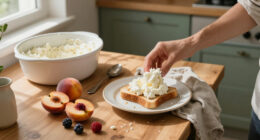
The method also gives home cooks a relatively accessible route to three established Sicilian flavors without specialized machinery. Coffee, almond and lemon do not freeze in the same way, so the separate formulas reduce guesswork while leaving room for ingredient variation. The finished granita may be served slightly softened, with brioche col tuppo or, for coffee granita, a cap of lightly sweetened or unsweetened whipped cream.
As an affiliate, we earn on qualifying purchases.
Sicilian Method Behind the Crystals
Granita developed in Sicily from older practices that used mountain snow or stored ice to chill sweetened flavorings. Mad Tasting describes its defining quality as a soft texture made from numerous small crystals. Versions around Catania and Messina can be smoother and creamier than those found elsewhere on the island, but the flavoring and water freeze together in each case.
That structure separates granita from shaved ice covered with syrup and from a conventionally churned sorbet. In Sicily, particularly during warm weather, granita with brioche can be served at breakfast rather than only as dessert. Brioche commonly contains wheat, eggs and milk, while whipped cream contains milk, so diners with allergies need suitable substitutes or verified ingredient labels.
“soft, spoonable texture made from countless small ice crystals”
— Mad Tasting
Ingredients Keep Results Variable
No single sugar level will suit every batch. Coffee bitterness changes with the bean and roast, almond pastes contain different amounts of sugar and fat, and lemons vary in acidity and juice concentration. Freezer temperature, pan size and scraping consistency can also alter the setting time. The source presents the quantities as starting ranges rather than fixed rules, and it does not report standardized testing across different household freezers. A base that tastes only mildly flavored when chilled may become weak after freezing, while a hard batch may need a longer softening period or a revised sugar ratio next time.
Freezing Schedule Sets the Finish
Home cooks following the report should next chill the prepared base fully, transfer it to a shallow metal pan and begin scraping after the first 30 minutes. Scraping continues at the same interval for about three to four hours, with the finished crystals allowed to soften briefly before serving. Perishable toppings and cooled mixtures should be refrigerated at 4°C or below, not left at room temperature for more than two hours, and unused granita should remain covered in a freezer near −18°C to limit contamination and unwanted odors.
Key Questions
Do I need an ice-cream machine for Sicilian granita?
No. The reported method uses a shallow metal pan and a fork. Scraping the freezing mixture every 30 minutes produces small crystals without mechanical churning.
Why should the base taste slightly too sweet?
Cold temperatures mute sweetness and aroma. A chilled base that tastes a little sweeter and stronger than desired is more likely to taste balanced after several hours of freezing.
Can boxed almond drink replace almond paste?
Mad Tasting advises using concentrated almond paste because many packaged almond drinks lack the solids and fat needed for body. Check labels because almond paste contains a tree-nut allergen.
What can I do if the granita freezes too hard?
Let the pan soften briefly in the refrigerator, then scrape the surface again. For a future batch, a modest increase in sugar may produce a softer result, but the change should remain within the guide’s ingredient-specific ranges.
When should lemon juice be added?
Add fresh lemon juice after the syrup cools. Heating the juice with the syrup can reduce the citrus aroma that gives lemon granita its fresh character.
Source: Mad Tasting
Fall Picks
fall essentials
As an affiliate, we earn on qualifying purchases.