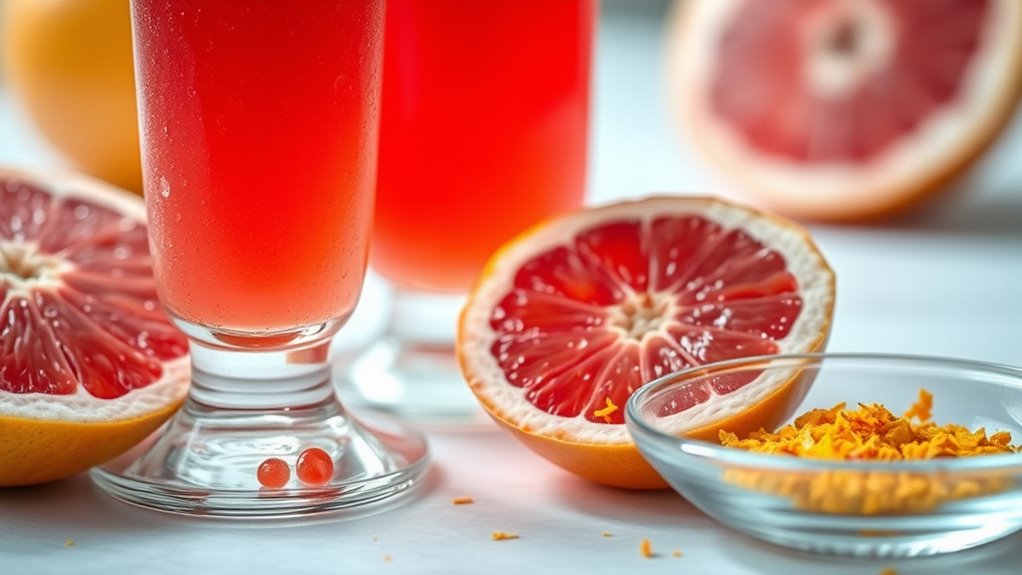

Grapefruit juice can dangerously interact with certain medications by blocking enzymes that break down drugs in your body. This leads to higher drug levels, increasing the risk of side effects, toxicity, and unpredictable responses. If you’re on medications for blood pressure, cholesterol, or mental health, it’s best to avoid grapefruit or consult your healthcare provider. Being aware of these risks helps keep your treatment safe—stay informed to learn more about protecting yourself.
Key Takeaways
- Grapefruit inhibits cytochrome P450 enzymes, increasing drug absorption and potentially causing toxicity.
- Even one glass of grapefruit juice can affect medication levels for days.
- Medications for blood pressure, cholesterol, and mental health are especially affected.
- Always consult your healthcare provider before consuming grapefruit while on medication.
- Check medication labels for grapefruit interaction warnings to ensure safety.

Have you ever wondered why grapefruit juice can cause unexpected effects when you’re taking certain medications? It all comes down to how grapefruit interacts with your body’s processes, especially medication absorption. When you drink grapefruit juice, it doesn’t just add flavor to your breakfast—it actively affects how your body handles certain drugs. This happens because grapefruit contains compounds that inhibit specific enzymes responsible for breaking down medications in your digestive system. These enzymes, primarily part of the cytochrome P450 family, play a key role in metabolizing many drugs. When they’re inhibited, the medication isn’t broken down as it normally would be, leading to higher levels of the drug circulating in your bloodstream.
This enzyme inhibition means your body absorbs more of the medication than intended. Instead of a controlled release and proper metabolism, the drug remains in your system longer and at higher concentrations. As a result, you might experience increased side effects or toxicity, even if you’re taking a standard dose. For example, drugs used to treat high blood pressure, cholesterol, and certain mental health conditions can become dangerously potent when combined with grapefruit juice. You may notice symptoms like dizziness, rapid heart rate, or even more severe reactions because your body isn’t processing the medication as it should.
Understanding this interaction is essential because it highlights why healthcare providers often advise caution with grapefruit juice. It’s not just about avoiding a potential allergy or stomach upset; it’s about preventing a significant change in how your medication works. The key is that grapefruit’s compounds that cause enzyme inhibition are quite potent, and their effects can last for days after you’ve finished drinking the juice. That’s why even a single glass can interfere with your medication schedule, making it unpredictable and potentially unsafe. Additionally, research shows that these compounds can persist in your system for an extended period, further complicating medication management.
If you’re prescribed medications that are known to interact with grapefruit, it’s best to discuss alternatives with your doctor or pharmacist. They might recommend avoiding grapefruit entirely or adjusting your dosage to account for the interaction. Knowing about enzyme inhibition and its effect on medication absorption helps you to make safer choices. Always read medication labels and consult healthcare professionals if you’re unsure whether grapefruit juice could affect your prescriptions. Staying informed assists you in preventing adverse reactions and ensures your treatments are both safe and effective. In the end, being cautious with grapefruit juice is a simple step toward better medication management and your overall health.
Frequently Asked Questions
Can Other Citrus Juices Cause Similar Drug Interactions?
Other citrus juices, like Seville oranges or tangelos, can cause similar drug interactions because of their citrus potency and juice variability. These juices contain compounds that may inhibit enzymes responsible for drug metabolism, just like grapefruit juice. Always check with your healthcare provider before consuming these juices with medications, as the level of interaction can vary depending on the citrus type and how much juice you drink.
How Quickly Do Interactions Occur After Drinking Grapefruit Juice?
Interactions can happen quickly, often within 30 minutes to 2 hours after you drink grapefruit juice. The timing of interactions depends on how the juice affects the absorption effects of your medication. If you consume grapefruit juice close to your medication time, it can markedly alter drug levels in your body. To stay safe, consider avoiding grapefruit juice at least 24 hours before and after taking certain medications.
Are There Specific Medications Most Affected by Grapefruit Juice?
Certain medication categories, like statins, calcium channel blockers, and some antihistamines, are most affected by grapefruit juice. The interaction severity varies, but it can lead to increased drug levels, raising the risk of side effects or toxicity. You should always check with your healthcare provider before consuming grapefruit juice if you’re on these medications, as it might alter how the drugs work in your body.
Does Cooking or Processing Grapefruit Eliminate Interaction Risks?
Cooking methods and juice processing don’t completely eliminate grapefruit’s interaction risks, so don’t assume it’s safe just because it’s cooked or processed. The compounds responsible for interactions remain active even after heating or juicing, like a stubborn stain that won’t come out. While some methods may reduce potency slightly, it’s safest to avoid grapefruit or its juice entirely when on certain medications. Always check with your healthcare provider for guidance.
Can Grapefruit Juice Interaction Vary Between Individuals?
Yes, grapefruit juice interactions can vary between individuals because of differences in individual metabolism and genetic factors. You might process certain drugs differently depending on your body’s ability to metabolize compounds influenced by your genetics. This means some people may experience stronger or weaker interactions, making it essential to consult your healthcare provider about potential risks. Being aware of your unique biological factors helps you manage medication safety effectively.
Conclusion
Just like a guardian watching over a delicate garden, you need to be cautious with grapefruit juice and medications. Its compounds can sneak in like mischievous pests, disrupting how your drugs work. Always check with your doctor or pharmacist before mixing grapefruit juice with your medicines. Staying informed keeps your health safe and your treatment on track. Remember, a little awareness is like sunshine for your well-being, helping you avoid unexpected surprises.