If you’re choosing between Ruby Red and white grapefruit juice, consider your flavor preference and health goals. Ruby Red juice tends to be sweeter with a deep pink hue, making it great for enjoying with yogurt or in cocktails. White grapefruit juice is more tart and tangy, perfect for invigorating, savory dishes. Both offer vitamin C and antioxidants, but the flavor profile can influence how you incorporate them into your diet. Exploring more details might help you pick the best option.
Key Takeaways
- Ruby Red grapefruit juice is sweeter with a deep pink hue, while White grapefruit juice is more tart and translucent.
- Ruby Red offers a milder, less bitter flavor ideal for sweet drinks and breakfast, whereas White grapefruit has a sharper, invigorating taste.
- Both juices are rich in vitamin C and antioxidants, supporting immune health and reducing oxidative stress.
- Ruby Red juice pairs well with yogurt and pastries, while White grapefruit complements salads and savory dishes.
- Your choice depends on preference for sweeter versus tangy flavor profiles and desired culinary uses.
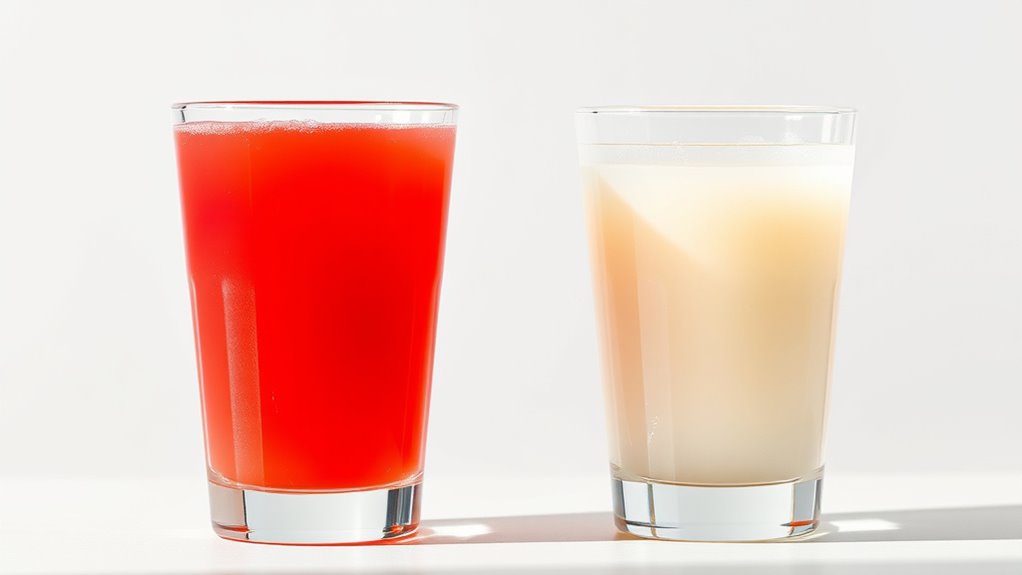
Have you ever wondered why grapefruit juice is a popular breakfast staple? It’s because it offers an invigorating start to your day, packed with health benefits and unique flavor profiles that cater to different tastes. When you compare Ruby Red and white grapefruit juices, you’ll notice that each brings something special to the table, making your choice both a matter of preference and nutritional value. Ruby Red grapefruit juice is renowned for its vibrant, deep pink hue and sweet-tart flavor profile. Its flavor is generally sweeter and less bitter than white grapefruit, which makes it appealing if you prefer a more mellow, fruity taste. This sweetness comes from higher natural sugar content, which can help curb your sweet cravings in the morning. Besides its delightful flavor, Ruby Red offers notable health benefits. It’s rich in vitamin C, an antioxidant that supports your immune system, and contains fiber, which aids digestion. The antioxidants in Ruby Red may also help combat oxidative stress, promoting overall health and possibly reducing the risk of chronic diseases. Nutritional profile also plays a role in why many choose Ruby Red for breakfast.
On the other hand, white grapefruit juice has a paler, almost translucent appearance and tends to have a more tart, tangy flavor profile. If you prefer a sharper, more citrusy kick to your breakfast, white grapefruit might be your go-to. Its less sweet taste means it’s often perceived as more invigorating and energizing, especially if you’re looking for a wake-up call that’s less sugary. Nutritionally, white grapefruit offers similar health benefits to Ruby Red, including vitamin C and antioxidants, but some people find it easier to enjoy daily because of its less intense sweetness. The flavor profiles of the two types of juice also influence how you might incorporate them into your diet. Ruby Red’s sweetness pairs well with breakfast foods like yogurt, pastries, or even as a mixer in cocktails. Meanwhile, white grapefruit’s tartness can cut through richer flavors, making it a good pairing with savory dishes or salads.
Ultimately, your choice comes down to your taste preferences and health goals. Both types of grapefruit juice provide a healthy boost, thanks to their vitamin content and antioxidant properties, but their flavor profiles set them apart. If you enjoy a sweeter, milder juice with complex flavor notes, Ruby Red is an excellent choice. If you prefer something more tangy and invigorating, white grapefruit might be better suited to your palate. Whichever you choose, incorporating either into your breakfast routine can help you start your day with a burst of flavor and health benefits.
Frequently Asked Questions
Which Grapefruit Variety Has More Vitamin C?
You’ll find that white grapefruit generally has more vitamin C than ruby red varieties. Both types offer impressive health benefits and are rich in nutritional content, but if you’re aiming for a vitamin C boost, white grapefruit is your better choice. Incorporate it into your diet to support your immune system and overall health. Remember, enjoying a variety of fruits maximizes your nutritional intake and health benefits.
Does Grapefruit Juice Affect Medication Absorption?
Grapefruit juice can considerably affect medication absorption, with about 85% of users experiencing drug interactions. It inhibits the enzymatic effects in your intestines that break down certain medicines, leading to higher drug levels in your bloodstream. This can cause unexpected side effects or reduce effectiveness. So, always check with your healthcare provider before drinking grapefruit juice if you’re on medication, to avoid potential enzymatic interference and adverse reactions.
Are There Taste Differences When Blending With Other Fruits?
When blending grapefruit juice with other fruits, you’ll notice distinct taste differences based on the fruit chosen. For example, pairing it with berries adds a sweet, tart flavor, while mixing with tropical fruits creates a revitalizing, vibrant taste. You’ll also experience texture contrast, with smoother blends from softer fruits and more pulpy, chunky textures from fibrous ones. Experimenting with different flavor pairings enhances your drink’s overall appeal and complexity.
How Does Grapefruit Juice Impact Blood Sugar Levels?
Grapefruit juice can influence your blood sugar levels, but its impact varies depending on your metabolic response. It has a moderate glycemic index, meaning it may cause a slower rise in blood sugar compared to sweeter fruits. Consuming grapefruit juice in moderation can support blood sugar regulation, but if you have diabetes or insulin sensitivity, monitor your response carefully. The juice’s fiber and nutrients may help stabilize your blood sugar when included in a balanced diet.
Can Grapefruit Juice Be Used in Cooking or Baking Recipes?
You can definitely use grapefruit juice in cooking and baking, adding a bright, tangy flavor that elevates your dishes. Its versatility makes it perfect for marinades, glazes, or even citrus-infused desserts. Just remember, a little goes a long way, and the natural acidity can enhance sweet or savory recipes alike. This ingredient’s cooking applications are endless, giving your culinary creations a fresh, zesty twist that keeps things interesting in the kitchen.
Conclusion
So, whether you prefer the charming allure of ruby red or the subtle elegance of white, each offers its own unique charm. Think of it as a gentle invitation to explore flavors that might surprise you, adding a splash of zest to your day. Embrace the choice that feels right, and let each sip be a quiet reminder to enjoy life’s little pleasures. After all, sometimes the best moments come from the sweetest surprises.

Cindy thoroughly researches juicing trends, techniques, and recipes to provide readers with practical advice and inspiration. Her writing style is accessible, engaging, and designed to make complex concepts easy to understand. Cindy’s dedication to promoting the advantages of juicing shines through her work, empowering readers to make positive changes in their lives through the simple act of juicing.