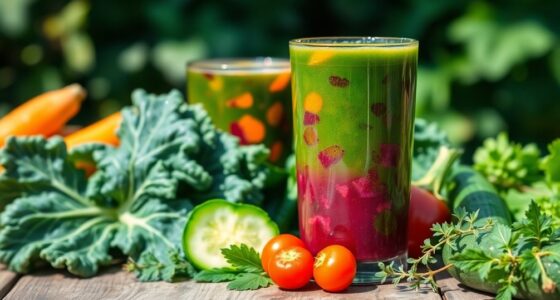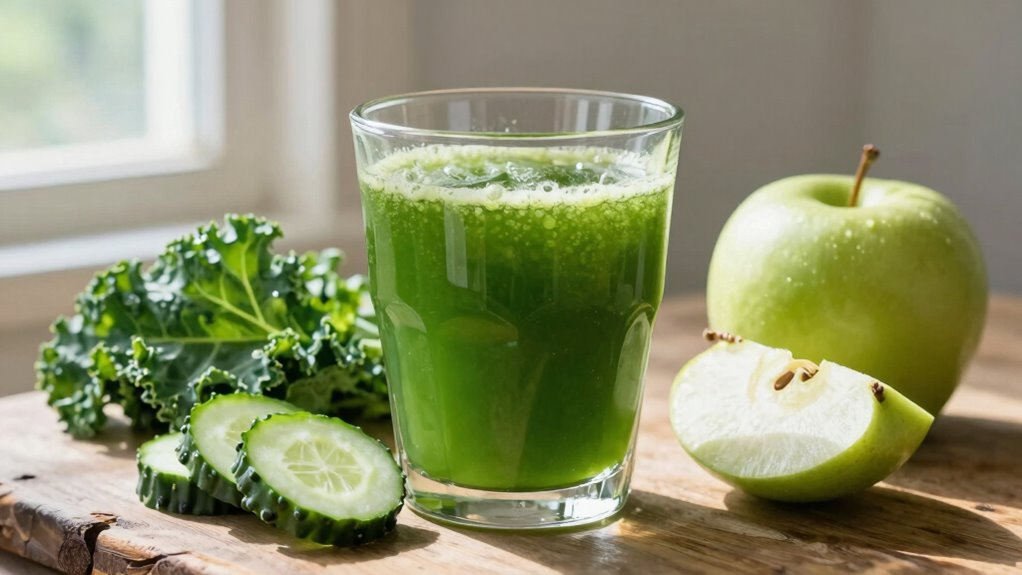

Your green juice’s nutrition changes with ingredient ratios because these proportions affect how your body absorbs vitamins, minerals, and antioxidants. Adding citrus boosts vitamin C, iron, and calcium absorption, while more leafy greens without citrus can reduce mineral bioavailability. Balancing ingredients enhances nutrient uptake and stability, and combining flavonoid-rich foods with healthy fats improves bioavailability. If you’re curious about how to optimize your juice for maximum benefits, you’ll find valuable insights by exploring further.

Get kitchen staples and gadgets delivered free with Prime
- Fast, free delivery on millions of items
- Prime Video, Amazon Music and more included
- Member-only deals all year
Key Takeaways
- Ingredient ratios influence nutrient absorption, with citrus enhancing mineral bioavailability and leafy greens alone offering reduced absorption.
- Adjusting ratios alters antioxidant levels, as colorful fruits increase antioxidant potency more than water or neutral ingredients.
- Proper proportions improve nutrient interactions, such as pairing fats with flavonoid-rich ingredients to boost bioavailability.
- Ratios affect nutrient stability and how long beneficial compounds remain active in the juice.
- Balancing ingredients maximizes overall nutritional value, vitamin absorption, and health benefits in every sip.
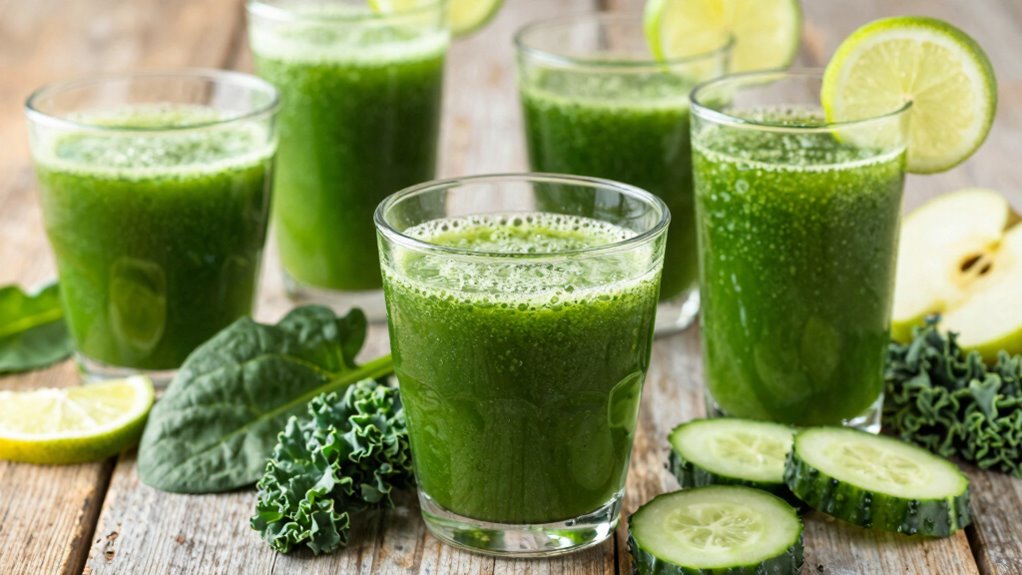
Green juice has become a popular way to boost your intake of vitamins and minerals, but recent nutrition changes suggest you might want to pay closer attention to what’s in your glass. The ratios of ingredients in your green juice can greatly influence how well your body absorbs nutrients and how effectively antioxidants work to protect your cells. When you adjust the ingredient ratios, you’re not just changing the flavor—you’re impacting the nutritional value in ways that matter.
For example, adding more citrus fruits like lemon or lime can enhance vitamin absorption, especially for nutrients like iron and calcium. Vitamin C, abundant in citrus, helps your body absorb non-heme iron from plant sources better, which is essential if you’re relying on green vegetables like spinach or kale. If your juice skews toward high leafy greens without enough citrus, your body might not be absorbing these important minerals as efficiently. Conversely, too much fruit can increase sugar content without markedly boosting antioxidant levels, so balancing the ratios is key for maximizing health benefits.
Antioxidant levels in your green juice are also sensitive to ingredient proportions. Leafy greens such as spinach and kale are rich in antioxidants like lutein, beta-carotene, and vitamin C. However, if you dilute these with excessive water or non-antioxidant-rich ingredients, the overall antioxidant concentration drops. Conversely, increasing the proportion of berries or other colorful fruits can greatly elevate antioxidant levels, helping your body combat oxidative stress more effectively. The balance of ingredients determines whether your juice provides a concentrated dose of these protective compounds or a diluted version that offers fewer benefits. Additionally, understanding the role of ingredient ratios in maintaining the nutrient density can help you craft more effective and healthful juice blends.
Your choice of ingredients and their ratios also influence how quickly nutrients are utilized and how long they stay active in your system. For instance, certain compounds like flavonoids are more bioavailable when paired with fats, meaning adding a small amount of healthy oil or avocado can improve nutrient uptake. If you ignore these interactions and prepare your juice without considering ingredient ratios, you might not get the full nutritional potential. Incorporating nutrient interactions and understanding bioavailability can help you optimize your juice’s health benefits. Additionally, research shows that ingredient ratios can significantly impact nutrient absorption and overall effectiveness, emphasizing the importance of mindful blending. Recognizing the role of food synergy in your juice can further enhance the health-promoting effects of your ingredients.
In short, understanding and adjusting ingredient ratios in your green juice isn’t just about taste; it’s about optimizing vitamin absorption and boosting antioxidant levels. When you pay attention to these details, you guarantee your juice works harder for your health, delivering more nutrients, better protection, and greater overall benefits in every sip.
As an affiliate, we earn on qualifying purchases.
Frequently Asked Questions
How Do Ingredient Ratios Affect Green Juice Calorie Content?
You can alter green juice’s calorie content by adjusting ingredient ratios. Using more calorie-dense ingredients like fruits increases calories, while focusing on lower-calorie vegetables keeps it light. Balancing flavors with the right ratio of sweet to bitter ingredients helps maintain flavor balance without sacrificing nutrient density. By tweaking these ratios, you control both the calorie content and the nutritional benefits, ensuring your green juice suits your health goals and taste preferences.
Can Changing Ratios Alter the Detoxifying Properties of Green Juice?
Changing ratios can massively boost or diminish the detoxifying powers of your green juice. When you adjust flavor balance and nutrient synergy, you’re shaping how effectively your body cleanses. More leafy greens might supercharge detox, while adding fruit can mask bitterness but dilute detox benefits. So, yes, tweaking ingredient ratios can dramatically alter the detox properties, making your juice a powerhouse or a mild refreshment depending on your goals.
Do Different Ratios Impact the Shelf Life of Green Juice?
Different ratios can impact the shelf life and shelf stability of green juice. Higher concentrations of delicate ingredients like leafy greens may reduce preservation, making the juice spoil faster. To extend shelf life, you should use preservation methods like refrigeration, vacuum sealing, or adding natural preservatives. Adjusting ingredient ratios thoughtfully helps maintain freshness longer, ensuring your green juice stays nutritious and safe to consume over an extended period.
How Do Ingredient Ratios Influence the Juice’s Taste and Texture?
You might find that adjusting ingredient ratios subtly shifts the flavor balance, making your green juice more invigorating or mildly earthy. It also influences texture consistency—more fruit can create a smoother, sweeter feel, while additional greens might add a slightly fibrous or thicker quality. These tweaks allow you to craft a beverage that perfectly matches your taste preferences, creating a harmonious blend that delights your palate with each sip.
Are Certain Ratios Better for Specific Health Conditions?
Certain ratios are better for specific health conditions because they optimize flavor balance and nutrient stability. For example, increasing greens can boost detox benefits, while more fruit enhances taste without compromising nutrients. If you want immune support, focus on vitamin C-rich ingredients like citrus. Adjust ratios to target your health needs, ensuring you maintain a pleasant flavor while preserving the nutritional integrity of your green juice.
Conclusion
So, when you tweak your green juice ingredients, you’re actually changing its nutritional profile—sometimes considerably. For example, increasing kale boosts your vitamin K intake by over 600%, which is essential for blood health. Keep experimenting with ingredient ratios to maximize benefits tailored to your health goals. Remember, small adjustments can lead to big nutritional payoffs, so don’t hesitate to get creative and discover the perfect green blend for you!
NFL season / tailgating Picks
team gear
As an affiliate, we earn on qualifying purchases.