
To produce shelf-stable juice using heat pasteurization, you start by heating the juice uniformly with proper thermal transfer methods like heat exchangers or hot water baths. You must then quickly raise the temperature to a safe level, hold it for the required time to destroy pathogens, and rapidly cool the juice afterward to preserve flavor and nutrients. Ensuring strict hygiene and process control guarantees safety and quality, and if you keep exploring, you’ll discover how to optimize each step for better results.
Key Takeaways
- Heat the juice uniformly using methods like plate heat exchangers to reach the target pasteurization temperature.
- Maintain the juice at the target temperature for the specified hold time to ensure microbial inactivation.
- Continuously monitor temperature sensors to ensure proper thermal transfer and process control.
- Rapidly cool the juice after pasteurization to preserve flavor, nutrients, and overall quality.
- Transfer and package the cooled juice into sterile containers under sanitized conditions to prevent recontamination.

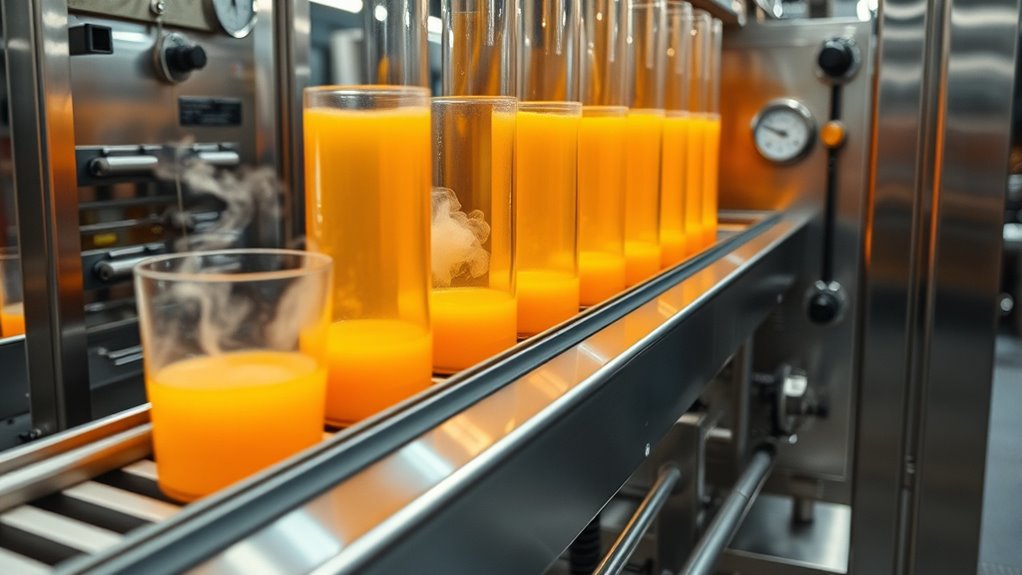
Heat pasteurization is a process that uses controlled heating to eliminate harmful microorganisms from food and beverages, making them safer for consumption. When you’re working to produce shelf-stable juice, understanding how thermal transfer plays a crucial role in this process is essential. Thermal transfer is the method by which heat moves from the heating source into the juice, ensuring an even temperature distribution that effectively targets all pathogens. Proper thermal transfer guarantees that every part of the juice reaches the necessary temperature to destroy bacteria, viruses, and spoilage organisms without compromising quality. Achieving optimal thermal transfer involves selecting the right heating method—be it direct steam, hot water bath, or plate heat exchangers—and maintaining consistent flow rates to prevent cold spots. This control is vital because uneven heating can leave some microorganisms alive, threatening microbial safety and shelf stability.
Once the juice reaches the target temperature, you need to hold it there for a specific time, known as the pasteurization hold time. This step is critical because it ensures that the heat sufficiently penetrates the entire volume of juice, destroying pathogenic microbes. During this phase, you must monitor temperature closely using reliable sensors, ensuring that the juice remains at the necessary level for the designated duration. This precise control is the foundation of microbial safety, preventing contamination and spoilage. After the holding period, rapid cooling is necessary to halt the heat treatment and preserve flavor, nutrients, and overall quality. Quick cooling also helps prevent heat damage, which can alter the juice’s taste and appearance.
Additionally, understanding the importance of thermal transfer efficiency can help optimize the pasteurization process, reducing energy consumption and ensuring consistent results. Throughout the process, maintaining strict hygiene and preventing recontamination is vital. Once the juice is pasteurized, it should be transferred into sterile containers under sanitized conditions. Proper sealing and storage ensure that the microbial safety achieved during pasteurization isn’t compromised. It’s important to remember that the success of heat pasteurization for shelf-stability hinges on meticulous control of thermal transfer parameters and adherence to validated process times and temperatures. This ensures that the juice is not only safe to consume but also retains its intended flavor and nutritional qualities. By paying close attention to these steps and principles, you guarantee a high-quality, shelf-stable product that meets safety standards and satisfies consumer expectations.
Frequently Asked Questions
How Long Does Heat Pasteurization Typically Take?
The pasteurization duration usually ranges from 15 to 30 seconds for high-temperature short-time pasteurization, depending on the juice type. You need precise temperature control, typically around 71.7°C (161°F), to guarantee safety without compromising flavor. Maintaining consistent temperature is crucial, as too low prolongs time, risking pathogens, while too high can affect juice quality. Proper timing and temperature control protect your juice’s safety and taste.
What Equipment Is Necessary for Heat Pasteurization?
You need specialized pasteurization equipment that includes a heat exchanger or thermal processor, which guarantees even heat application. Accurate temperature control is essential, so look for machines with reliable thermostats or digital controls. You also need a holding tube or chamber to maintain the right temperature for the necessary time. Additionally, flow meters and sensors help monitor and adjust the process, ensuring the juice is safely pasteurized without compromising quality.
Can Pasteurization Affect Juice Flavor or Nutrients?
Pasteurization can impact juice flavor and nutrients, but proper techniques help maintain both. You might notice slight flavor changes if temperatures are too high or exposure is prolonged. However, by carefully controlling heat, you can maximize flavor preservation and nutrient retention. This ensures your juice remains nutritious and tasty, providing a fresh experience for consumers while maintaining safety standards. Proper pasteurization balances safety with quality.
Is Heat Pasteurization Suitable for All Types of Fruit Juices?
Heat pasteurization isn’t suitable for all types of fruit juices, especially raw juice, as it can alter flavor and reduce nutrient content. You should consider the juice’s acidity and sugar levels because these factors influence how well heat pasteurization preserves flavor and safety. For delicate juices, alternative methods like cold pasteurization might better maintain flavor preservation while ensuring safety. Always evaluate each juice type individually for the best approach.
How Is Temperature Accuracy Maintained During Pasteurization?
Did you know that maintaining precise temperature control during pasteurization is essential, as even a 1°C deviation can affect safety? You keep temperature accuracy by regularly performing calibration procedures on your equipment. This involves comparing thermometer readings with a standard device, ensuring consistent heat application. Proper calibration helps you reliably reach and hold the target temperature, safeguarding the juice’s quality and safety throughout the pasteurization process.
Conclusion
Now that you know the heat pasteurization steps, you’re ready to confidently create safe, shelf-stable juice. Follow the focused, foolproof process to foster freshness and flavor while fighting bacteria. By paying close attention to temperature and timing, you’ll produce pristine, preserved produce that’s perfect for prolonged storage. So, stay smart, steady, and specific—your successful, safe juice is just a step away!