The key to high-yield juicing isn’t magic—it’s selecting ripe, fresh produce, properly prepping it, and handling it with care. Choose firm, fragrant fruits and vibrant vegetables, wash and dry everything thoroughly, and store items correctly to preserve nutrients. Prepping produce in advance, like peeling or chopping, maximizes juice extraction and flavor. Keep these tips in mind, and you’ll uncover more flavor, nutrients, and yield with every batch—discover the next steps to perfect your juicing routine.
Key Takeaways
- Thoroughly wash all produce to remove dirt and pesticides before juicing.
- Properly dry fruits and vegetables to prevent spoilage and maximize juice extraction.
- Select ripe, firm produce with fragrant aroma for better yield and flavor.
- Chop or peel produce in advance to streamline the juicing process and preserve nutrients.
- Store produce correctly, such as refrigerating apples and leafy greens, to maintain freshness and quality.
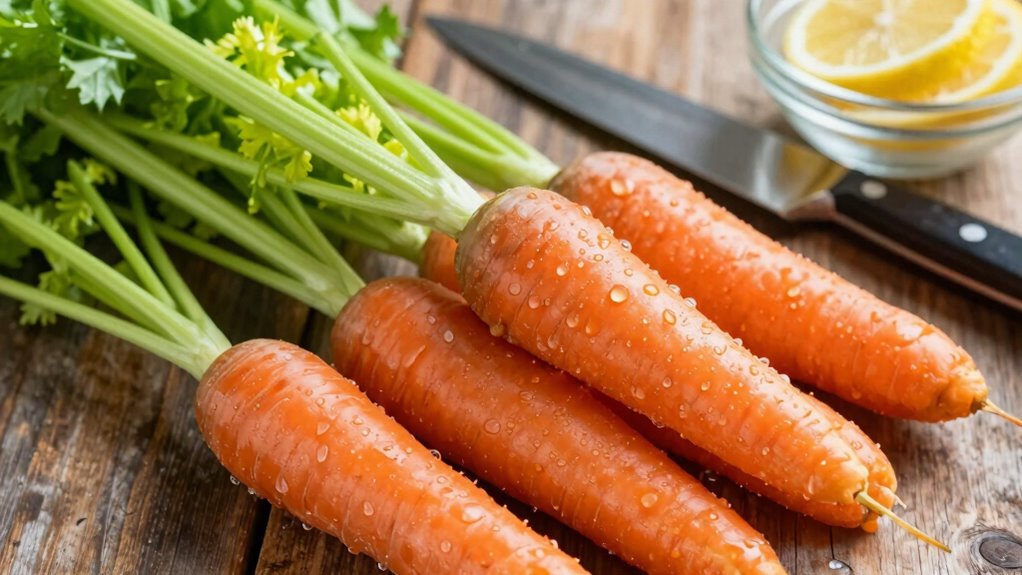
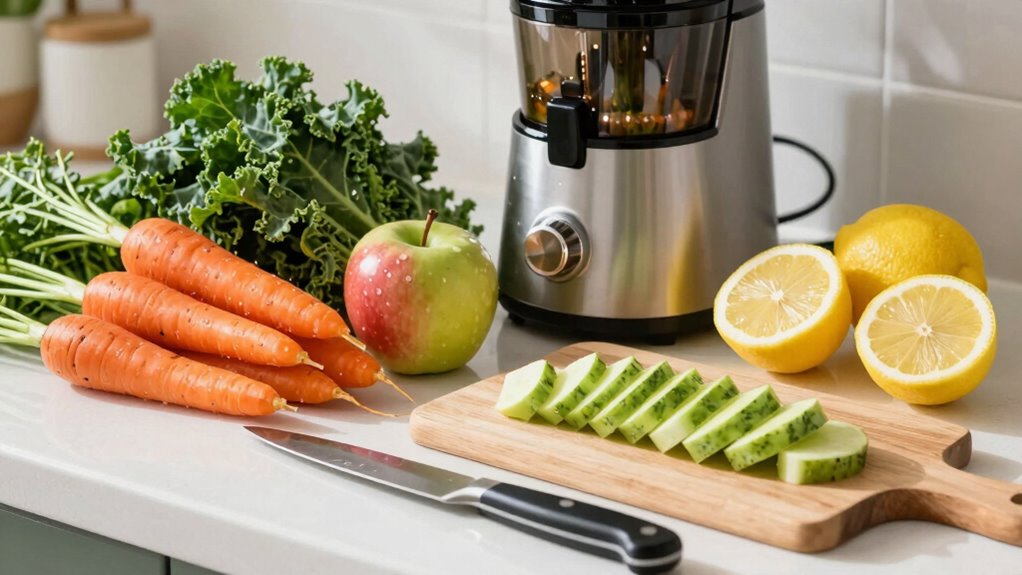
Getting ready to start your juicing routine involves more than just grabbing fruits and vegetables. The key to high-yield juicing starts long before you press that power button. It begins with careful fruit selection and proper storage techniques. When you choose your produce wisely, you set the foundation for delicious, nutrient-rich juice with every blend. So, take a moment to consider which fruits and vegetables will give you the best results. Opt for fresh, ripe produce—those that feel firm and smell fragrant, indicating peak ripeness. Apples, pears, and citrus are popular choices because they add sweetness and flavor, but don’t overlook vegetables like carrots, cucumbers, and leafy greens. The more vibrant and fresh your produce, the more juice you’ll extract, and the better the taste.
Next, think about your fruit selection in terms of variety. Incorporate a mix of sweet, tart, and neutral flavors to create balanced, enjoyable juices. If you’re juicing for health benefits, include greens like spinach or kale for nutrients, but balance their bitterness with sweeter fruits. When picking your produce, keep in mind that quality is essential—wilted, bruised, or overripe items will yield less juice and may spoil quickly. If you buy in bulk, you need effective storage techniques to maintain freshness and reduce waste. Proper storage starts with understanding each fruit’s ideal environment. For example, apples and citrus do well in the fridge, while bananas and avocados are best stored at room temperature. Keep leafy greens in a sealed bag with a paper towel to absorb excess moisture, preventing spoilage. Root vegetables like carrots can stay in a cool, dark place or the fridge, depending on how soon you plan to use them. Additionally, proper storage helps preserve nutrients and extend shelf life, maximizing your investment in fresh produce.
Prepping your produce ahead of time is also a smart move. Wash everything thoroughly to remove dirt and pesticides, then dry the fruits and vegetables to prevent mold and rot. Some people prefer to peel or chop produce in advance, especially if it speeds up their morning routine. Proper storage techniques help preserve the nutrients and flavor, ensuring you get maximum juice yield and quality. By investing in good storage habits, you avoid unnecessary trips to the store and reduce waste, making your juicing more efficient and economical. A thoughtful approach to fruit selection and storage techniques doesn’t just make your juice taste better—it transforms your entire juicing experience into a more consistent, healthful, and enjoyable habit.
Frequently Asked Questions
Can I Juice Every Day Without Any Prep?
You can juice daily without extensive prep, but it’s best to do some simple meal prepping first. Wash your produce thoroughly and cut fruits and veggies ahead of time to save time. Remember to clean your equipment after each use to keep everything hygienic. This way, you stay consistent without hassle, and your juicing remains fresh and safe. Proper prep guarantees you enjoy healthy juice every day with minimal effort.
Does Peeling Fruits Improve Juice Yield?
Peeling fruits is like peeling back layers of a mystery—sometimes revealing more than you expect. Removing the peel can improve juice yield because peels often contain less juice and may introduce bitterness. Peeling benefits include a smoother flavor and cleaner juice, but it also removes nutrients. If you want maximum yield and clarity, peel fruits with tough or thick skins, but keep in mind, some nutrients stay in the peel.
How Do I Prevent Oxidation During Juicing?
To prevent oxidation during juicing, you should juice quickly and serve immediately. Use airtight containers to store your juice, minimizing exposure to air, which helps with oxidation prevention. Keep your juice cold, as lower temperatures slow oxidation and preserve nutrient retention. Additionally, adding a splash of lemon juice can act as an antioxidant, further reducing oxidation and maintaining the maximum nutrient content in your juice.
Is Organic Produce Necessary for High-Yield Juicing?
You don’t need organic produce for high-yield juicing, but it’s like choosing between a clear lake and muddy water. Organic farming reduces pesticide residues and makes pesticide removal easier, giving you cleaner juice. While conventional produce can work, washing thoroughly helps remove surface chemicals. Ultimately, organic options may offer purer, more vibrant juice, but proper cleaning and fresh choices matter most for maximizing your yield and health benefits.
What’s the Best Way to Store Fresh Juice?
To keep your fresh juice at its best, focus on proper juice preservation by storing it in airtight storage containers. Use glass or BPA-free plastic bottles with tight-fitting lids to prevent oxidation and preserve nutrients. Keep the juice refrigerated, ideally at or below 40°F, and consume it within 24 to 48 hours for maximum freshness and flavor. Proper storage ensures your juice stays nutritious and delicious longer.
Conclusion
By taking just a few minutes to properly prep your produce, you can boost the nutrients you get from each juice. Studies show that pre-soaking and trimming can increase antioxidant levels by up to 30%. So, next time you juice, remember that this simple step can make all the difference. It’s a small effort for a big boost in health, proving that high-yield juicing is more about preparation than magic.