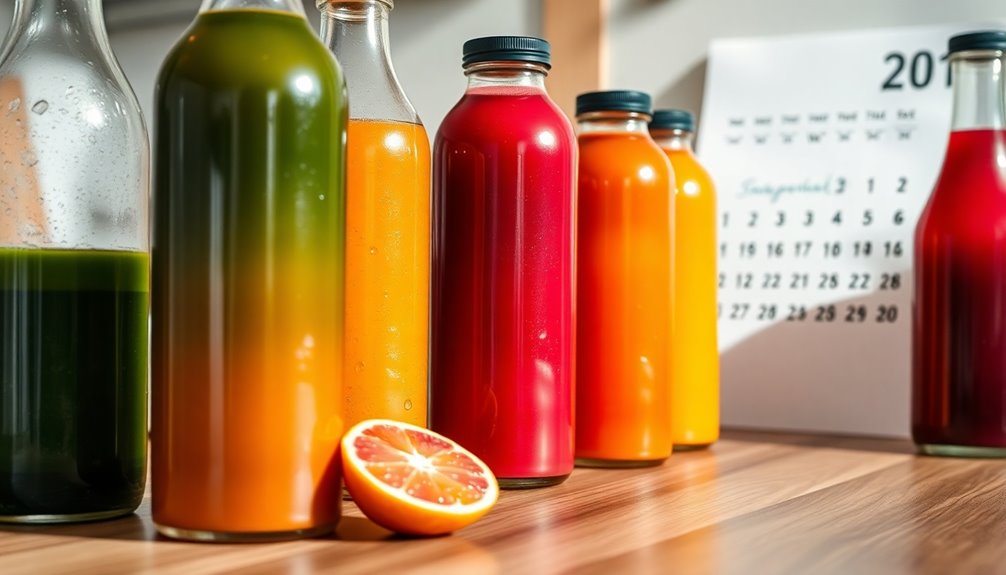

Cold-pressed juice lasts about 3-5 days when you keep it properly refrigerated at 34-40°F (1-4°C). Without preservatives, it spoils quickly, so it's best to drink it soon for optimal flavor and nutrients. Make sure to seal the container tightly after each use and avoid leaving it out of the fridge for more than 8 hours. Want to know more about how to extend its shelf life and signs of spoilage?
Key Takeaways
- Cold-pressed juice lasts about 3-5 days when properly refrigerated at 34-40°F (1-4°C).
- Freezing cold-pressed juice extends its shelf life to 6-12 months.
- Signs of spoilage include dull color, strong smell, and mold presence.
- Proper storage techniques, like using airtight containers, are crucial for maintaining quality.
- Some brands use high pressure processing to extend shelf life; check labels for details.
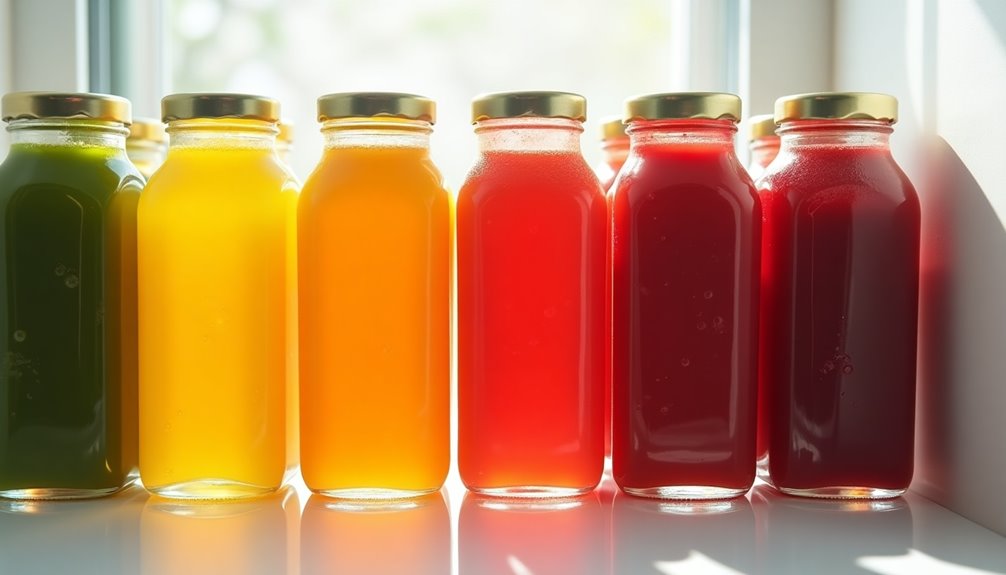
How long does cold-pressed juice really last? The answer depends largely on how you store it. When properly refrigerated at temperatures between 34-40°F (1-4°C), cold-pressed juice typically lasts about 3-5 days. This short shelf life is primarily due to the lack of preservatives in cold-pressed juices, which means they're packed with fresh nutrients but also more susceptible to spoilage.
If you want to extend its life, freezing is your best bet. When stored in airtight containers at 0°F (-18°C) or lower, cold-pressed juice can maintain its quality for an impressive 6-12 months.
However, keep in mind that improper handling or storage can drastically shorten that shelf life, possibly even reducing it to zero days. If you leave your juice out unrefrigerated, it's best to consume it within 8 hours. After that, the levels of nutrients like vitamin C start to decline rapidly, leaving you with a less beneficial drink. So, if you're planning to enjoy your juice, ensure it's kept chilled until you're ready to drink it.
You should be on the lookout for signs of spoilage as well. Cold-pressed juice may show signs of separation, which isn't unusual, but if you notice significant separation or a dull color change, that's a red flag. A strong, fermented smell or the presence of mold means you should definitely discard it. Recognizing these signs can save you from consuming juice that could make you sick.
For those who want to get the most out of their juice, proper storage is key. After opening, make sure to seal the container tightly and put it back in the fridge immediately. If you're planning to freeze the juice, ensure that the container is airtight to prevent freezer burn, which could affect both flavor and nutrients.
High pressure processing is another option some brands use to extend the shelf life of their cold-pressed juices, but you'll want to check the label to see if that's the case.

Yokoma Semi-automatic Aluminum Screw Cap Capping Machine Bottle Cap Capping Sealing Machine Wine Bottle Capper Sealer Machine 5.9-13.8" Adjuatable Height 110V
[Versatile Cap Processing] This semi-automatic screw cap capping machine handles a wide range of aluminum and metal bottle...
As an affiliate, we earn on qualifying purchases.
Frequently Asked Questions
How Long Can Cold-Pressed Juice Last in the Fridge?
When you store cold-pressed juice in the fridge, it generally lasts about 3 to 5 days if you keep it at the right temperature, between 34 and 40°F.
If you've got a vegetable-based juice, it might stay fresh a bit longer due to lower sugar content.
Just remember, if you notice separation, brown foam, or a strong smell, it's best to toss it out.
Always check for signs of spoilage before drinking!
How to Know if Cold-Pressed Juice Has Gone Bad?
To know if your cold-pressed juice has gone bad, look for signs like separation, brown foam, or a grayish color.
If you notice strong fermented smells or any mold development, it's time to toss it.
Also, keep an eye on the "best by" date and remember that if it's been left unrefrigerated for over 8 hours, you shouldn't drink it.
Trust your senses; they're your best guide for safety.
What Is the Downside of Cold-Pressed Juice?
You might love the fresh taste of cold-pressed juice, but beware of its downsides.
First, its shelf life is short, typically just 3-5 days. It spoils quickly without preservatives, leaving you with potential waste.
Plus, it needs to be stored at specific temperatures, making it less convenient than other juices.
Finally, the price can be steep due to the quality of produce used, which might leave you questioning if it's worth it.
How Do You Preserve Cold-Pressed Juice?
To preserve your cold-pressed juice, store it in airtight containers and refrigerate it promptly after juicing.
Keep the temperature between 34-40°F to maintain freshness. You can also freeze the juice for longer storage, which can last up to 6-12 months. To ensure the best quality and taste, it’s advisable to consume fresh juice within a week of making it, even when refrigerated. If you’re wondering how long does fresh juice last when stored properly, remember that freezing is often the best option for extending its shelf life. Just be sure to use airtight containers to prevent freezer burn and preserve flavor!
Adding natural preservatives like lemon juice can help too.
If you want to extend shelf life even further, consider using High-Pressure Processing (HPP) for better preservation without significant nutrient loss.

NEWTRY Induction Sealer 20-100mm Heat Handheld Sealing Machine Electromagnetic Bottle Cap Sealer Power & Time Adjustable for Plastic Glass Bottles Caps (110V)
【Basic Parameters】Sealing Range: 0.79”-3.94”(20-100mm) | Power Range: 500W-1000W | Time Adjustment Range: 0.1-5.9s | Applicable Bottle Cap Type:...
As an affiliate, we earn on qualifying purchases.
Conclusion
In the world of cold-pressed juice, freshness is fleeting, like a delicate butterfly resting only briefly on a bloom. You've got about 3 to 5 days to savor that vibrant elixir before it begins to lose its vitality. So, embrace the moment—drink it in, relish the flavors, and let each sip be a celebration of nature's bounty. Remember, in the realm of juice, the clock is always ticking; don't let these liquid gems slip away.

FUNSEALER Induction Heat Sealer Bottle Cap Sealing Machine For Plastic Glass Bottle Cap (110&220 Dual Voltage)
Suitable for: plastic bottle, glass bottle and other non-metallic packaging containers of aluminum foil composite film( induction film)cover...
As an affiliate, we earn on qualifying purchases.

Portable Handheld Induction Sealer 20mm-130mm 110V Induction Sealing Machine White Bottle Cap Sealing Machine
Induction sealing Machine:It is a non-contact heating process that accomplishes the hermetic sealing of a container with a...
As an affiliate, we earn on qualifying purchases.

Cindy thoroughly researches juicing trends, techniques, and recipes to provide readers with practical advice and inspiration. Her writing style is accessible, engaging, and designed to make complex concepts easy to understand. Cindy’s dedication to promoting the advantages of juicing shines through her work, empowering readers to make positive changes in their lives through the simple act of juicing.