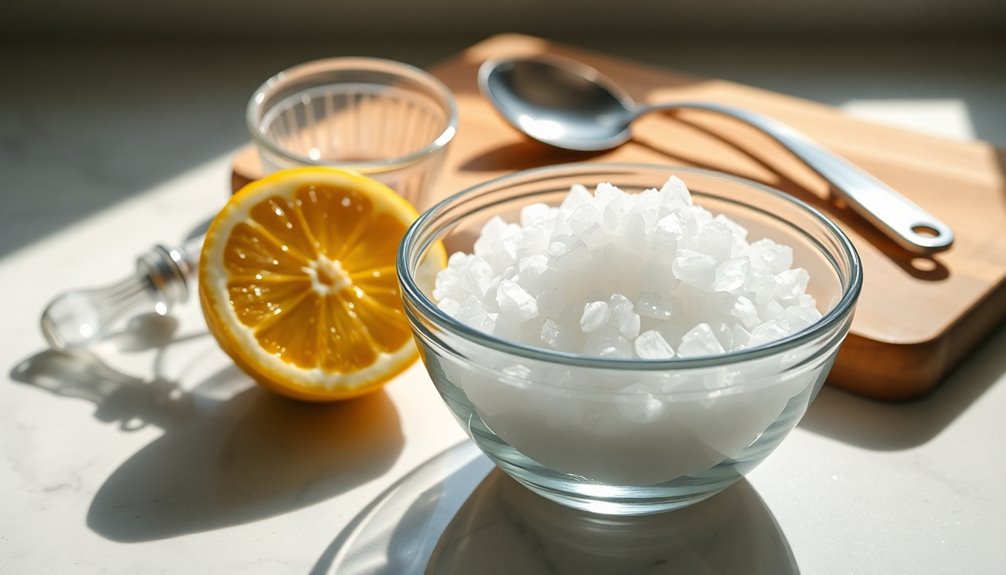

When you're substituting lemon juice with citric acid, use a rounded 1/4 teaspoon of citric acid for every tablespoon of lemon juice. If you need more, remember that 1 teaspoon of citric acid replaces 1/4 cup (or 4 tablespoons) of lemon juice. This ensures your dishes maintain the right level of acidity. Keep in mind that citric acid won't give you the same flavor, but it's perfect for acidity. Want to know more about its uses?

Get kitchen staples and gadgets delivered free with Prime
- Fast, free delivery on millions of items
- Prime Video, Amazon Music and more included
- Member-only deals all year
Key Takeaways
- Use a rounded 1/4 teaspoon of citric acid to replace 1 tablespoon of lemon juice.
- To replace 1/4 cup (4 tablespoons) of lemon juice, use 1 teaspoon of citric acid.
- Citric acid provides acidity but lacks the lemon juice flavor profile.
- Accurate measurements of citric acid are crucial for canning and preserving safety.
- Consider adding vinegar to balance taste if lemon juice flavor is desired.
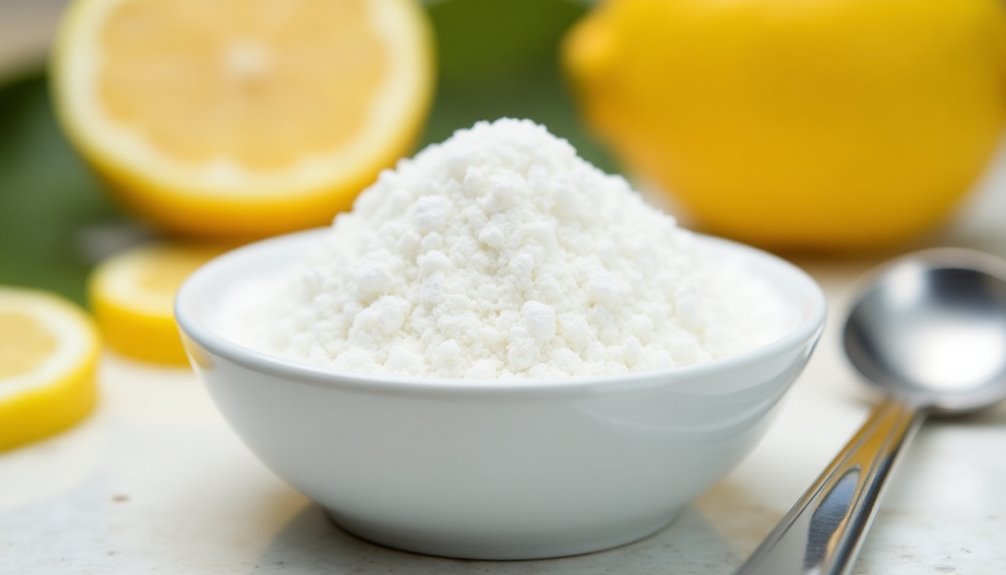
When you're in a pinch and need to replace lemon juice, citric acid can be a handy alternative. This white, crystalline powder offers the acidity you're looking for, making it especially useful in recipes where the tangy flavor of lemon isn't a priority.
While citric acid doesn't replicate the flavor of lemon juice, it serves as an effective substitute for the acidity needed in various dishes. Whether you're baking, cooking, or preserving, knowing how to use citric acid can save the day.
To substitute citric acid for lemon juice, you'll want to keep some measurements in mind. For every tablespoon of lemon juice called for in a recipe, use a rounded 1/4 teaspoon of powdered citric acid. This measurement ensures you maintain the appropriate level of acidity without compromising safety in your dish.
If you're working with larger quantities, you can scale it up; approximately 1 teaspoon of citric acid can replace 1/4 cup, or 4 tablespoons, of lemon juice. This adjustment is essential, especially when preparing large batches for canning or other preservation methods.
When canning, it's crucial to monitor the pH levels to ensure your food remains safe for consumption. Ideally, you want to keep the pH below 4.6. Citric acid helps you achieve this acidity, but you need to measure accurately.
A rounded 1/4 teaspoon of citric acid weighs about 1.2 grams, so it's wise to use a kitchen scale if you're unsure about your measurements. Stick to the guidelines to keep your canned goods safe and delicious.
While citric acid is a great substitute for lemon juice, it won't provide the same flavor profile. Therefore, consider the role lemon juice plays in your recipe. If it's just for acidity, citric acid is perfect.
However, if you're relying on lemon juice for its unique citrus flavor, you might want to consider other options or add a splash of vinegar to balance the taste.
Safety is paramount, especially when canning. Always ensure that your recipe accounts for the required acidity levels, as this is key to preventing spoilage and foodborne illness.
Using citric acid can be a reliable way to maintain the necessary acidity, but you must be diligent about your measurements and adherence to guidelines.
Frequently Asked Questions
How Much Citric Acid Instead of Lemon Juice?
When you're considering a substitute for lemon juice, it's essential to keep measurements precise.
Use 1/4 teaspoon of citric acid for every tablespoon of lemon juice needed. If your recipe calls for larger amounts, 1 teaspoon can replace 1/4 cup of lemon juice. When substituting citric acid for lemon juice, it’s important to adjust your measurements carefully to achieve the desired flavor profile in your dish. Additionally, for recipes that involve specific techniques, you may need to understand how to measure fog juice needs, especially if you’re creating atmospheric effects for events or performances. Always remember to taste as you go, allowing you to fine-tune the acidity to your liking.
Remember, while citric acid adds tartness, it won't give you the same citrus flavor.
Always aim for a pH below 4.6 for safe canning practices when using this substitute.
What Happens if You Use Too Much Citric Acid?
Imagine you're making a batch of homemade peach jam. If you accidentally add too much citric acid, you'll end up with a jam that's overly sour and unappetizing.
Using excessive citric acid can lower the pH too much, compromising the flavor and texture. It can even affect preservation, leading to spoilage.
Always stick to recommended measurements to maintain balance, ensuring your preserves taste delicious and remain safe to eat.
Can I Use Citric Acid Instead of Lemon Juice When Canning Tomatoes?
Yes, you can use citric acid instead of lemon juice when canning tomatoes.
Just remember to add the right amount to maintain acidity and ensure safety. For each quart jar of tomatoes, use 1 teaspoon of citric acid, or 1/2 teaspoon for a pint jar.
Citric acid raises acidity without adding extra liquid or lemon flavor, making it a great choice for your recipes while keeping your canned tomatoes safe.
How Much Citric Acid to Use in Juice?
When you're making juice and want to use citric acid, remember that it's a great way to add acidity.
For every tablespoon of lemon juice you'd typically use, you'll need 1/4 teaspoon of citric acid.
If you're making a larger batch, about 1 teaspoon can replace 1/4 cup of lemon juice.
Just be sure to measure accurately to maintain the right flavor and acidity levels in your juice!
Conclusion
So, next time you're in a pinch and don't have lemon juice, just grab that trusty citric acid! With a tiny sprinkle—just a mere 1/2 teaspoon for every tablespoon of lemon juice—you'll unleash a citrus explosion that could rival the sun! Your taste buds won't know what hit them, and your dish will shine brighter than a disco ball at a dance party. Go ahead, make that kitchen magic happen—citric acid is your new best friend!
NFL season / tailgating Picks
team gear
As an affiliate, we earn on qualifying purchases.