
Growing an indoor herb garden for juicing means you’ll always have fresh, vibrant herbs on hand to improve your drinks. Popular choices include basil, mint, parsley, and cilantro—they each add unique, flavorful notes that can elevate your juicing routine. These herbs are easy to maintain and can be clipped whenever you need them, ensuring your juices taste great and stay nutritious year-round. Keep exploring, and you’ll discover even more ways to make your herbal garden work for you.

Get kitchen staples and gadgets delivered free with Prime
- Fast, free delivery on millions of items
- Prime Video, Amazon Music and more included
- Member-only deals all year
Key Takeaways
- Basil, mint, parsley, and cilantro are versatile, flavorful herbs ideal for enhancing various juice recipes repeatedly.
- Growing herbs indoors ensures fresh, pesticide-free ingredients year-round for consistent juicing quality.
- Easy-to-maintain herbs like basil and mint thrive with proper light, watering, and pruning, encouraging continuous harvests.
- Incorporating fresh herbs elevates juice flavor and nutritional value, making each glass more vibrant and healthful.
- Indoor herb gardens promote sustainable living and daily health routines through easy access to flavorful, fresh herbs.
Growing an indoor herb garden is a smart way to guarantee fresh, flavorful ingredients for your juicing routine. When you focus on herb planting indoors, you gain easy access to vibrant herbs that can elevate your juicing recipes. Instead of relying on store-bought herbs that may sit on shelves for days, you get to harvest fresh, aromatic herbs whenever you need them. This not only enhances the taste of your juices but also assures you’re using high-quality ingredients free from pesticides or preservatives. Plus, herb planting indoors allows you to experiment with different varieties year-round, regardless of the season outside.
Growing indoor herbs ensures fresh, flavorful ingredients for your juices year-round.
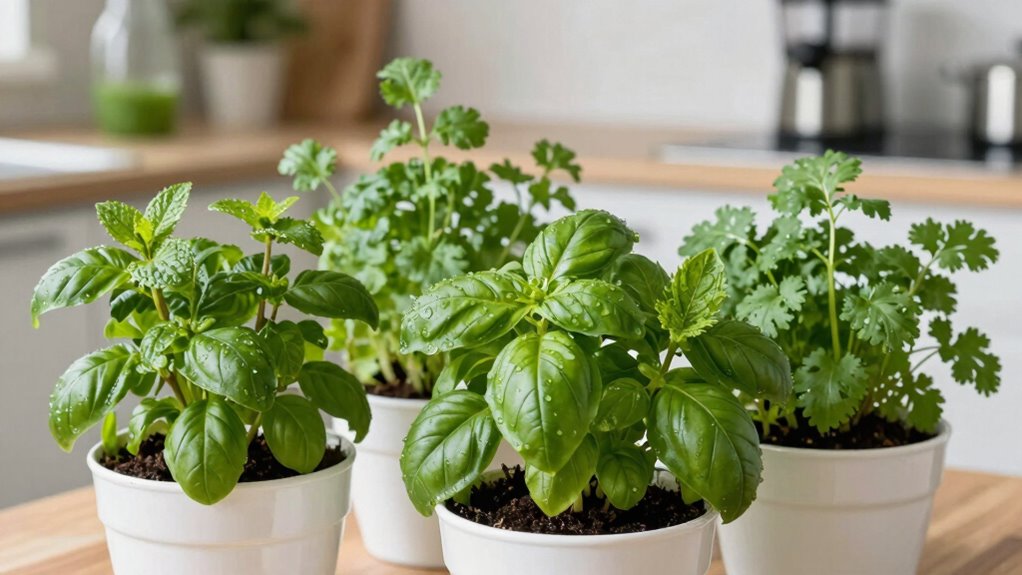
When selecting herbs for your indoor garden, consider those that complement your favorite juicing recipes. Basil, for instance, adds a sweet, slightly spicy note to green juices, while mint provides a revitalizing burst that lifts the overall flavor. Parsley is another versatile herb that brightens up almost any juice with its clean, slightly peppery taste. Cilantro offers a citrusy undertone, perfect for adding complexity to vegetable-based juices. Growing these herbs indoors means you can clip fresh leaves as needed, ensuring your juicing always starts with the best ingredients.
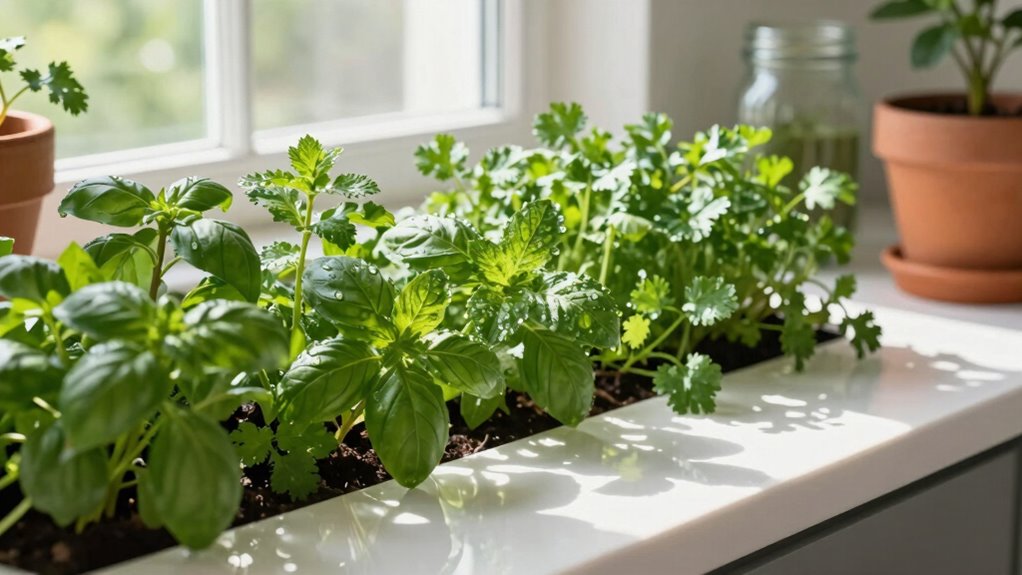
Herb planting indoors is straightforward and rewarding. You don’t need a large space—just a sunny windowsill or grow lights to keep your herbs thriving. Use good-quality soil, guarantee proper drainage, and water regularly to keep your herbs healthy. As your plants grow, you can prune them to encourage bushier growth, which means even more herbs for your juicing recipes. The beauty of indoor herb gardens is that they’re low-maintenance but high-yield, giving you a steady supply of fresh greens and herbs to experiment with in your juices.
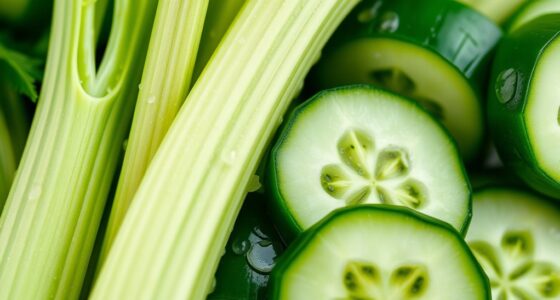
Incorporating homegrown herbs into your juicing routine transforms each glass into a fresh, flavorful experience. You can tailor your juices to include just the right amount of herb to suit your palate, enhancing both taste and nutritional value. Whether you’re making a simple cucumber and mint juice or a more complex blend with parsley and basil, having herbs on hand makes the process seamless. Plus, growing your own herbs adds a satisfying, healthful element to your lifestyle, giving you control over what goes into your body. With a little effort in herb planting indoors, you’ll find that your juicing recipes become more vibrant, flavorful, and enjoyable every time.
indoor herb garden kit for juicing
As an affiliate, we earn on qualifying purchases.
As an affiliate, we earn on qualifying purchases.
Frequently Asked Questions
How Often Should I Water My Indoor Herbs?
You should water your indoor herbs when the soil moisture feels dry about an inch below the surface. Typically, this means watering once or twice a week, but it varies based on your indoor conditions. Stick to a consistent watering schedule, and always check the soil moisture before watering to prevent overwatering. Proper watering helps your herbs thrive and keeps them healthy for juicing.
What’s the Best Lighting for Indoor Herb Gardens?
Think of your indoor herb garden as a vintage typewriter, where the right light makes everything run smoothly. You should aim for bright, direct sunlight or use grow lights with full-spectrum LED bulbs. Consider herb container styles that maximize light exposure, and keep indoor humidity control in check to prevent mold. Proper lighting guarantees lush, healthy herbs, making your juicing herbs thrive with vibrant flavors season after season.
How Do I Prevent Pests Indoors?
You can prevent pests indoors by regularly inspecting your herbs for pest identification early. Keep your garden clean and avoid overwatering, which attracts pests. Use organic pest control methods like neem oil or insecticidal soap when necessary, instead of chemicals. Quarantining new plants before introducing them helps prevent pests from spreading. Staying vigilant and maintaining healthy, well-maintained herbs will markedly reduce pest issues and keep your indoor garden thriving.
Can I Grow Herbs Year-Round Indoors?
Yes, you can grow herbs year-round indoors. Did you know that indoor gardens can yield herbs even during winter’s coldest months? To keep herbs thriving, practice herb drying for preservation and use companion planting to boost growth and deter pests. With proper lighting, watering, and care, your indoor herb garden stays productive, giving you fresh herbs whenever you need them for juicing or cooking.
Which Herbs Are Most Nutritious for Juicing?
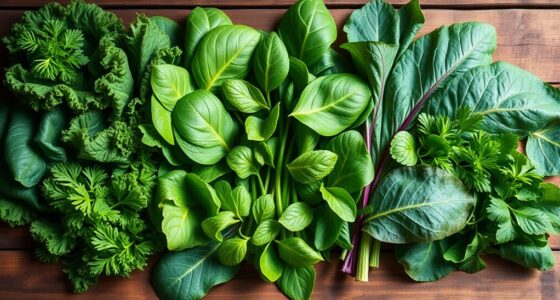
You’ll want to grow herbs like kale, parsley, and mint for juicing, as they’re packed with nutrients and have vibrant flavor profiles. Kale offers high levels of vitamins A, C, and K, boosting your immunity, while parsley provides iron and antioxidants. Mint adds a invigorating taste and aids digestion. These herbs deliver impressive nutritional benefits, making your juices both delicious and healthful, and are easy to grow indoors year-round.
Conclusion
As you nurture your indoor herb garden, you’ll find yourself constantly drawn to the fresh flavors it offers—almost like it was meant to be part of your daily routine. The joy of cultivating herbs for juicing becomes a delightful coincidence, blending convenience with health. Before you know it, you’ll wonder how you ever lived without these vibrant greens, turning your kitchen into a personal oasis of wellness that keeps calling you back, season after season.
NFL season / tailgating Picks
team gear
As an affiliate, we earn on qualifying purchases.