If you need a date coder that can withstand condensation, thermal systems are your best choice. They produce more durable, moisture-resistant prints that won’t smudge or fade when exposed to humidity or water. Inkjet coders, however, struggle in damp conditions, as their prints can smudge or fade over time. To learn which system suits your environment and how to optimize your marking process, keep exploring your options further.
Key Takeaways
- Thermal coders produce more moisture-resistant and durable prints that withstand condensation better than inkjet systems.
- Inkjet prints are prone to smudging, fading, or washing away in humid or condensation-prone environments.
- Thermal systems transfer ink via heat, creating prints that resist moisture and environmental humidity.
- Inkjet systems require specialized, moisture-resistant inks, but still struggle with long-term durability under condensation.
- Overall, thermal date coders are better suited for environments with high humidity or frequent condensation.
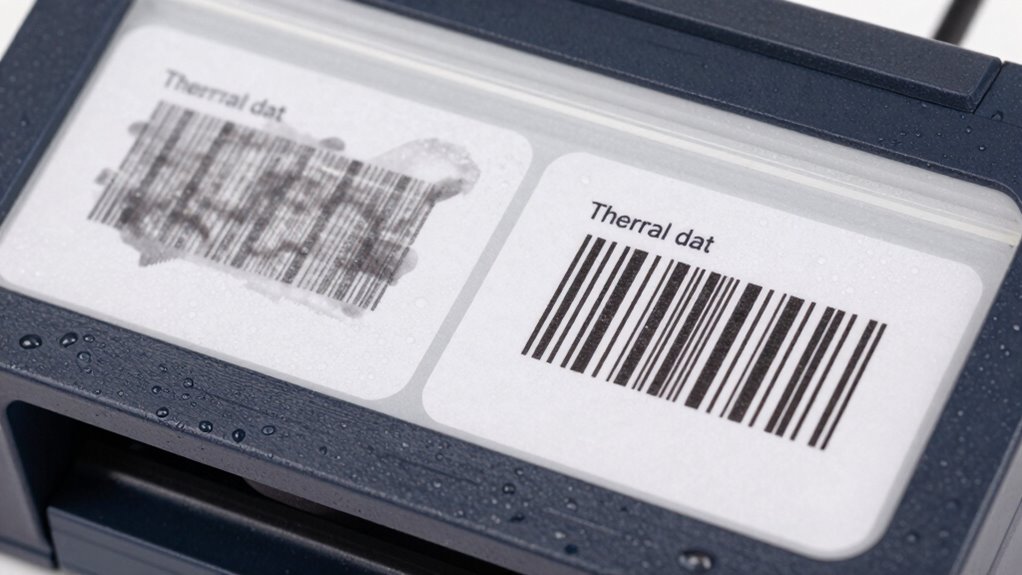
When choosing a date coding system for your production line, understanding the differences between inkjet and thermal coders is essential. Both methods have their strengths and weaknesses, especially when it comes to print durability and maintenance challenges. If your production environment frequently encounters condensation or moisture, these factors can determine which system is more suitable for your needs.
Inkjet coders are popular because they are versatile and can print on a wide variety of surfaces. However, their print durability can be compromised in humid or wet conditions. Moisture can cause the ink to smudge or fade over time, making it harder to read the date or batch number. This issue becomes more prominent when condensation forms on the product surface or ambient environment. To combat this, you might need to invest in specialized inks or additional protective coatings, which can add to maintenance efforts. Inkjet systems also require regular cleaning to prevent ink clogging, especially when printing on porous or uneven surfaces. Maintenance challenges include cleaning print heads frequently and replacing ink cartridges or reservoirs, which can be time-consuming and increase downtime.
Thermal coders, on the other hand, excel in environments with high humidity or condensation. They use heat to transfer ink or create marks, resulting in a more robust and durable print. The print produced by thermal coders tends to resist smudging, fading, or washing away, making it ideal for products exposed to moisture. This durability ensures your labels stay legible during storage, transportation, and shelf life. However, thermal systems can be more sensitive to dust and debris, which may clog the print head if not maintained properly. While they generally require less frequent cleaning than inkjet systems, when maintenance is needed, it often involves more technical procedures, such as replacing thermal ribbons or cleaning delicate components. These challenges can impact overall uptime if not managed proactively. Additionally, print durability can be significantly affected by environmental factors, which should be carefully considered during system selection.
Frequently Asked Questions
How Do Temperature Fluctuations Affect Each Coder’s Performance?
Temperature fluctuations can impact each coder differently, especially with humidity effects in mind. You’ll find thermal date coders perform better with temperature stability, as they rely on consistent heat to produce clear marks. Inkjet coders may struggle during rapid temperature changes, causing smudging or fading due to humidity effects. To guarantee ideal performance, maintain stable temperatures and control humidity levels in your environment, reducing printing errors and preserving print quality.
Can Inkjet or Thermal Coders Print on Irregular or Textured Surfaces?
Think of your surfaces as a rugged mountain trail — tricky to navigate. Inkjet coders struggle here because surface adhesion and ink viscosity make it hard for the ink to stick evenly on irregular or textured surfaces. Thermal coders, however, are like a steady climber, better suited to these surfaces since they rely less on surface adhesion, ensuring clearer, more consistent prints even on rough terrain.
What Maintenance Is Required to Prevent Condensation Damage?
To prevent condensation damage, you need to implement proper moisture protection and follow cleaning protocols regularly. Keep the printhead and surrounding components dry and free of moisture buildup, which can cause corrosion or print failure. Use appropriate desiccants and ensure proper ventilation in the printing area. Routine cleaning removes dust and moisture that can lead to condensation issues, helping your date coders operate reliably in humid or variable environments.
Are There Environmental Considerations Affecting Coder Durability?
Like a wise old owl in a storm, you should consider environmental factors that affect your coder’s durability. Moisture sensitivity and environmental stability play vital roles, especially in humid or extreme conditions. If you neglect these, your equipment’s lifespan diminishes. Choose coders with robust sealing and weatherproof features, and monitor environmental conditions regularly. Properly addressing these factors ensures your print stays clear and your investment lasts longer, even in challenging environments.
How Do Power Outages Impact the Operation of Each Coder Type?
Power failures can disrupt both inkjet and thermal date coders, halting production. You should use an emergency backup power system to keep them running during outages, ensuring continuous printing. Inkjet printers, especially those with sensitive electronics, are more vulnerable to power fluctuations, so backup power helps prevent print quality issues. Thermal coders tend to be more resilient but still benefit from emergency backup to maintain operational integrity during power failures.
Conclusion
When choosing between inkjet and thermal date coders, consider your environment’s humidity. Inkjet printers might struggle with condensation, smudging or fading your print, while thermal coders often hold up better. Remember, “a chain is only as strong as its weakest link,” so select the technology that best suits your conditions. Investing in the right coder guarantees your dates stay clear and legible, helping you avoid costly mistakes down the line.