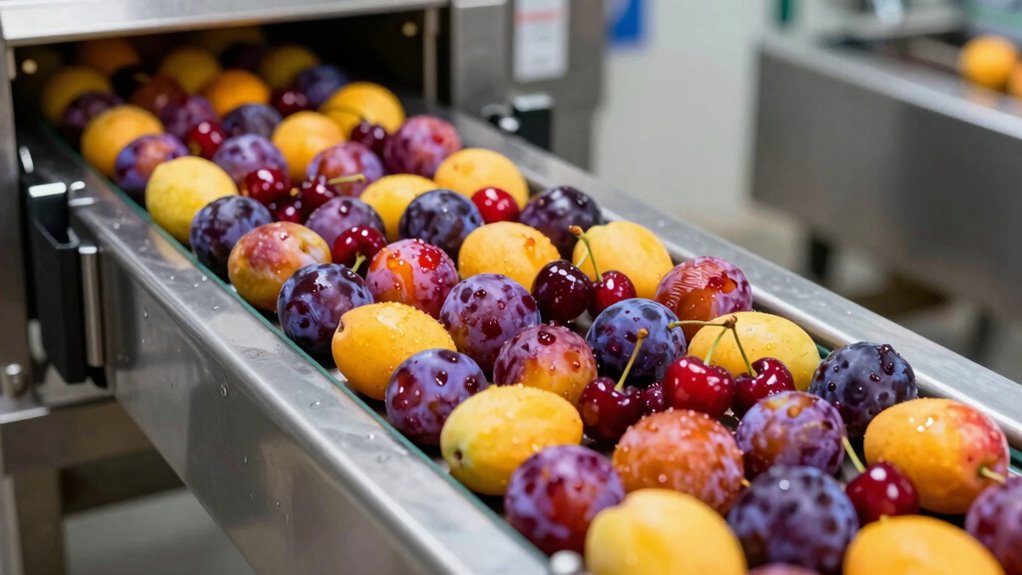

When you arrive with overripe fruit, juice plants carefully monitor ripeness stages to prevent spoilage. They handle the fruit gently, quickly sorting and segregating overripe batches from ideal ones. Immediate processing or blending with underripe produce helps maintain quality. Low-temperature storage slows spoilage, and enzymes or formulation adjustments optimize juice extraction from softer fruit. If you want to discover more about how these practices guarantee fresh, high-quality juice, stay tuned for further insights.

Get kitchen staples and gadgets delivered free with Prime
- Fast, free delivery on millions of items
- Prime Video, Amazon Music and more included
- Member-only deals all year
Key Takeaways
- Juice plants monitor harvest timing to identify and separate overripe fruit upon arrival.
- Overripe fruit is handled gently and processed quickly to prevent further spoilage.
- Enzymes and formulation adjustments are used to optimize extraction and product stability from soft fruit.
- Rapid cooling and proper storage extend the processing window for overripe produce.
- Sorting and targeted processing help maximize yield and maintain juice quality despite overripe inputs.
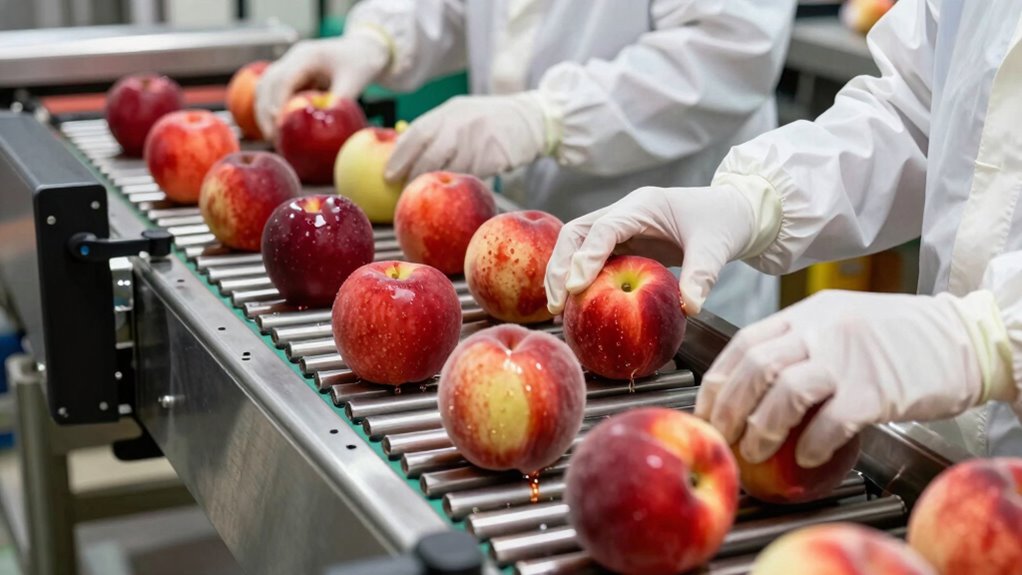
Handling ripe fruit properly is essential for juice plants to produce high-quality products. When fruit ripening occurs prematurely or unevenly, it can jeopardize the entire production process. As a juice plant operator, you need to understand how to manage fruit that arrives too ripe to guarantee the best flavor, nutrient content, and shelf life. Proper handling starts with monitoring harvest timing; knowing when fruit is at its peak ripeness helps prevent the arrival of overripe produce. However, if fruit does arrive past its ideal harvest window, quick and strategic actions become necessary to minimize quality loss.
When you receive fruit that’s overly ripe, the first step is to assess its condition carefully. Overripe fruit tends to be softer, with a higher risk of bruising and spoilage. You should handle it gently during transfer and sorting to prevent damage. Speed is essential—delays can lead to fermentation, mold growth, or fermentation, all of which compromise juice quality. Once sorted, you might separate the overripe batch from those in ideal condition. This allows you to decide whether to process it immediately or use it for specific products like concentrate, which tolerate slight over-ripeness better than fresh juice.
Processing overripe fruit requires adjustments to your standard procedures. For example, you might need to incorporate enzymes or pectinases to break down tissue and improve extraction. These enzymes assist in maximizing yield despite the fruit’s softer texture. Additionally, since overripe fruit contains more sugars and less acidity, adjustments in your formulation or fermentation process may be necessary to maintain balance and prevent fermentation issues. You might also consider blending overripe fruit with underripe batches to dilute overly strong flavors and achieve a more balanced profile. Proper handling also includes monitoring fruit ripeness stages to better anticipate and manage incoming produce. Being aware of biodiversity can help in understanding how different fruit varieties respond to ripening conditions and how to optimize handling practices accordingly. Recognizing the importance of post-harvest management can further reduce spoilage risks and improve overall quality control.
Another critical aspect is controlling storage conditions before processing. Overripe fruit is more susceptible to spoilage, so keeping it at low temperatures slows microbial activity and preserves quality temporarily. Quick cooling after reception is essential to extend the window for processing and prevent further deterioration. If immediate processing isn’t possible, you may need to freeze the fruit briefly, although this can affect texture and juice extraction efficiency. Throughout this process, maintaining strict hygiene standards reduces contamination risks that can be higher with overripe produce.
fruit enzyme for juice extraction
As an affiliate, we earn on qualifying purchases.
As an affiliate, we earn on qualifying purchases.
Frequently Asked Questions
How Do Juice Plants Detect Overripe Fruit Upon Arrival?
You can tell if fruit is overripe upon arrival through ripeness assessment and quality control measures. Juice plants perform visual inspections, checking for softness, discoloration, and signs of spoilage. They also use tools like firmness testers and aroma sensors to detect overripe fruit. These steps guarantee only fresh, high-quality fruit enters the processing line, preventing overripe ingredients from affecting the juice’s flavor, texture, and shelf life.
Are There Specific Storage Conditions for Overly Ripe Fruit?
You’ll find that storage techniques for overly ripe fruit focus on slowing ripening indicators. Imagine placing fragile, soft fruit in cool, controlled environments where temperatures hover just above freezing, and humidity levels are carefully maintained. This slows down enzymatic activity, preventing spoilage. Proper storage keeps the fruit from fermenting or spoiling prematurely, giving your team extra time to process the fruit at its peak ripeness while minimizing waste and preserving flavor.
What Are the Safety Concerns With Handling Very Ripe Fruit?
Handling very ripe fruit raises safety concerns like microbial contamination and pesticide residues. You need to be cautious, as overly ripe fruit can harbor harmful bacteria or molds that may cause illness. Additionally, if the fruit was treated with pesticides, residues might be higher in ripe fruit, requiring thorough washing or peeling. Proper sanitation and inspection help reduce these risks, ensuring the juice you produce remains safe and healthy for consumers.
How Is Overripe Fruit Processed Into Juice Without Spoilage?
You might think overripe fruit can’t make good juice, but with proper fruit preservation techniques, it can be transformed without spoilage. Juice plants process overripe fruit quickly, using rapid extraction and pasteurization to prevent fermentation. Strict quality control guarantees that even very ripe fruit produces high-quality juice, maintaining flavor and safety. This way, overripe fruit is not wasted but turned into delicious, safe juice efficiently.
Do Juice Plants Reuse or Repurpose Overripe Fruit?
Yes, juice plants often reuse or repurpose overripe fruit to minimize waste and promote fruit preservation. They carefully assess ripening indicators to determine the fruit’s suitability. Overripe fruit is processed quickly into juice, ensuring it’s used before spoilage occurs. Sometimes, it’s blended into purees or used for other products, reducing waste and maximizing resources. This approach helps maintain quality and sustainability in juice production.
Conclusion
You’ve seen how juice plants expertly handle overripe fruit, turning potential waste into valuable product. Remarkably, studies show that up to 20% of harvested fruit is often discarded due to overripeness, yet juice plants efficiently process this surplus, reducing waste and maximizing yield. This innovative approach not only benefits the environment but also boosts your supply chain’s sustainability. So next time, remember how these plants transform excess into opportunity, proving that even ripe fruit has a purpose.
Halloween Picks
halloween
As an affiliate, we earn on qualifying purchases.