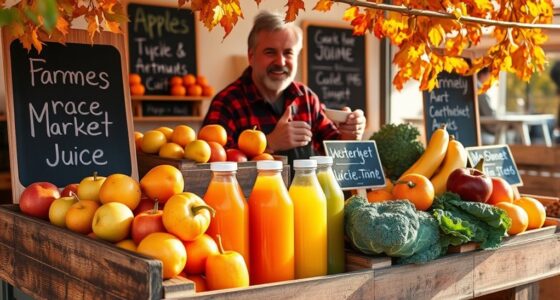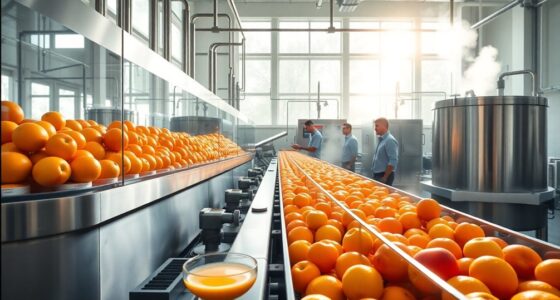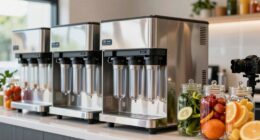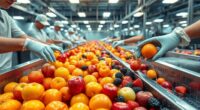
From orchard to bottle, your fruit first gets certified organic, ensuring it’s grown without synthetic chemicals. Then, it’s harvested at peak ripeness and transported in refrigerated trucks to processing plants. There, the fruit is sorted, washed, and carefully extracted to maximize juice yield while maintaining quality. The juice is pasteurized, filtered, and bottled under strict standards. If you want to see how each step guarantees freshness and safety, keep exploring the supply chain process.
Key Takeaways
- Fruits are harvested at peak ripeness and transported promptly to processing facilities to preserve freshness.
- Supply chain logistics utilize refrigerated trucks and efficient scheduling to prevent spoilage and maintain quality.
- Fruits are sorted, washed, and prepared at processing plants for juice extraction, ensuring safety and quality.
- Juice is extracted, filtered, and pasteurized to preserve flavor, extend shelf life, and eliminate bacteria.
- Bottling involves automated filling, sealing, and coordinated distribution to deliver fresh, high-quality juice to consumers.
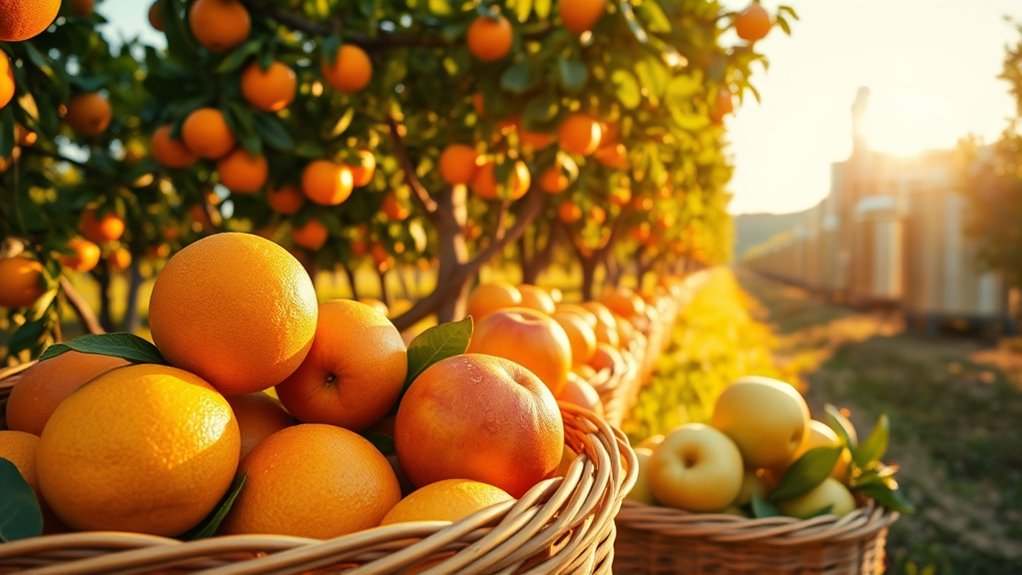
Have you ever wondered how your favorite juice makes its way from orchard to bottle? It’s a fascinating process that involves careful planning, strict standards, and precise coordination. At the start, the journey hinges on the quality of the fruit, which is often certified organic to meet consumer demand for healthier, environmentally friendly products. Organic certification ensures that the fruits are grown without synthetic pesticides or fertilizers, and that sustainable farming practices are followed. This certification not only guarantees the quality of the raw materials but also influences every step that follows in the supply chain. From the moment the fruit is harvested, supply chain logistics come into play, orchestrating the movement of produce from farms to processing facilities.
Organic-certified fruits ensure quality and sustainability from orchard to processing.
The logistics behind this process are complex and require meticulous planning. Farmers, distributors, and processors coordinate schedules to make certain that ripe fruit reaches the factory at its peak freshness. In many cases, refrigerated trucks transport the fruit to prevent spoilage, especially when dealing with delicate varieties. This stage demands precision, as delays can affect the fruit’s quality and, ultimately, the flavor of the final juice. Once at the processing plant, the fruit is sorted, washed, and prepared for extraction. This step is essential because any contamination or mishandling could compromise the safety and quality of the juice. Additionally, understanding the juice yield from various fruits helps optimize the extraction process and reduce waste.
From there, the extraction process begins, where juice is carefully pressed and filtered to remove pulp, seeds, and solids. Quality control measures are indispensable here; samples are tested to make sure the flavor, sugar content, and purity meet the desired standards. It’s also during this phase that the juice may be pasteurized to eliminate any harmful bacteria, extending shelf life while preserving flavor. Once the juice passes all quality checks, it’s ready to be bottled. The filling process is highly automated, with machinery designed to prevent contamination and make certain each bottle is filled accurately and sealed tightly.
Throughout this entire journey, supply chain logistics remain essential — coordinating transportation, managing inventory, and tracking each batch to make sure freshness and safety are maintained. From organic-certified farms to the processing plant, and finally into your hands, every step demands precision, accountability, and adherence to strict standards. It’s this seamless coordination that guarantees you receive a fresh, pure, and delicious juice every time. So next time you enjoy a glass, remember the intricate journey it took to get there.

Yokoma Semi-automatic Aluminum Screw Cap Capping Machine Bottle Cap Capping Sealing Machine Wine Bottle Capper Sealer Machine 5.9-13.8" Adjuatable Height 110V
[Versatile Cap Processing] This semi-automatic screw cap capping machine handles a wide range of aluminum and metal bottle...
As an affiliate, we earn on qualifying purchases.
Frequently Asked Questions
How Do Juice Suppliers Ensure Fruit Freshness During Transportation?
You guarantee fruit freshness during transportation by maintaining a strict cold chain, which keeps the fruit at ideal temperatures from harvest to delivery. You also use packaging innovations like vacuum-sealed or insulated containers to protect the fruit from spoilage and temperature fluctuations. These measures help preserve the quality and freshness of the fruit, ensuring it arrives at the processing facility in prime condition for juice production.
What Certifications Are Required for Organic Juice Producers?
You need to meet organic standards and certification requirements to produce organic juice. This means adhering to specific practices like avoiding synthetic pesticides and fertilizers, maintaining soil health, and using organic-approved processing methods. You must obtain certification from authorized agencies that verify your compliance. Regular inspections and documentation guarantee your operations stay aligned with organic standards, helping consumers trust your product’s organic integrity.
How Is Juice Quality Monitored Throughout the Supply Chain?
You monitor juice quality throughout the supply chain through consistent laboratory testing, visual inspections, and sensory evaluations. You guarantee quality assurance by tracking each step, from harvest to bottling, to catch contaminants, measure sugar levels, and verify flavor profiles. This process creates a reliable, high-quality product, giving consumers confidence. By maintaining rigorous standards, you prevent spoilage, uphold safety, and keep the juice fresh and delicious from orchard to bottle.
What Are the Biggest Challenges in Sourcing Exotic Fruits?
You face challenges in sourcing exotic fruits due to complex fruit importation and supply chain logistics. Ensuring consistent quality and freshness becomes difficult with long-distance transportation and strict regulations. You must navigate seasonal availability, customs delays, and transportation risks that can disrupt your supply. Managing relationships with international suppliers and coordinating timely delivery are essential to overcoming these hurdles and maintaining a steady flow of exotic fruits for your products.
How Do Seasonal Variations Affect Juice Supply Consistency?
Ever wonder how seasonal harvesting impacts your favorite juice? It causes supply fluctuations that can disrupt consistency, making it hard to meet demand year-round. When fruits are out of season, sourcing becomes more challenging, leading to shortages or higher costs. You might notice variations in flavor or availability. To stay stocked, suppliers often rely on stockpiling or adjusting production schedules, but seasonal changes still pose a significant hurdle in delivering consistent juice quality.
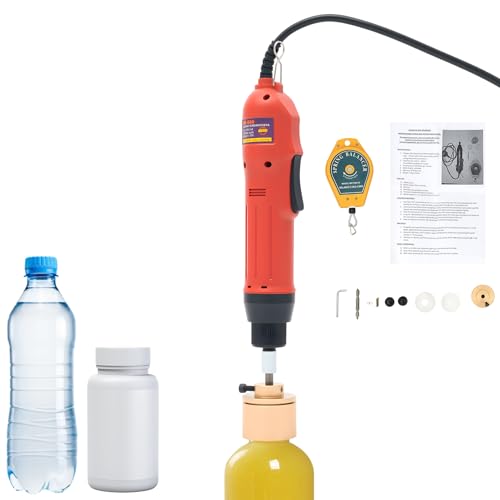
Electric Handheld Bottle Capping Machine, Bottle Capper Screwing Sealing Machine for 10-30mm/0.39-1.18inch Round Plastic Caps
Saving Labor: The bottle capping machine can let you get rid of the traditional laborious wringing of bottle...
As an affiliate, we earn on qualifying purchases.
Conclusion
Understanding the juice supply chain is like following a river from its source to your glass. You see how each step, from orchard to bottle, plays an essential role. By appreciating this journey, you become more aware of the effort and care involved. Just as a river nurtures everything in its path, your awareness can help support sustainable practices. Ultimately, your choice can make a difference, turning each sip into a conscious, meaningful act.

ZONEPACK Manual Electric Bottle Capping Machine Handheld Cap Sealer Sealing Machine 10-50mm Capping Diameter Bottle Capper Sealer Screwing Sealing Machine (110V)
HANDHELD ELECTRIC CAPPING MACHINE - Voltage: AC 110V 60Hz; Power: 80W; Cap diameter: 10-50mm; Production capacity: 30-90 bottles/minute...
As an affiliate, we earn on qualifying purchases.

Moonshan 4-Nozzle Automatic Liquid Filling Machine Line 1-30 Ounce Bottle Filling Machine Bottle Filler with 35 Inch Belt Conveyor Desktop Version for Juice Wine Detergent
Desktop Version Automatic Line: This compact 4-nozzle automatic liquid filling machine line integrates liquid filling machine, belt conveyor,...
As an affiliate, we earn on qualifying purchases.