
Revolutionary advances in juice production are changing how you enjoy your drinks. Membrane technologies like microfiltration and reverse osmosis enhance juice quality by removing unwanted particles and preserving flavor. These methods reduce processing times and energy use while maintaining the nutritional content. Plus, new techniques for recovering aroma compounds enrich flavor and increase consumer satisfaction. If you stick around, you'll discover more about these innovations and their impact on your favorite beverages.

Get kitchen staples and gadgets delivered free with Prime
- Fast, free delivery on millions of items
- Prime Video, Amazon Music and more included
- Member-only deals all year
Key Takeaways
- Advanced membrane technologies like microfiltration and reverse osmosis enhance juice quality by efficiently removing impurities and preserving sensitive nutrients and flavors.
- Innovations in aroma recovery through pervaporation and membrane distillation achieve over 90% extraction rates while minimizing thermal degradation of flavors.
- Membrane operations significantly reduce processing times and energy consumption compared to traditional methods like sedimentation and thermal concentration.
- New membrane materials and designs are being researched to improve performance, durability, and sustainability in juice processing.
- The global market for membrane technology in juice production is expected to reach $8.26 billion by 2024, indicating rapid industry growth.
Fundamentals of Membrane Operations
Membrane operations play an essential role in enhancing juice quality by using pressure-driven separation techniques.
With technological advances, you can utilize methods like microfiltration (MF), ultrafiltration (UF), nanofiltration (NF), and reverse osmosis (RO) to effectively refine juices.
MF membranes, with pore sizes of 0.05 to 2 µm, remove particles and bacteria at pressures of 0.5–2 bar.
UF membranes retain dissolved molecules while allowing smaller solutes to pass through, operating between 1–10 bar.
NF membranes, at 5–15 bar, concentrate juice while reducing sugar content without thermal treatment.
Finally, RO membranes work at 10 to 100 bar, separating low molecular weight compounds, enhancing purity, and extending shelf life.
These methods guarantee high-quality juices that meet consumer demands.
Fruit Juice Clarification
Achieving high juice quality goes beyond just separation techniques; it also involves effective clarification.
Fruit juice clarification is essential for enhancing visual appeal and stability by removing suspended solids and cloudiness. Traditional methods, like sedimentation and centrifugation, can be labor-intensive, but membrane technologies, such as microfiltration, provide a more efficient solution.
With pore sizes between 0.05 and 2 µm, microfiltration membranes effectively eliminate larger particles and bacteria without thermal stress or chemical additives, greatly improving product quality and safety.
This innovative technology reduces processing times and energy consumption, aligning with sustainability goals in the industry. Ongoing research into membrane materials guarantees that the sensory and nutritional qualities of fresh fruits are preserved, resulting in superior juice products.
Fruit Juice Concentration
Fruit juice concentration plays a vital role in juice production by reducing the volume of juice and enhancing its flavor while extending shelf life.
Traditional methods, often involving thermal processes, can compromise sensitive nutrients and flavors. That's why many producers are turning to membrane technology, like reverse osmosis and nanofiltration.
These methods operate at lower temperatures, preserving the juice's nutritional and sensory qualities. By utilizing these advanced techniques, you not only enjoy better-tasting juices but also contribute to consumer convenience.
The global market for this technology is booming, projected to hit $8.26 billion by 2024. This shift reflects a growing demand for efficient, sustainable processes that deliver healthier, more natural juice products, aligning perfectly with today's health-conscious consumer.
Recovery of Aroma Compounds
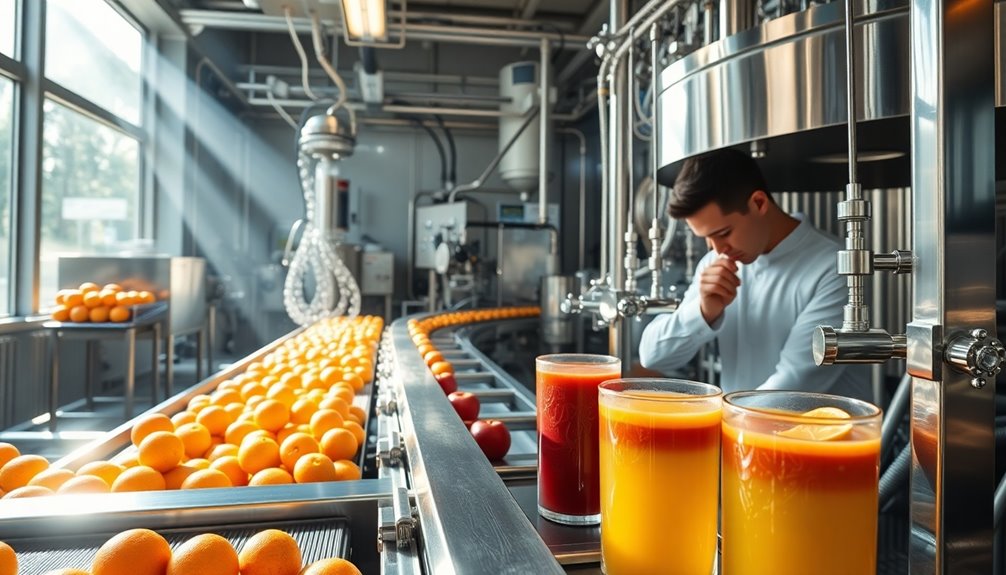
While the recovery of aroma compounds might seem like a niche aspect of juice production, it's essential for enhancing flavor and consumer satisfaction. In today's global market, the sensory qualities of juice can greatly impact consumer choices.
Techniques like pervaporation and membrane distillation allow you to selectively extract volatile aroma compounds while preserving the juice's nutritional value. These methods operate at lower temperatures, minimizing thermal degradation of sensitive flavors.
Studies show that optimizing these advanced separation techniques can yield over 90% recovery rates. Additionally, ongoing innovations in membrane design are improving efficiency, aligning with the industry's sustainability goals.
Future Directions in Juice Processing
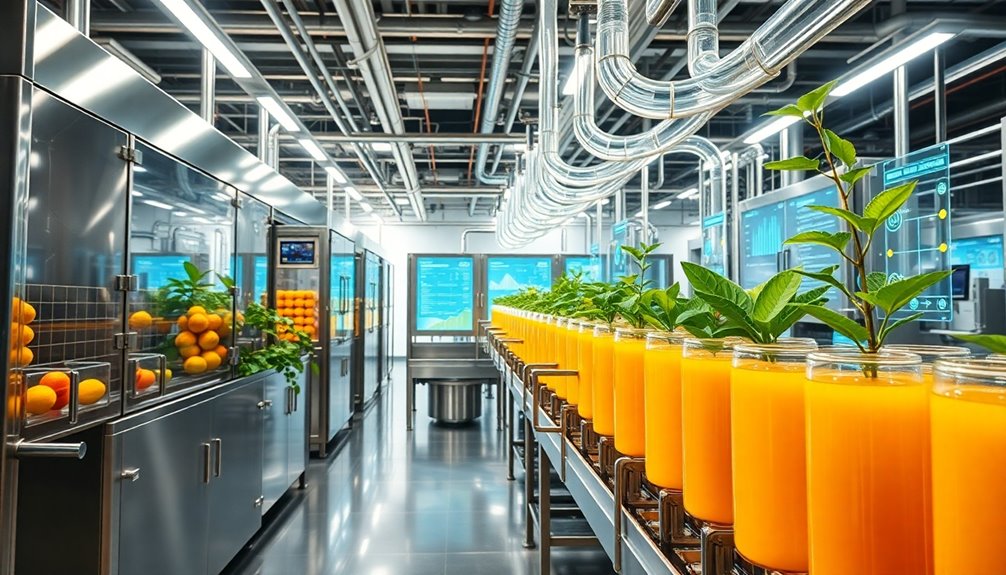
Advancements in aroma recovery are paving the way for innovative juice processing techniques that enhance both quality and sustainability.
By integrating advanced membrane technologies like microfiltration and reverse osmosis, you can achieve superior juice quality while minimizing thermal stress and chemical additives.
Research is focusing on new membrane materials that improve performance and durability, ensuring that the sensory characteristics and nutritional qualities of fresh fruits are preserved.
Techniques such as membrane distillation and osmotic distillation are gaining traction, operating at lower temperatures to protect thermosensitive components.
Optimizing continuous operations with spiral wound and hollow fiber designs will boost production efficiency and cut energy consumption.
As sustainability and energy efficiency become paramount, these innovations align with consumer demands for eco-friendly products. Furthermore, the integration of tropical fruit blends in juice processing can enhance flavor profiles, creating unique product offerings that appeal to health-conscious consumers.
Frequently Asked Questions
What Is the Application of Membrane Technology in Processing of Juices?
Membrane technology plays a vital role in juice processing by enhancing quality and safety.
You can use microfiltration and ultrafiltration to effectively separate unwanted particles and bacteria, improving clarity and shelf-life.
Reverse osmosis allows you to concentrate juices by removing water while preserving essential nutrients and flavors.
This technology not only reduces energy consumption but also supports sustainable practices, making it an increasingly attractive choice in the growing juice market.
What Is the Thermal Processing of Apple Juice?
Thermal processing of apple juice means heating the juice to a specific temperature for a set time to eliminate pathogens and extend its shelf life.
You typically reach pasteurization temperatures around 85°C (185°F) for at least 30 seconds. This method guarantees safety, but it can affect the juice's taste and nutritional profile, potentially reducing heat-sensitive vitamins.
Balancing temperature and time is vital to maintaining quality while making certain the juice is safe for consumers.
What Is the Process of Apple Juice?
The process of apple juice begins with washing and sorting the apples to remove any dirt or damaged ones.
You then crush the apples into a pulp, followed by pressing to extract the juice using hydraulic or pneumatic methods.
After that, you clarify the juice to eliminate solids, often using advanced filtration techniques.
Finally, you pasteurize the juice to kill pathogens and package it in sterilized containers to guarantee freshness and safety.
Conclusion
In this tech revolution, you've got the chance to transform juice production into something extraordinary. Just like a master chef fine-tunes a recipe for the perfect dish, these innovative techniques refine the juice-making process. For instance, advanced membrane operations can concentrate flavors while preserving nutrients, much like a painter skillfully blending colors to create a masterpiece. Embracing these revolutionary advances means you're not just producing juice; you're crafting a vibrant, flavorful experience that consumers will savor.
Halloween Picks
halloween
As an affiliate, we earn on qualifying purchases.