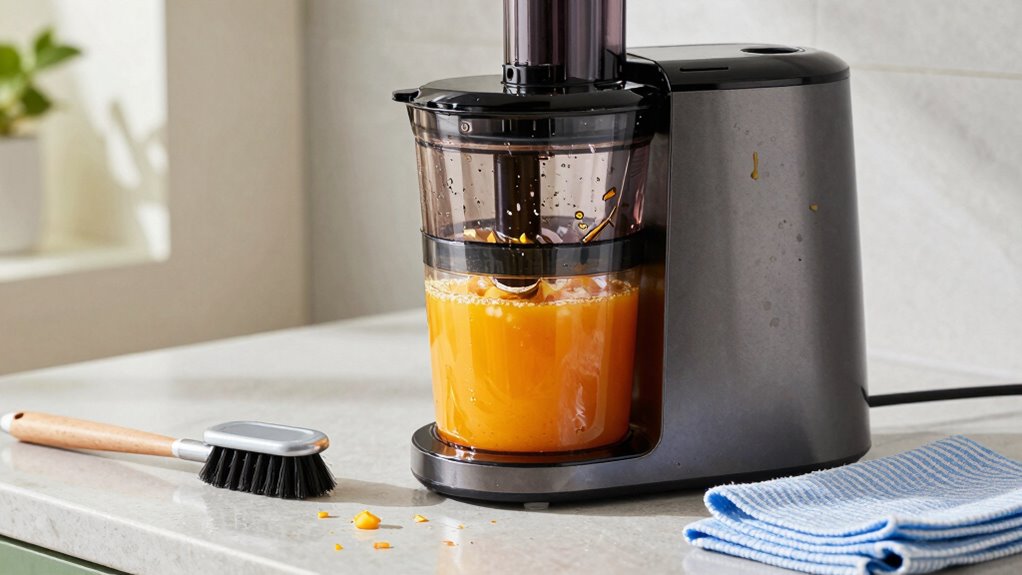
To prevent mold and odors, adopt a quick 10-minute cleaning routine after each juicing session. Rinse all parts immediately with warm water, focusing on the filter and blades to remove pulp and residue. Use a soft brush and soapy water to scrub tight spots, then thoroughly dry all components before reassembling. Consistently following this simple habit keeps your juicer hygienic and in top shape—continue below to discover more tips for long-term maintenance.
Key Takeaways
- Rinse all juicer parts immediately after use to prevent residue from drying and hardening.
- Use warm, soapy water and a soft brush to thoroughly clean filter, blades, and crevices in about 10 minutes.
- Dry all components completely before reassembling to prevent mold and bacterial growth.
- Schedule weekly deep cleans with vinegar or mild cleaning solutions to eliminate lingering residue and odors.
- Incorporate quick daily cleaning into your routine to maintain hygiene and keep the juicer performing optimally.

Keeping your juicer clean is essential for ensuring it functions properly and produces healthy, great-tasting juice. One of the main reasons to clean your juicer regularly is to prevent the buildup of fruit residue. When you process fruits and vegetables, tiny particles often get stuck in the nooks and crannies of your machine. If left uncleaned for too long, this residue can turn into mold or bacteria, which not only affects the taste of your juice but also poses health risks. Developing a simple cleaning schedule helps you stay on top of this task, making it less of a chore and more of a routine. Setting aside just ten minutes after each use guarantees you remove all fruit residue before it has a chance to dry out or mold.
A consistent cleaning schedule is key to maintaining your juicer’s performance. You might find it helpful to clean your machine immediately after juicing, rather than letting the residue sit overnight. This habit prevents fruit particles from hardening and becoming more difficult to remove later. Plus, when you clean promptly, you’re less likely to forget or skip steps, ensuring every part of your juicer stays hygienic. You’ll want to disassemble the juicer thoroughly, paying special attention to the filter, blades, and any small crevices where fruit residue tends to accumulate. Using warm, soapy water is usually enough to cut through the sticky fruit pulp, but a soft brush can help reach into tight spots.
Sticking to a cleaning schedule doesn’t mean you need to spend a lot of time. Incorporate these quick steps into your daily routine: rinse the parts immediately after use, scrub with warm soapy water, and dry thoroughly before reassembling. For a deeper clean, you can periodically soak removable parts in vinegar or a mild cleaning solution to eliminate any lingering residue or odors. This routine helps prevent the growth of mold and keeps your juicer functioning like new.
Frequently Asked Questions
Can I Use Vinegar to Clean My Juicer?
Yes, you can use vinegar for cleaning your juicer. Vinegar cleaning is a natural disinfectant that effectively removes residues and prevents mold growth. Simply mix equal parts vinegar and water, then run the solution through your juicer. Afterward, rinse thoroughly with water to eliminate any vinegar smell. This natural disinfectant is a safe, eco-friendly way to keep your juicer clean and hygienic with minimal effort.
How Often Should I Replace Juicer Parts?
You should replace juicer parts based on their wear and tear and manufacturer recommendations. For ideal juicer maintenance, check the cleaning frequency and inspect parts regularly for cracks or damage. Typically, blades and seals need replacement every 6 to 12 months, but this varies. Keep an eye on performance, and don’t hesitate to replace parts sooner if you notice reduced efficiency or buildup that cleaning can’t fix.
Is It Safe to Use a Dishwasher for Cleaning?
Yes, using a dishwasher for cleaning your juicer parts is generally safe, but you should check dishwasher safety guidelines first. Most removable parts are dishwasher safe and can be cleaned efficiently with this method. To guarantee proper cleaning, use gentle cycles and avoid harsh detergents. Remember, for ideal cleaning methods, always verify that your juicer parts are labeled dishwasher safe to prevent damage or mold buildup.
What Tools Are Best for Deep Cleaning?
For deep cleaning your juicer, you should use cleaning brushes and soft cloths. Cleaning brushes help reach into small parts and crevices, removing stubborn residue. Soft cloths are perfect for wiping surfaces without scratching. Together, these tools guarantee a thorough clean, preventing mold and build-up. Regularly using them keeps your juicer hygienic, safe, and in top condition, making your juice taste fresh and pure every time.
How Do I Prevent Mold in Juicer Seals?
Like a vigilant guardian, you prevent mold in juicer seals by thoroughly cleaning and drying them after each use. Guarantee you regularly inspect and maintain the seals, applying a thin layer of food-safe oil if recommended. Keep the seals dry and store the juicer in a cool, dry place. These mold prevention steps safeguard your juicer’s longevity and performance, making maintenance a simple, effective habit.
Conclusion
By sticking to this quick 10-minute routine, you’re planting seeds for a sparkling, mold-free juicer that blooms with every use. Think of your cleaning as watering a garden—regular attention keeps it vibrant and healthy. Just a few minutes daily clears away the debris and mold spores, ensuring your juicer stays a shining, fruit-filled oasis. With consistency, you’ll enjoy fresh, pure juice every time, transforming your kitchen into a thriving, clean sanctuary.