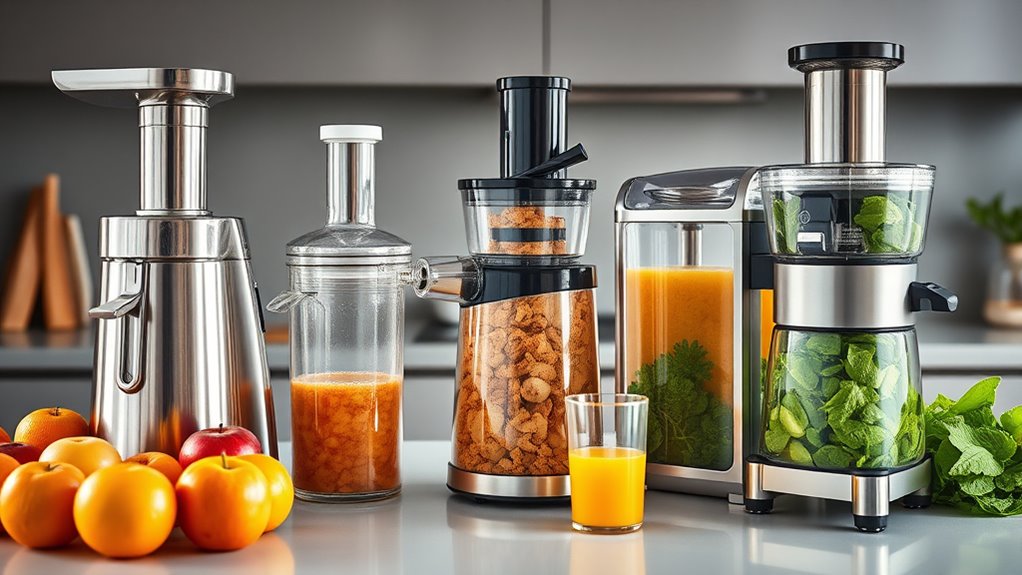

There are three main types of juicers you should know about: centrifugal, masticating, and twin-gear juicers. Centrifugal models spin quickly with a mesh filter to extract juice fast but may lose some nutrients. Masticating juicers crush produce slowly with an auger to preserve more nutrients and handle leafy greens better. Twin-gear juicers use interlocking gears for maximum efficiency and nutrient retention. Continue exploring to find out which juicer suits your needs best.
Key Takeaways
- Centrifugal juicers spin produce rapidly to extract juice using a mesh filter and centrifugal force.
- Masticating (slow) juicers crush produce slowly with an auger, preserving nutrients and extracting more juice.
- Twin-gear juicers grind and press produce with interlocking gears for maximum nutrient retention.
- Speed and juice quality are key factors when choosing between different juicer types.
- Regular cleaning and maintenance are essential to keep all juicers working efficiently and produce fresh juice.
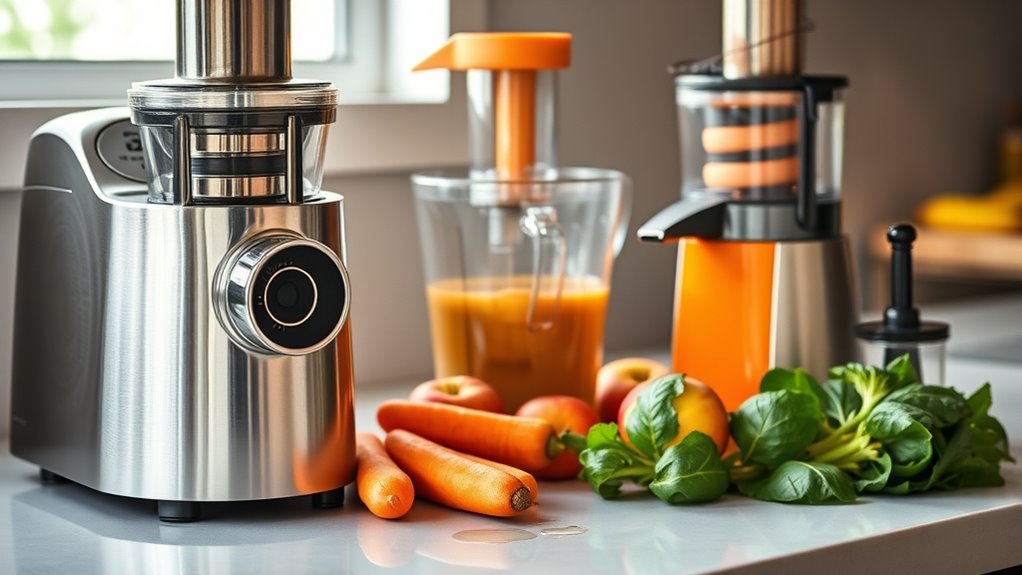
Have you ever wondered how to easily boost your daily intake of vitamins and nutrients? Juicing is a fantastic way to do that, but to get the most out of your efforts, understanding the different types of juicers and how they work is vital. Whether you’re new to juicing or looking to upgrade your equipment, knowing the ins and outs can make a significant difference in your juice quality and convenience. One of the key aspects to think about is juicer maintenance. Keeping your machine clean guarantees peak performance and prevents flavor contamination. Regularly disassembling your juicer, rinsing parts with warm water, and using mild brushes to remove pulp buildup can extend its lifespan and maintain the freshness of your juices. Proper juicer maintenance also helps prevent bacteria growth and guarantees each juice you make is as healthy as possible.
Regular cleaning and maintenance ensure fresh, nutritious juices and extend your juicer’s lifespan.
When it comes to juice extraction techniques, each type of juicer employs a different method to extract liquid from fruits and vegetables. Centrifugal juicers operate with a spinning blade that shreds produce against a mesh filter, rapidly separating juice from pulp through centrifugal force. They’re quick and convenient, making them a popular choice for busy mornings. Masticating juicers, also called slow or cold-press juicers, crush produce slowly with an auger, squeezing out juice with minimal heat and oxidation. This method preserves more nutrients and results in a higher yield of juice, especially from leafy greens. Twin-gear juicers use two interlocking gears to grind and press produce, producing very dry pulp and maximum nutrient retention. They’re ideal if you want the highest quality juice, though they tend to be more expensive and take up more space. Additionally, choosing a high-quality projector technology can greatly enhance your viewing experience, especially when watching movies or sports at home.
Choosing the right juicer depends on your priorities—speed versus juice quality, budget, and the types of produce you prefer. Once you’ve selected your machine, mastering juice extraction techniques becomes essential. For instance, prepping your produce by washing thoroughly and cutting into manageable pieces helps your juicer operate smoothly. Layering produce properly—so harder fruits and vegetables go first—can improve efficiency. Additionally, alternate between different textures to reduce clogging and ensure smooth operation. After juicing, don’t forget about juicer maintenance: clean all parts promptly to prevent pulp buildup and maintain peak function. Many juicers come with brushes designed specifically for cleaning, making the process easier. Regular upkeep not only prolongs your machine’s life but also guarantees each glass of juice is fresh, nutrient-rich, and free from old pulp or mold.
In the end, understanding how your juicer works and practicing good maintenance and extraction techniques will help you enjoy delicious, nutritious juices every day.
Frequently Asked Questions
Which Juicer Is Best for Leafy Greens?
You should choose a masticating or slow juicer for leafy greens because they offer superior juicing efficiency. These juicers gently crush and press greens, extracting more juice without losing nutrients. Unlike centrifugal juicers, they handle leafy greens better, ensuring you get the most out of your produce. So, if you want the best results with leafy greens, invest in a masticating juicer for maximum juice yield and nutrient retention.
How Do I Clean and Maintain My Juicer?
Think of your juicer like a trusty garden tool—regular cleaning keeps it working smoothly. To clean, disassemble the parts and use warm water and mild soap, paying attention to pulp residues. Use a brush for hard-to-reach spots. Follow maintenance tips like lubricating moving parts and inspecting seals periodically. These cleaning techniques and upkeep tips guarantee your juicer stays efficient, fresh, and ready to extract vibrant nutrients every time you juice.
Can I Juice Fruits and Vegetables Together?
Yes, you can juice fruits and vegetables together to create delicious fruit combinations and vegetable blends. Mixing different produce not only enhances flavors but also boosts nutritional benefits. Just make certain you balance sweet fruits with more neutral or bitter vegetables to achieve a tasty, well-rounded juice. Experiment with combinations like apple and spinach or carrot and orange to find your favorite blends.
What Is the Shelf Life of Fresh Juice?
Fresh juice typically lasts 24 to 48 hours if stored properly. To preserve nutrients and prevent nutrient degradation, store your juice in an airtight container in the fridge. Use glass bottles if possible, and fill them to the top to limit exposure to air. Avoid leaving juice at room temperature, as this accelerates spoilage. Always check for signs of spoilage before drinking, and consume within the recommended timeframe for best freshness.
Are Masticating Juicers Quieter Than Centrifugal Ones?
Ever wondered if a quieter juicer could make your mornings more peaceful? Masticating juicers are generally quieter than centrifugal ones because they operate at lower speeds, reducing noise levels. Plus, their appliance durability often surpasses that of centrifugal models due to less wear and tear. So, if you prefer a less noisy experience and a longer-lasting device, a masticating juicer’s a smart choice for you.
Conclusion
Now that you know the different types of juicers and how they work, you’re ready to start your juicing journey. Did you know that the global juicer market is projected to reach $4.8 billion by 2027? That shows just how popular fresh juice has become! So, pick the right juicer for your needs, experiment with flavors, and enjoy the health benefits. Fresh juice isn’t just tasty — it’s a smart way to boost your wellness every day.

Cindy thoroughly researches juicing trends, techniques, and recipes to provide readers with practical advice and inspiration. Her writing style is accessible, engaging, and designed to make complex concepts easy to understand. Cindy’s dedication to promoting the advantages of juicing shines through her work, empowering readers to make positive changes in their lives through the simple act of juicing.