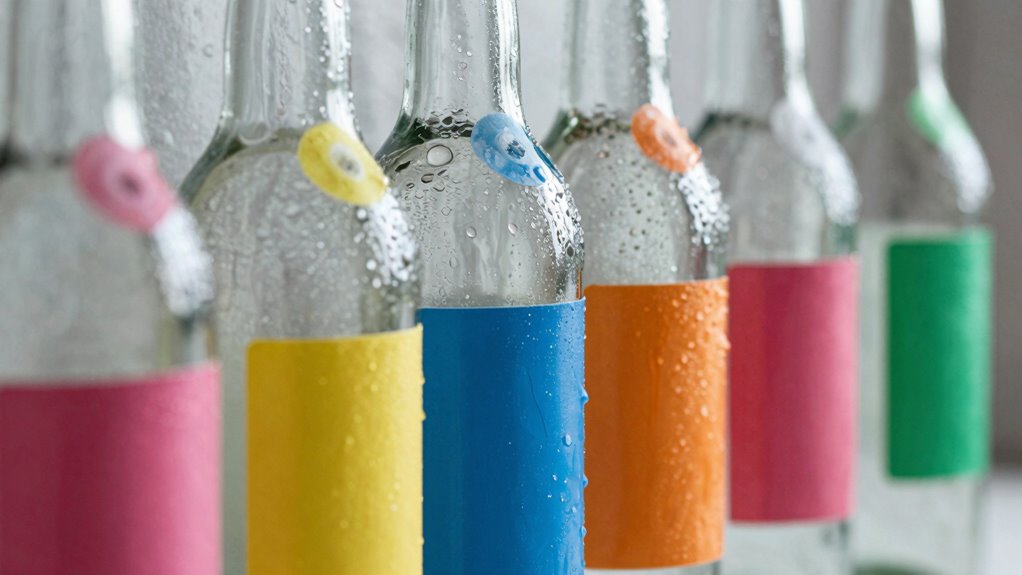
Cold condensation creates a water layer between your label and surface, preventing proper adhesion. This moisture weakens the bond, making labels more likely to slide off or detach. When temperatures fluctuate or humidity is high, adhesives struggle to maintain grip, especially if they’re not designed for moisture-rich environments. Using the right adhesive formulation and preparing surfaces properly can help. If you want to understand how to prevent this issue, keep exploring the details behind cold condensation effects.
Key Takeaways
- Cold condensation forms a water layer that prevents adhesives from bonding directly to surfaces, weakening adhesion.
- Moisture causes adhesives to lose cohesion and tack, leading to label slippage or detachment.
- Standard adhesives often become brittle or less flexible in cold, humid conditions, reducing their effectiveness.
- Specialized acrylic-based adhesives are designed to resist moisture and temperature fluctuations, maintaining better adhesion.
- Proper surface preparation and selecting moisture-resistant adhesives are essential to prevent labels from sliding off in cold condensation environments.
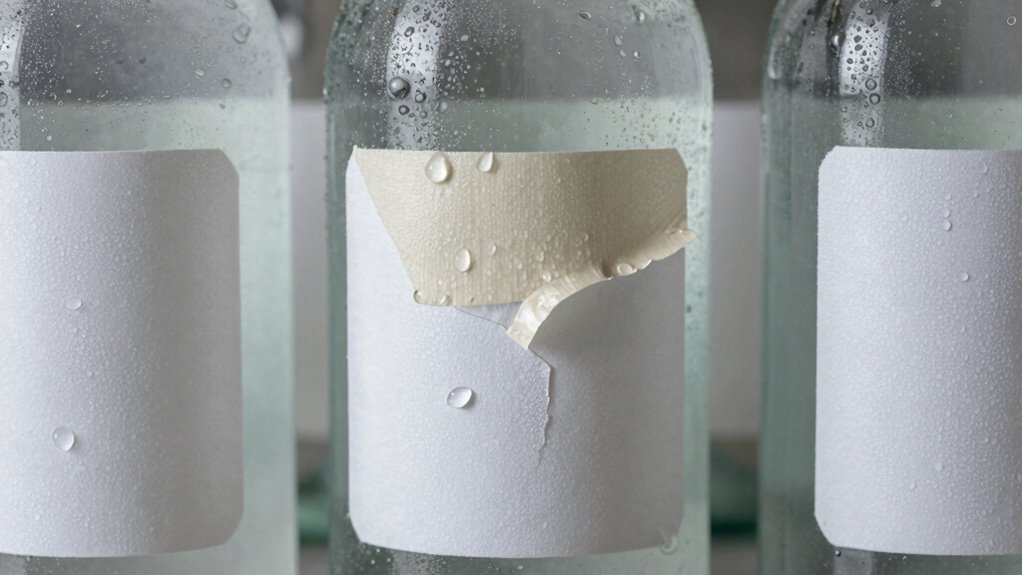
When cold condensation occurs, label adhesives face significant challenges that can compromise their performance. One of the main issues you’ll encounter is the way temperature effects influence how well an adhesive sticks in moist, chilled environments. When condensation forms on a surface, it creates a layer of water that can interfere with the adhesive’s ability to bond properly. This moisture acts as a barrier, preventing the adhesive from making direct contact with the substrate, which weakens the bond. As a result, labels are more likely to slide off or become partially detached, especially in environments where temperature fluctuations are common. Choosing reliable adhesives designed for moisture resistance becomes essential in these conditions. The choice of adhesive formulations plays a critical role in addressing these challenges. Not all adhesives are created equal—some are designed specifically to withstand moisture and temperature variations, while others falter under such conditions. For cold condensation scenarios, you need adhesives that maintain their tack and cohesive strength despite exposure to moisture. These formulations often contain specialized polymers or additives that improve their resistance to water and temperature swings. For example, acrylic-based adhesives tend to perform better in cold, humid environments because they form flexible bonds that can adapt to surface changes caused by condensation. Conversely, rubber-based adhesives might lose their grip when exposed to moisture, leading to label slippage.
Cold condensation hampers adhesive bonds, causing labels to slip or detach in moist, fluctuating temperatures.
Understanding the temperature effects on adhesive formulations also helps you select the right product for your application. In colder environments, adhesives can become brittle or lose their tack if they aren’t formulated to withstand low temperatures. Conversely, in slightly warmer conditions, adhesives need to maintain flexibility without becoming too soft, which could cause them to slide or peel away. Manufacturers often modify adhesive formulations to optimize performance across a range of temperatures, but it’s up to you to choose the right type based on your specific conditions.
Additionally, surface preparation plays a key role in improving adhesion in cold, moist environments. Ensuring the surface is dry and free of contaminants helps the adhesive form a stronger bond. If condensation is frequent or unavoidable, selecting a formulation designed for high moisture resistance is essential. This way, you improve the likelihood of the label staying firmly attached despite the challenging environment.
Frequently Asked Questions
How Do Temperature Fluctuations Affect Label Adhesive Performance?
Temperature fluctuations can weaken the bond strength of label adhesives by causing adhesive degradation. When temperatures drop or rise rapidly, the adhesive may lose its flexibility and stickiness, making it easier for labels to slide off. You should choose adhesives specifically designed to withstand temperature changes, ensuring they maintain their bond strength and stay securely attached even in varying conditions. Proper selection helps prevent labels from slipping due to temperature-related adhesive failure.
What Types of Adhesives Are Most Resistant to Cold Condensation?
You should choose adhesives with chemical bonding, flexible adhesive formulations, and high moisture resistance to withstand cold condensation. These adhesives create strong bonds despite temperature swings, resist moisture intrusion, and maintain flexibility. Look for products designed specifically for cold environments, featuring advanced chemical bonding and resilient adhesive formulations. This combination guarantees the labels stay firmly in place, even when exposed to cold, damp conditions.
Can Label Adhesives Be Improved for Better Cold Resistance?
Yes, you can improve label adhesives for better cold resistance by incorporating innovative formulations and advanced adhesive technology. These innovations focus on enhancing adhesion properties at low temperatures, ensuring labels stay put even in condensation-heavy environments. By researching new polymer blends and bonding agents, manufacturers can develop adhesives that maintain strong adhesion despite cold conditions, helping your labels stay secure and reliable, no matter the climate.
How Does Humidity Influence Adhesive Failure in Cold Environments?
Humidity impacts adhesive failure like a thief in the night, quietly weakening the bond. Moisture effects seep into the adhesive, causing it to lose grip and slide off in cold environments. When the air’s damp, the adhesive struggles to hold, as if fighting a losing battle against water’s relentless push. To prevent this, you need adhesives designed to resist moisture, ensuring your labels stay put despite the dampness.
Are There Specific Storage Conditions to Prevent Label Slipping?
To prevent label slipping, you should follow proper storage tips like keeping items in a controlled environment with stable, moderate temperatures and low humidity. Store products away from cold, damp areas to avoid condensation that weakens adhesives. Use effective labeling techniques, such as applying labels in ideal conditions and selecting adhesives designed for cold environments. These steps help maintain label adhesion and prevent slipping over time.
Conclusion
So, next time your labels slip in cold condensation, don’t blame the adhesive—blame your cold, unfeeling science. After all, who knew that a bit of frost could turn a perfectly sticky label into a rebellious, slide-off rebel? It’s a gentle reminder that even adhesives have their limits, and perhaps, just perhaps, they’re smarter than we think—refusing to cling when Mother Nature isn’t in the mood. Cheers to the icy dance of labels and cold!