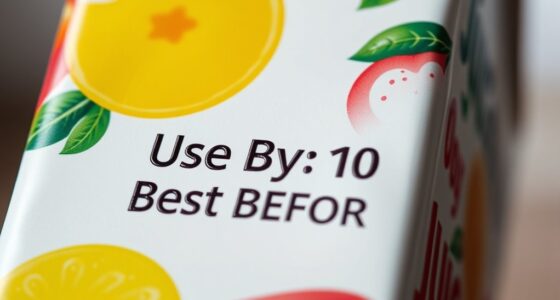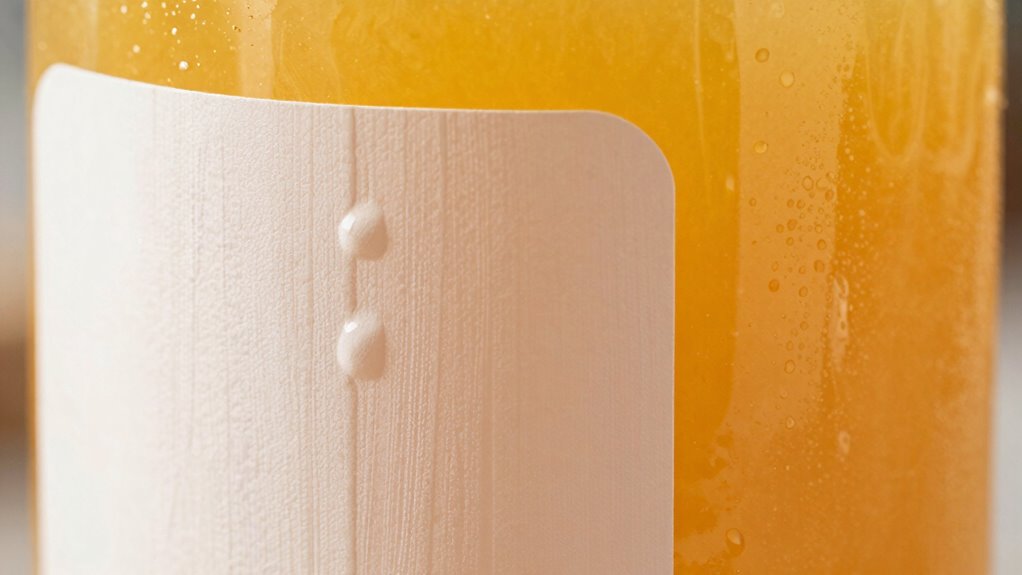

The texture of a juice bottle’s label shapes your first impression of its quality, durability, and authenticity before you taste it. Smooth, glossy labels suggest a premium, well-made product, while rough or damaged textures can raise doubts about quality. Tactile cues influence your perception subconsciously, signaling freshness and craftsmanship. If you want to understand how these subtle surface details impact your confidence in juice brands, keep exploring this interesting connection.

Get kitchen staples and gadgets delivered free with Prime
- Fast, free delivery on millions of items
- Prime Video, Amazon Music and more included
- Member-only deals all year
Key Takeaways
- Smooth, glossy labels suggest premium quality, while rough or damaged textures raise doubts about product authenticity.
- Durable, resistant labels convey freshness and reliable packaging, enhancing perceived juice quality.
- Textured or embossed finishes communicate craftsmanship, reinforcing a perception of high-quality, artisanal juice.
- Tactile cues influence initial impressions, with pleasing textures boosting trust before tasting.
- Poorly textured or flimsy labels can undermine confidence, making the juice seem less fresh or trustworthy.
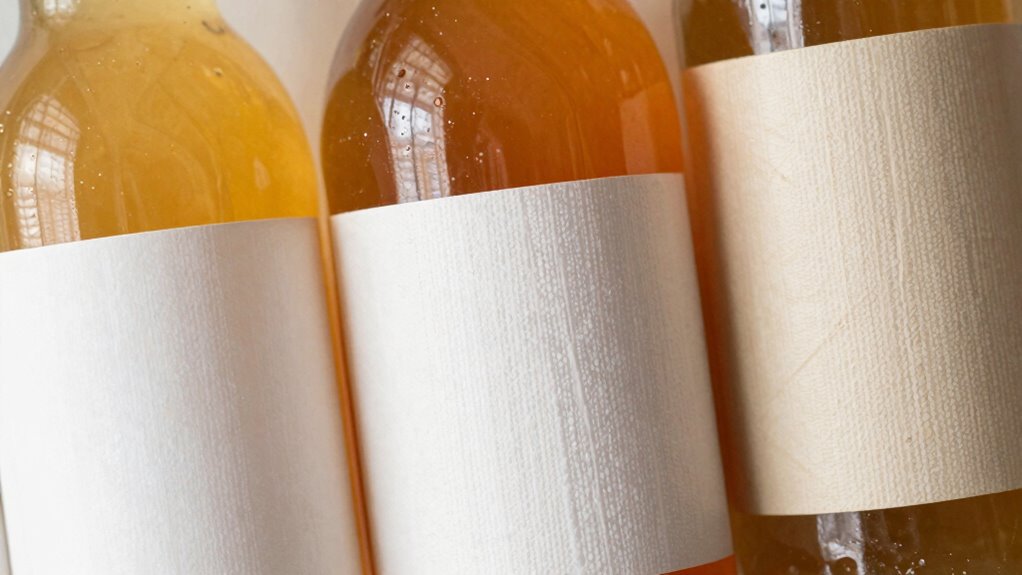
The texture of a label can considerably influence your perception of juice quality, as it often reflects the product’s overall freshness and authenticity. When you pick up a juice bottle, your first impression isn’t just about the flavor or the brand but also about what the label feels like under your fingertips. A smooth, glossy surface might suggest a premium, well-made product, while a rough or damaged label could make you question its quality. The tactile experience plays a subtle but powerful role in forming your opinion before you even read the label’s words. Additionally, the label texture can hint at the environmental impact of the packaging, influencing eco-conscious consumers’ perceptions. Packaging durability is closely tied to how a label’s texture affects your perception. If the label feels sturdy and resistant to tearing or peeling, you’re more likely to see the juice as fresh and reliable. Durable packaging signals that the manufacturer cares about protecting the product, which can translate into trust in the juice’s quality. Conversely, a flimsy, easily damaged label might make you wonder if the juice inside is just as fragile or compromised. You might think that if the packaging isn’t robust enough to withstand handling, the contents could be of lower quality or less fresh. This perception influences whether or not you decide to buy the product and how much confidence you place in it. Your consumer perception is also shaped by the tactile qualities of the label. A textured, embossed, or matte finish can communicate craftsmanship and attention to detail, which can evoke a sense of quality. These textures often evoke a sense of authenticity, suggesting that the juice is crafted with care. Recognizing that label design can also influence perception, it’s clear that visual and tactile elements work together to reinforce the impression of quality. Labels that feel cheap or tacky can give the impression that the product is mass-produced or lacks genuine quality. The feeling of the label becomes a subtle cue, guiding your expectations about what’s inside the bottle. If the texture aligns with the image of a high-quality product, you’re more inclined to believe that the juice is fresh, natural, and worth paying for. Furthermore, consumer perception can be shaped by the overall sensory experience, making the tactile feel an integral part of branding and marketing. When you consider how the packaging material interacts with the label, it’s evident that the entire presentation contributes to your perception of quality. Ultimately, the way a label feels influences your overall experience, even before you taste the juice. It’s a form of non-verbal communication that affects consumer perception at a subconscious level. A well-designed, durable, and pleasingly textured label reassures you that the product inside meets your standards. In contrast, a poorly textured or damaged label can undermine your confidence, leading you to question the juice’s authenticity or freshness. So, when choosing your next bottle, pay attention to the tactile details—they often reveal more than you think about the quality of the juice inside.
premium glossy juice bottle labels
As an affiliate, we earn on qualifying purchases.
As an affiliate, we earn on qualifying purchases.
Frequently Asked Questions
How Does Label Texture Influence Consumer Purchase Decisions?
You’re likely influenced by label texture when deciding to buy juice because tactile engagement makes the product feel more premium or trustworthy. A textured label adds visual contrast, catching your eye and making the packaging stand out on the shelf. This sensory experience heightens your perception of quality, encouraging you to choose that product over others with smoother, less engaging labels. Texture truly plays a key role in your purchase decisions.
Are There Specific Textures Linked to Premium Juice Perceptions?
Yes, specific textures like smooth, matte, or embossed labels are linked to premium juice perceptions. These textures enhance the fruit sensation and tactile appeal, making the product feel more luxurious and high-quality. You’ll notice that textured labels often evoke a sense of craftsmanship and freshness, encouraging you to associate the juice with superior taste and quality. This tactile experience influences your overall impression, making premium options stand out on the shelf.
Does Label Texture Affect the Perceived Freshness of Juice?
You can’t judge a book by its cover, but label texture does influence how fresh you think the juice is. A glossy label with smooth ink embossing looks more vibrant and appealing, signaling freshness. Conversely, dull or rough textures might suggest the opposite. When labels have high glossiness and crisp embossing, they give an impression of high quality and freshness, making you more likely to trust the product inside.
How Do Different Materials Impact Label Durability on Juice Bottles?
Different materials profoundly impact label durability on juice bottles. Transparent materials like PET or clear vinyl offer good visibility but may be less durable if adhesive strength isn’t strong enough. Opaque or textured materials, such as paper or laminated films, tend to withstand moisture and handling better. Ensuring the right material transparency and adhesive strength is essential so your labels stay intact, even when bottles are exposed to moisture or frequent use.
Can Label Texture Influence Brand Loyalty Among Juice Consumers?
Did you know that 85% of consumers say tactile labels influence their purchase decisions? As a juice brand, you can boost loyalty by using textured labels that stand out. A unique label tactile creates a memorable experience, strengthening brand recognition. When customers feel a quality, textured label, they associate it with premium juice, increasing their trust and likelihood to choose your brand repeatedly.
Conclusion
So, next time you grab that juice, don’t just judge it by the taste—inspect the label texture. Because, clearly, a fancy embossed label magically transforms your humble orange drink into a gourmet nectar. Who knew that feeling the roughness or smoothness could reveal a hidden world of flavor? Just remember, in the grand universe of juice, it’s all about the tactile experience—because nothing says quality like feeling your way to the perfect sip.
Halloween Picks
halloween
As an affiliate, we earn on qualifying purchases.