
For sensitive stomachs, try low-acid juices made from gentle ingredients like ripe bananas, melons, or cucumbers. Ferment these blends to naturally reduce acidity, boost probiotics, and improve digestion. Use airtight containers and keep them refrigerated, consuming within 24-48 hours. Add honey or almond milk for extra soothing effects. If you want simple, stomach-friendly options and tips to perfect your fermentations, there’s plenty more to discover below.
Key Takeaways
- Use ripe, low-acid fruits like bananas, melons, and pears in your juice blends.
- Incorporate vegetables such as cucumbers and spinach to create gentle, stomach-friendly drinks.
- Ferment juices with probiotic cultures to naturally reduce acidity and support gut health.
- Store fermented juices in airtight containers in the refrigerator and consume within 48 hours.
- Add honey or almond milk to mellow flavors and improve digestibility for sensitive stomachs.
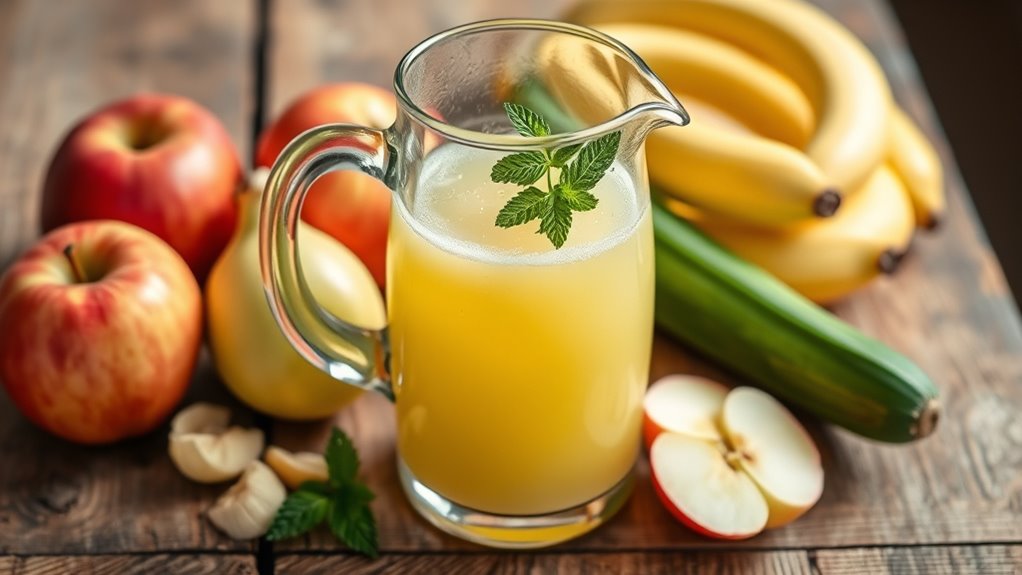
If you have a sensitive stomach, enjoying fresh juice doesn’t have to be off-limits. Many people with sensitive digestion avoid citrus and other high-acid fruits, but there are ways to enjoy flavorful, nutritious juices without upsetting your stomach. One effective method is to incorporate fermentation benefits into your juice preparations. Fermentation naturally reduces acidity and enhances digestibility, making drinks gentler on your stomach. For example, fermenting fruits like apples or pears creates probiotic-rich beverages that support gut health and can soothe irritation. Plus, fermentation boosts the nutritional profile by increasing beneficial enzymes and probiotics, which help your digestive system function smoothly.
When you’re making low-acid juices, storage tips become especially important. Proper storage not only preserves the freshness but also maintains the health benefits of your juice. Keep your juices refrigerated in airtight containers to prevent oxidation, which can increase acidity and spoilage. Consuming your juice within 24 to 48 hours ensures you’re getting the most nutrients and the freshest flavor. If you’re fermenting your juice, use clean, sterilized jars to avoid unwanted bacteria, and follow specific fermentation times to achieve the desired probiotic effects without risking over-fermentation, which can lead to increased acidity. During fermentation, it’s normal to release some gases—just loosen the lid slightly or use a fermentation airlock to prevent pressure buildup.
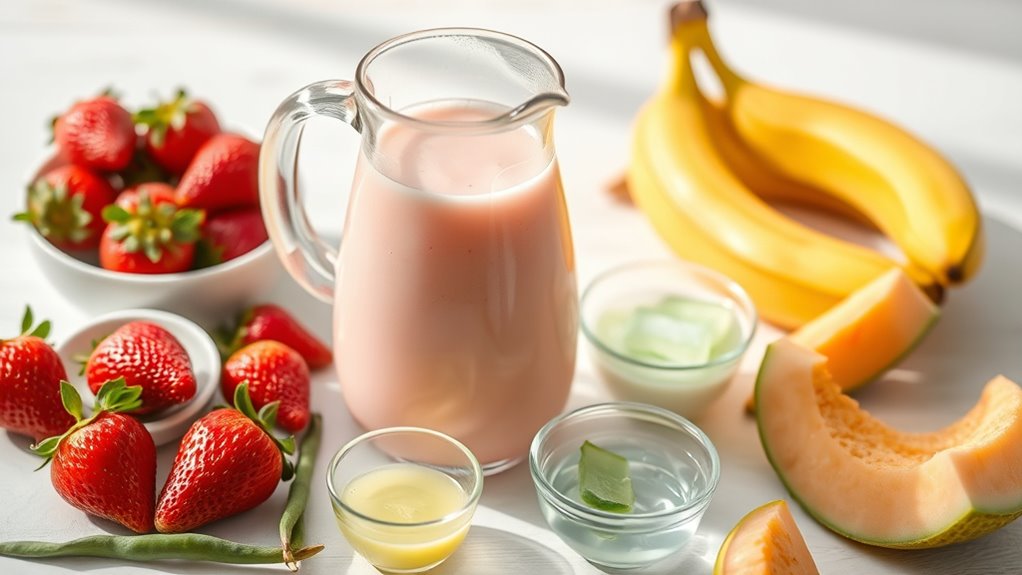
Choosing ingredients wisely is key when making low-acid juices. Opt for fruits like bananas, melons, or ripe pears, which are naturally lower in acid. Vegetables such as cucumbers, zucchini, and spinach also make excellent bases for gentle, stomach-friendly juices. When blending, keep the ratios balanced; adding a touch of honey or a splash of almond milk can mellow out flavors further and create a smoother, easier-to-digest drink. If you want to incorporate fermentation benefits, consider adding a small amount of starter culture or probiotic powder to your juice before fermenting. This not only enhances the probiotic content but also helps reduce overall acidity, making your juice more soothing for sensitive stomachs.
Frequently Asked Questions
Can Low-Acid Juices Help With Acid Reflux Symptoms?
Yes, low-acid juices can help with acid reflux relief and improve stomach comfort. By choosing juices with less acidity, you reduce irritation and minimize reflux symptoms. You’ll notice that drinks like cucumber, aloe vera, or melon juices soothe your stomach and promote better digestion. Incorporating these into your diet can make a significant difference in easing discomfort and supporting overall digestive health.
Are There Any Juice Ingredients to Avoid for Sensitive Stomachs?
Did you know that about 60% of people with sensitive stomachs find certain ingredients worsen their symptoms? You should avoid high-acid fruit combinations like citrus and pineapples. Instead, opt for gentle ingredient substitutions like apples or pears. These help minimize irritation and keep your juice both tasty and stomach-friendly. Always listen to your body and test small amounts to see how different ingredients affect you.
How Often Should I Drink Low-Acid Juice for Best Results?
You should aim for a moderate juice frequency, about one to two servings daily, to support your sensitive stomach. Keep your serving size small, around 4 to 6 ounces per session, to prevent overloading your digestive system. Listen to how your body responds, and adjust your juice intake accordingly. Consistent, moderate consumption helps maximize benefits without causing discomfort, ensuring your stomach stays happy and healthy.
Do Low-Acid Juices Contain Enough Nutrients Compared to Regular Juices?
Low-acid juices can be just as nutritious as regular juices when you select the right ingredients. You can boost their nutrient content by blending fruit smoothies and vegetable blends, which conserve vitamins and minerals. While they might have slightly less acidity, they still provide essential nutrients, antioxidants, and fiber. Incorporate a variety of fruits and vegetables in your smoothies to guarantee you’re getting a balanced, nutrient-rich drink that’s gentle on your stomach.
Can Children With Sensitive Stomachs Safely Consume Low-Acid Juices?
Absolutely, kids with sensitive stomachs can safely enjoy low-acid juices—because who wants a cranky, upset tot? You’re doing right by considering pediatric nutrition and juice safety. Just guarantee the juice is 100% fruit, free from added sugars, and served in moderation. Always consult your pediatrician if unsure. With mindful choices, you’ll keep their tummies happy and their nutrition on point!
Conclusion
Think of these low-acid juices as gentle streams flowing through a peaceful landscape, soothing your sensitive stomach like a calming breeze. By choosing these options, you’re planting seeds of comfort and nurturing your digestive health. Let each sip be a soft ripple, washing away discomfort and bringing clarity. Embrace these nourishing drinks as your safe harbor, a symbol of care that restores balance and peace to your inner world. Cheers to gentle, stomach-friendly refreshment!

Cindy thoroughly researches juicing trends, techniques, and recipes to provide readers with practical advice and inspiration. Her writing style is accessible, engaging, and designed to make complex concepts easy to understand. Cindy’s dedication to promoting the advantages of juicing shines through her work, empowering readers to make positive changes in their lives through the simple act of juicing.