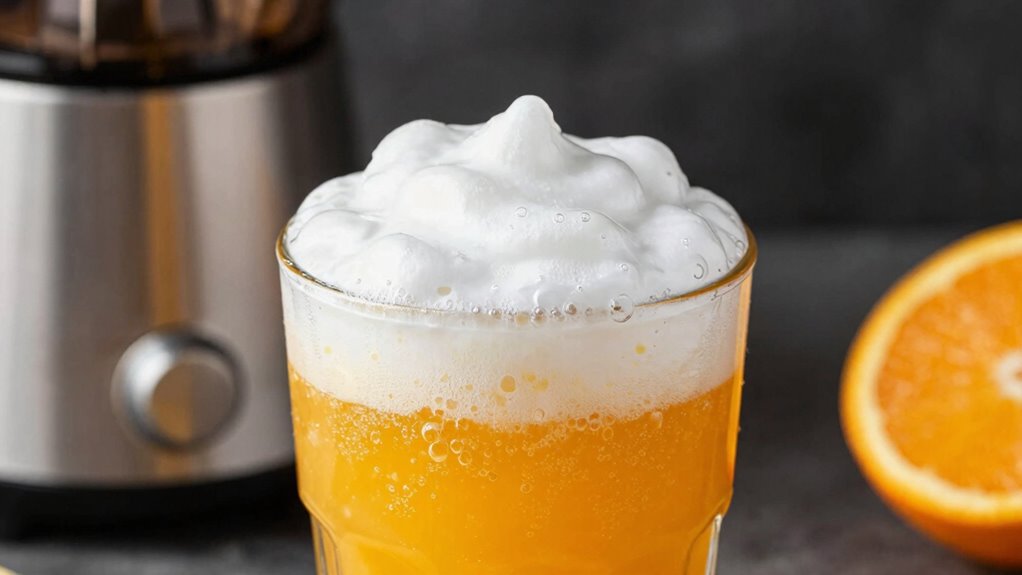

Optimizing the order of ingredients in your juice process can dramatically cut down foam and improve flavor retention. By adding stabilizers or anti-foaming agents at the right stages, you control foam formation and preserve the natural taste of the fruits. This streamlined approach simplifies production, reduces chemical use, and boosts product quality—giving you a competitive edge. If you keep exploring, you’ll discover how these techniques transform your juice manufacturing for better efficiency and flavor.

Get kitchen staples and gadgets delivered free with Prime
- Fast, free delivery on millions of items
- Prime Video, Amazon Music and more included
- Member-only deals all year
Key Takeaways
- Proper ingredient sequencing minimizes foam formation, enhancing juice clarity and flavor retention.
- Adding stabilizers or anti-foaming agents at strategic stages prevents excessive foam during processing.
- Optimized ingredient order preserves natural fruit flavors and reduces the need for chemical stabilizers.
- Combining ingredient sequencing with advanced extraction techniques improves process efficiency and product quality.
- Low-foam processing enhances brand reputation by delivering fresh-tasting, natural juices with fewer additives.
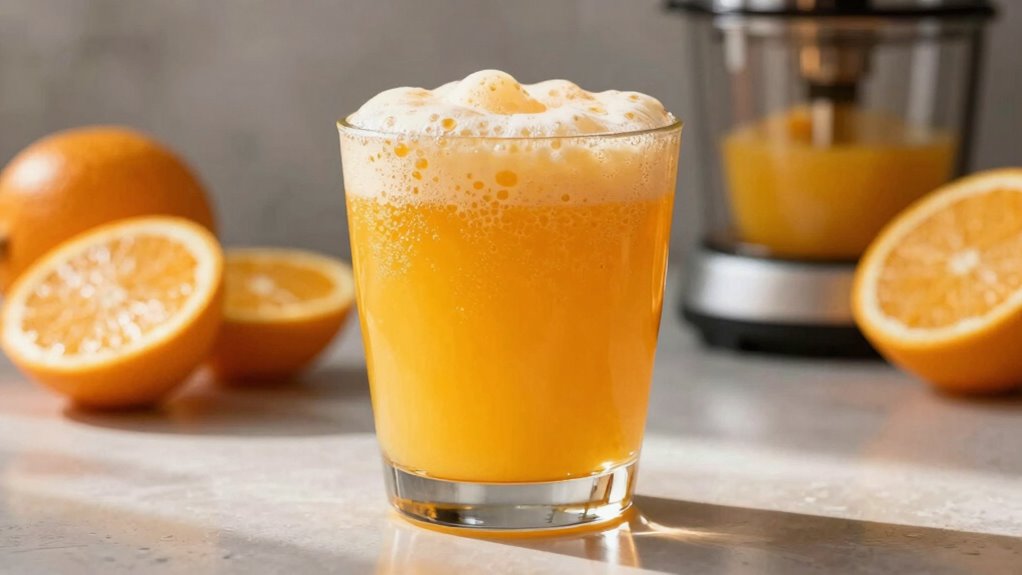
Flavor enhancement plays a pivotal role in this process. When you employ innovative extraction, you’re able to better retain the authentic taste of the fruit, resulting in a more appealing product for consumers. Reduced foam during processing means fewer disturbances that could dilute or alter the flavor, ensuring the final juice is as close to fresh as possible. This makes your product more competitive in a crowded market, where consumers are increasingly seeking natural, flavorful options. Plus, with less foam and fewer processing steps, you reduce the need for chemical stabilizers or emulsifiers, appealing to health-conscious buyers. The order of ingredient addition is also essential. By carefully sequencing the ingredients, you optimize both foam control and flavor retention. For example, adding natural stabilizers or anti-foaming agents at specific stages can further minimize foam without compromising flavor integrity. Understanding extraction techniques can further enhance your ability to optimize flavor and foam control. Additionally, implementing precise ingredient sequencing allows for greater process control and consistency, which is crucial for maintaining high product quality. Employing advanced processing methods can also contribute to reducing foam and preserving natural flavors. Incorporating innovative techniques into your production process can lead to significant improvements in both efficiency and product quality. Ultimately, the combination of innovative extraction and strategic ingredient sequencing transforms your production line, enabling you to produce juice that’s not only easier to process but also more flavorful and appealing to consumers. Low-foam juice is more than just a technical upgrade; it’s a game-changer that elevates your entire product offering, making your brand synonymous with quality, efficiency, and natural taste.
anti-foaming agents for juice processing
As an affiliate, we earn on qualifying purchases.
As an affiliate, we earn on qualifying purchases.
Frequently Asked Questions
How Does Low-Foam Juice Impact Shelf Life?
You’ll notice that low-foam juice extends shelf life by reducing foam stability, which often traps bacteria and spoilage agents. By controlling foam formation, preservation methods become more effective, preventing microbial growth and oxidation. This means your juice stays fresher longer, with fewer preservatives needed. Overall, managing foam stability through ingredient order improves shelf life, maintaining quality and safety, which benefits both producers and consumers.
Can Low-Foam Juice Be Used in All Beverage Types?
You can’t use low-foam juice in all beverage types, as it’s best suited for products where flavor preservation and packaging compatibility are priorities. It works well in clear, carbonated, or sensitive beverages because it reduces foam, ensuring better stability and presentation. However, for thick, pulpy, or cream-based drinks, the low-foam formulation might alter texture or taste, so always consider the specific beverage requirements before choosing this ingredient.
What Are the Cost Differences With Traditional Juices?
You’ll find that low-foam juice can be more cost-effective than traditional juices due to improved production efficiency, reducing waste and processing time. Its flavor stability means fewer quality issues, saving money on reprocessing or rejects. While initial ingredient costs might be slightly higher, the overall savings from streamlined production and consistent quality make low-foam juice a smarter, more economical choice for many beverage types.
Are There Any Health Concerns With Low-Foam Formulations?
You might wonder if low-foam formulations pose health concerns, but they’re generally safe if properly developed. Focus on pH stability to prevent spoilage and guarantee safety, and check allergen concerns since ingredient adjustments could introduce allergens or cross-contact risks. Always verify that manufacturers follow strict safety guidelines, and consult health authorities if you’re unsure. Proper formulation and testing minimize health risks, making low-foam juices a safe choice.
How Does the Ingredient Order Influence Taste Consistency?
The ingredient order directly impacts taste consistency by enhancing flavor uniformity and mixing efficiency. When you add ingredients in the right sequence, it allows flavors to blend thoroughly, preventing uneven taste. Proper order guarantees ingredients dissolve evenly, reducing clumps or separation. This consistency in mixing results in a smoother, more uniform flavor profile, so every sip tastes just as intended. Paying attention to ingredient order makes a noticeable difference in the final product’s quality.
Conclusion
Imagine pouring your juice and watching a mesmerizing cascade of vibrant colors swirl effortlessly without a single foam wave crashing over the sides. By simply tweaking the ingredient order, you reveal a secret so powerful it transforms your entire juicing game—no more messy spills or stubborn foam. This tiny change is like summoning a liquid miracle, turning your everyday juice into a silky-smooth masterpiece. Get ready to impress everyone with your unstoppable, foam-free liquid perfection!
Columbus Day / Indigenous Peoples' Day Picks
long weekend sales
As an affiliate, we earn on qualifying purchases.