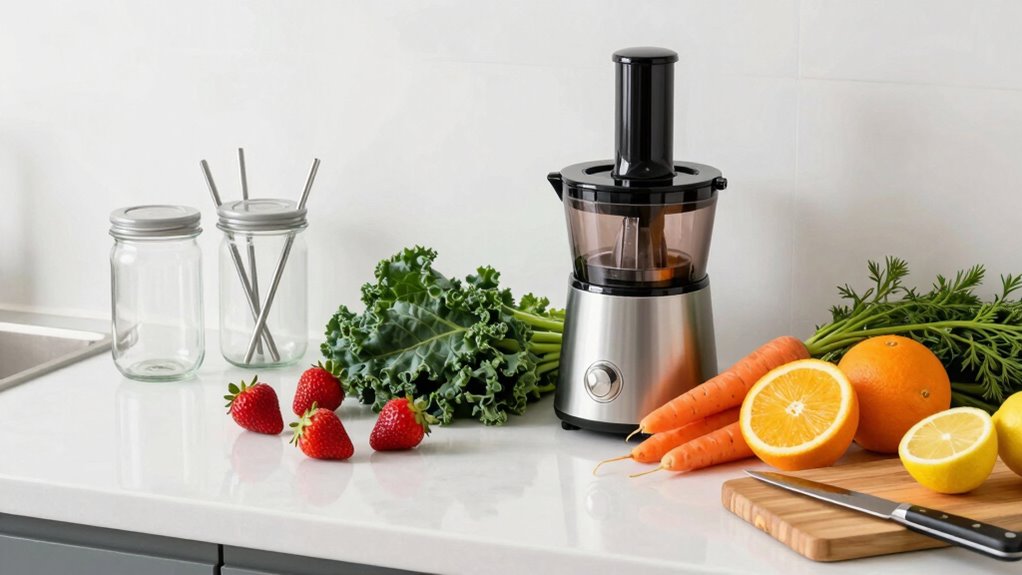

To build a low-waste home juicing routine, focus on sourcing ingredients sustainably, such as local, seasonal, and organic produce. Preserve surplus fruits and vegetables by freezing or drying, and store everything in reusable containers to cut down on single-use plastics. Compost organic waste like pulp and peels to reduce landfill contributions. Adopt eco-friendly handling and storage practices, making small adjustments that considerably lower your environmental impact. Keep exploring for more tips to perfect a sustainable juicing habit.

Get kitchen staples and gadgets delivered free with Prime
- Fast, free delivery on millions of items
- Prime Video, Amazon Music and more included
- Member-only deals all year
Key Takeaways
- Use reusable containers and jars to store juice, pulp, and leftover ingredients to minimize single-use plastics.
- Incorporate preservation techniques like freezing or drying to extend ingredient shelf life and reduce waste.
- Source ingredients locally, seasonally, and organically to ensure freshness and lower environmental impact.
- Compost organic waste such as pulp and peels to reduce landfill contributions and create nutrient-rich soil.
- Plan shopping and juicing routines mindfully to avoid overbuying and maximize ingredient utilization.
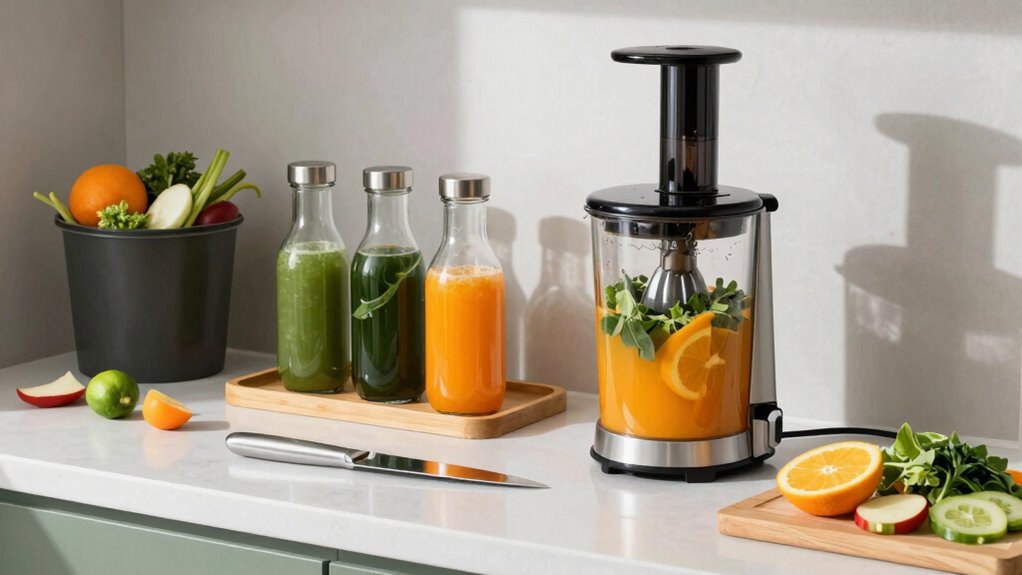
Ingredient preservation is another key aspect of building a low-waste juicing habit. Fresh produce can spoil quickly, so learning methods to extend its shelf life keeps your ingredients fresh longer and reduces spoilage. You can freeze surplus fruit and vegetables, making sure to package them in reusable containers or silicone bags to prevent freezer burn. Drying herbs or fruit peels is another effective way to preserve their flavor and nutrients for later use. When you prioritize ingredient preservation, you cut down on waste and get the most value from your groceries. Additionally, understanding food preservation techniques can help you maximize ingredient longevity and further reduce waste.
As you plan your juicing sessions, consider using reusable containers and jars for storing your juice and leftover pulp. This not only cuts down on single-use plastics but also ensures that you’re handling your ingredients and finished drinks with care for the environment. If you’re juicing frequently, invest in a compost bin designed for organic waste; this makes it easy to dispose of pulp and peels responsibly. Using organically sourced ingredients can also minimize pesticide residues and support sustainable farming practices. Incorporating sustainable sourcing into your routine not only benefits the environment but also encourages ethical agriculture. Not only does this reduce waste, but it also enriches your garden soil if you have one.
To further minimize waste, choose ingredients that are in season and locally sourced whenever possible. This practice supports local farmers and reduces the carbon footprint associated with transporting produce. Plus, seasonal fruits and vegetables tend to last longer and retain more nutrients, making your juice more nutritious. When you incorporate mindful shopping and storage habits, you’re actively reducing waste and making your routine more sustainable.
Building a low-waste juicing routine isn’t just about cutting back on waste—it’s about creating a more mindful, sustainable habit. By leveraging recycling innovations, conserving your ingredients, and choosing eco-friendly storage methods, you turn your juicing into an environmentally conscious practice. These small adjustments make a significant difference in reducing your ecological footprint while still enjoying the vibrant, healthful drinks you love.
reusable glass juice storage jars
As an affiliate, we earn on qualifying purchases.
As an affiliate, we earn on qualifying purchases.
Frequently Asked Questions
How Can I Reduce Juice Container Waste?
You can reduce juice container waste by switching to reusable containers instead of single-use bottles. When buying juice, look for options with biodegradable packaging, which breaks down more easily and lessens environmental impact. After juicing, store leftovers in your reusable containers, and always opt for brands that prioritize eco-friendly packaging. This approach minimizes waste and supports sustainable living, making your juicing routine greener and more eco-conscious.
What Are Eco-Friendly Juicing Accessories?
You might find a reusable strainer or a bamboo juicer surprisingly eco-friendly choices. The reusable strainer reduces waste by replacing single-use filters, while a bamboo juicer’s natural material minimizes plastic use. Both options encourage sustainable habits, blending functionality with eco-consciousness. These accessories turn your juicing routine into an eco-friendly practice, helping you cut down on waste effortlessly while enjoying fresh, healthy juices.
How Do I Store Leftover Pulp Sustainably?
To store leftover pulp sustainably, use reusable storage bags that keep it fresh and reduce waste. You can also wrap the pulp in biodegradable pulp wraps, which break down naturally and are eco-friendly. Make sure you label and date the storage containers to keep track of freshness. When you’re ready to reuse, incorporate the pulp into recipes or compost it, making the most of your juicing efforts while minimizing your environmental impact.
Are There Sustainable Cleaning Methods for Juicers?
Yes, you can clean your juicer sustainably by using a biodegradable cleaner, which breaks down naturally and reduces environmental impact. Afterward, wipe down parts with reusable cloths instead of disposable paper towels. This method minimizes waste and keeps your kitchen eco-friendly. Regularly maintaining your juicer with these sustainable cleaning practices helps prolong its lifespan and supports your low-waste home routine.
How Can I Compost Fruit and Vegetable Scraps?
You can compost fruit and vegetable scraps by setting up a compost bin in your yard or using a community compost program. To preserve fruit and prevent waste, freeze excess or turn overripe produce into jams or smoothies. Follow composting tips like balancing greens and browns, turning the pile regularly, and keeping it moist. This way, your scraps transform into nutrient-rich soil, reducing waste and supporting sustainable gardening efforts.
Conclusion
By choosing reusable containers, composting pulp, and buying local produce, you embrace sustainability at every step. You reduce waste, support your community, and nurture your health. You minimize environmental impact, save money, and enjoy fresh, vibrant juices. You create a routine that’s simple, mindful, and eco-friendly. Ultimately, you turn your juicing habit into a powerful act of caring—for the planet, for yourself, and for future generations. Your low-waste journey begins with each mindful choice you make today.
Halloween Picks
halloween
As an affiliate, we earn on qualifying purchases.