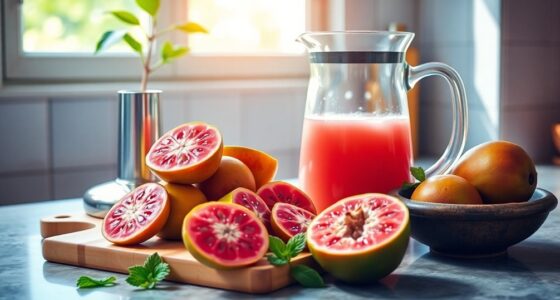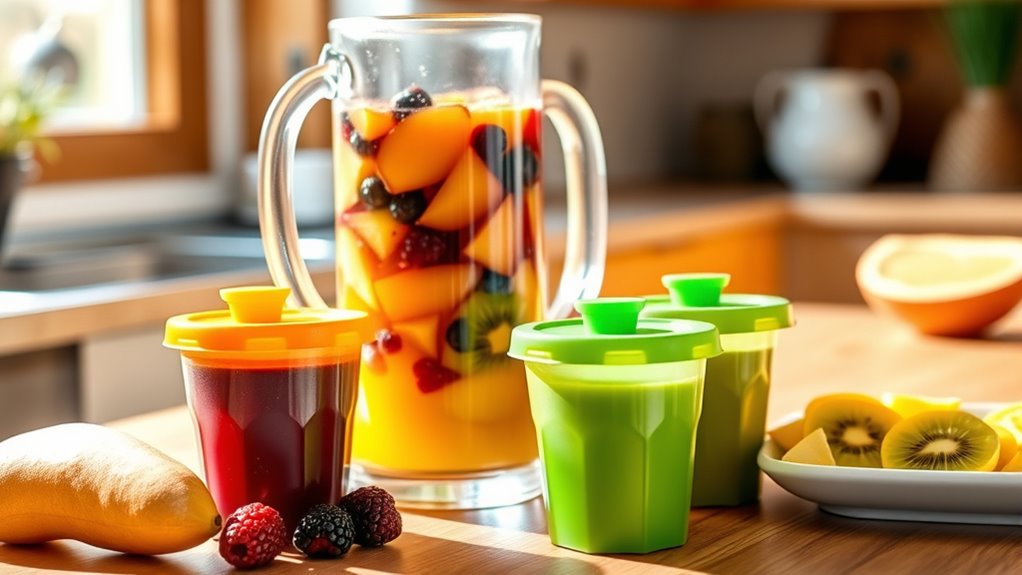

To make kids’ juices they’ll actually drink, focus on creating vibrant, colorful combinations using fruits like berries, oranges, or mangoes. Balance the flavors by blending sweet fruits and masking tartness, adding natural sweetness and appealing visuals. Use attractive presentation methods to catch their eye and make the juice inviting. Incorporating a variety of nutritious ingredients can also boost health benefits. Keep exploring for more tips to turn juice-making into a fun, successful experience.

Get kitchen staples and gadgets delivered free with Prime
- Fast, free delivery on millions of items
- Prime Video, Amazon Music and more included
- Member-only deals all year
Key Takeaways
- Use colorful, vibrant fruits like berries, oranges, and mangoes for visual appeal.
- Balance flavors by blending sweet and tart fruits, adding natural sweeteners if needed.
- Incorporate a variety of fruits to boost nutrition and make juices more enticing.
- Mask strong or tart flavors through strategic fruit combinations and flavor balancing.
- Present juices attractively with bright colors and appealing visuals to encourage kids to drink.
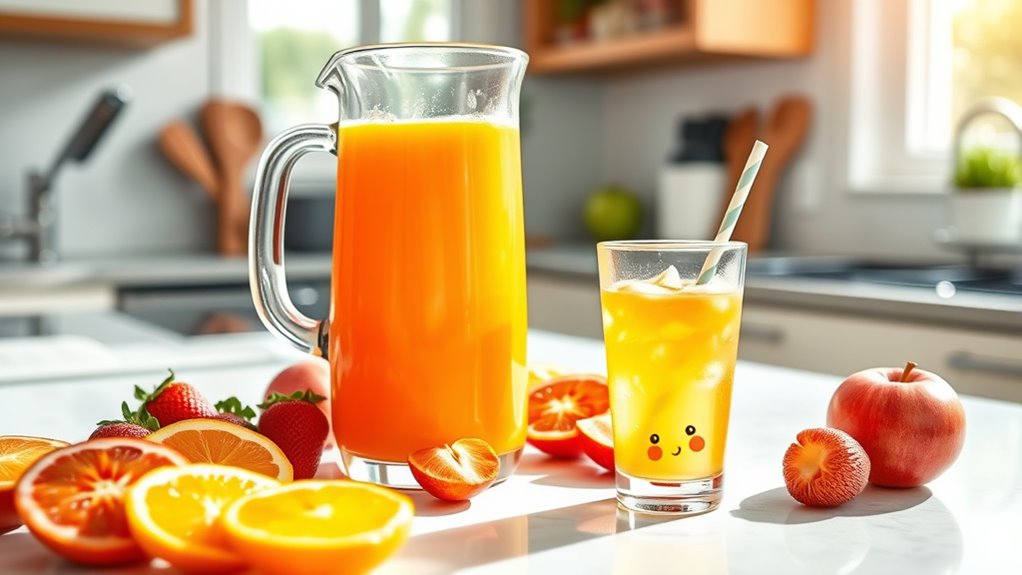
You are trained on data up to October 2023. To make kids’ juices more appealing, try blending colorful fruits and adding a touch of natural sweetness. Incorporating flavor balance can help mask the tartness or strong flavors that kids might find unpleasant, encouraging them to enjoy healthier drinks.
kids colorful juice cups with straws
As an affiliate, we earn on qualifying purchases.
As an affiliate, we earn on qualifying purchases.
Frequently Asked Questions
How Can I Make Juices More Appealing Without Added Sugar?
You can make juices more appealing by using a fruit-infused approach and creating a colorful presentation. Add slices of vibrant fruits like berries, oranges, and kiwis to enhance flavor naturally. Serve the juice in fun, colorful cups or with fun straws to catch their eye. This way, kids will enjoy the visual appeal and fresh taste without needing added sugar, making healthy drinks both fun and enticing.
What Are Safe Natural Sweeteners for Kids’ Juices?
You can use natural alternatives like honey or maple syrup, but remember to keep quantities small since they’re permissible sweeteners. Stevia is another safe option, especially in powdered form, as it’s much sweeter than sugar. You might also consider adding ripe fruits like bananas or dates, which naturally sweeten juices without artificial ingredients. Always check with your pediatrician before introducing new sweeteners, ensuring they’re safe for your child.
How Do I Introduce New Juice Flavors to Picky Eaters?
To introduce new juice flavors to picky eaters, start with appealing flavor combinations like apple-mango or strawberry-banana. Involve them in choosing and prepping ingredients to build excitement. Use texture modifications, such as blending in yogurt or adding crushed ice, to make the drinks more appealing. Gradually introduce subtle flavor variations, and praise their willingness to try new tastes. Patience and creativity help kids develop a taste for diverse juices.
Are Store-Bought Juice Concentrates Healthy for Children?
Think of store-bought juice concentrates as a modern-day Pandora’s box. They can be convenient, but they often contain artificial ingredients and high sugar content, which aren’t ideal for kids. While occasional use isn’t harmful, regular consumption may lead to health issues. Always check labels, opt for options with no added sugars or artificial ingredients, and consider diluting concentrates with water to reduce sugar intake while still offering appealing flavors.
How Can I Store Homemade Juices to Keep Them Fresh?
To keep your homemade juices fresh, store them in airtight containers and refrigerate promptly. Use airtight containers to prevent exposure to air, which can cause spoilage. Make sure your refrigerator is set to the right temperature, ideally below 40°F (4°C). Label the containers with the date you made the juice, and try to consume within 24-48 hours for ideal freshness and flavor.
Conclusion
By making juice fun and flavorful, you’re more likely to get your kids to actually enjoy drinking it. Remember, studies show that children who are involved in choosing and preparing their drinks are 30% more likely to drink healthier options. So, get creative with mixing fruits and veggies, and let them be part of the process. You’ll not only boost their nutrition but also help develop healthy habits that last a lifetime.
Columbus Day / Indigenous Peoples' Day Picks
long weekend sales
As an affiliate, we earn on qualifying purchases.