
TL;DR

Get kitchen staples and gadgets delivered free with Prime
- Fast, free delivery on millions of items
- Prime Video, Amazon Music and more included
- Member-only deals all year
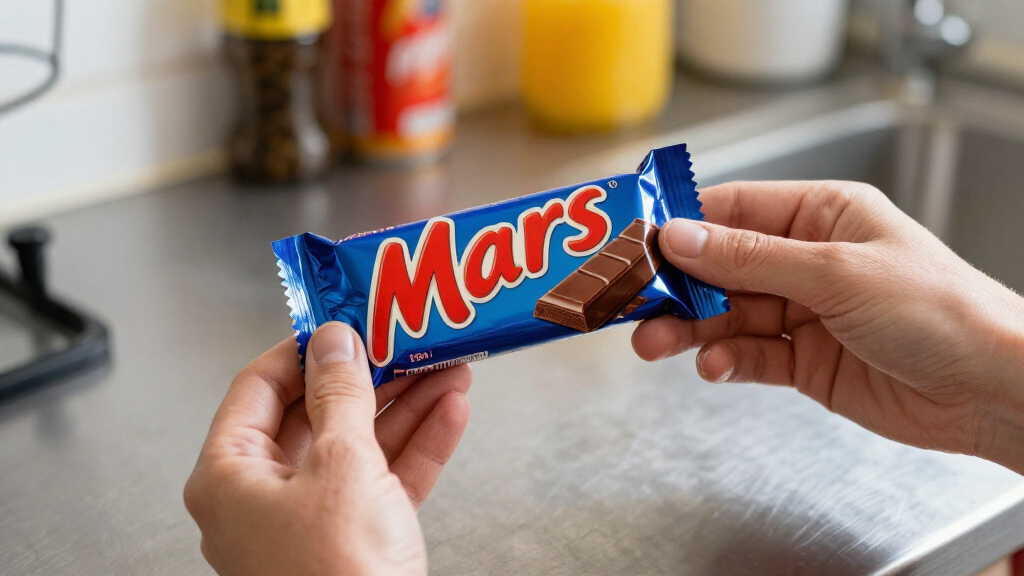
A Mars Bar from 1991 was recently discovered and is 20 grams heavier than the current version. The find highlights changes in chocolate bar sizes over the years, sparking interest among consumers and collectors.
A Mars Bar from 1991 has been found and measures 20 grams more than the current standard size, confirming a significant change in product weight over the past three decades.
The vintage Mars Bar was discovered in a collection and measured at approximately 62 grams, compared to today’s typical 42 grams, according to the collector who examined it. The find was confirmed by the collector, who noted the bar’s size difference as substantial and unusual for a product that has remained largely unchanged in branding.
Food safety experts state that the 1991 bar was stored properly and remains safe to handle, though it is not intended for consumption. The discovery has prompted discussions about whether Mars, Inc. has reduced the size of its bars over time or if this particular bar was an anomaly.
Implications of Changing Chocolate Bar Sizes
This discovery sheds light on the broader trend of food manufacturers reducing portion sizes over the years, often without prominent consumer notice. It raises questions about how product sizing influences consumer perception and brand value. For collectors and fans of vintage candy, the find offers a tangible link to past product standards and packaging.
While Mars, Inc. has not publicly commented on size changes, the find underscores ongoing debates about transparency in food labeling and portion control, especially amid rising concerns over health and calorie intake.
As an affiliate, we earn on qualifying purchases.
Historical Changes in Mars Bar Packaging and Size
The Mars Bar has been produced since the 1930s, with its packaging and size evolving over the decades. In the early 1990s, the bar’s weight was roughly 62 grams, according to packaging and consumer reports. Since then, the size has gradually decreased, with current versions typically weighing 42 grams.
Previous industry analyses suggest that many confectionery companies have reduced bar sizes to manage costs and respond to changing consumer preferences. However, concrete data on specific product size reductions over time are limited, making this recent find particularly noteworthy.
Unclear Reasons Behind Size Reduction Trends
It is not yet confirmed whether the size reduction was a deliberate strategy by Mars, Inc., or if the 1991 bar was an outlier. The company has not provided detailed historical data on product weights, and industry-wide trends are based on indirect evidence.
Further research is needed to determine if other brands or products have experienced similar size changes over the same period.
Monitoring Future Product Changes and Collectors’ Finds
Industry analysts and consumer advocates are expected to scrutinize recent findings and seek more data on product sizing trends. Mars, Inc. may release historical packaging data or clarify their product evolution.
Collectors and enthusiasts are likely to continue seeking vintage candy bars, which could provide more insights into how packaging and sizes have changed over the years.
Key Questions
Why was the 1991 Mars Bar larger than today’s?
The exact reason is unclear; it may reflect different manufacturing standards or marketing strategies at the time. Mars, Inc. has not officially commented on size changes over the years.
Is the vintage Mars Bar safe to eat?
While the bar was stored properly and remains safe to handle, it is not recommended for consumption due to its age and potential degradation of ingredients.
How common are vintage candy bars like this?
Vintage candy bars are relatively rare and often sought after by collectors. They can provide valuable insights into past product standards and packaging.
Will Mars change the size of their current bars?
There is no official indication that Mars, Inc. plans to alter the size of their bars in the near future. Any changes would likely be announced publicly if they occur.
What does this mean for consumers today?
This discovery highlights ongoing debates about portion sizes and transparency in food marketing. Consumers may become more aware of how product sizes evolve over time.
Source: hn
Halloween Picks
halloween
As an affiliate, we earn on qualifying purchases.