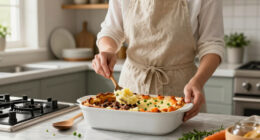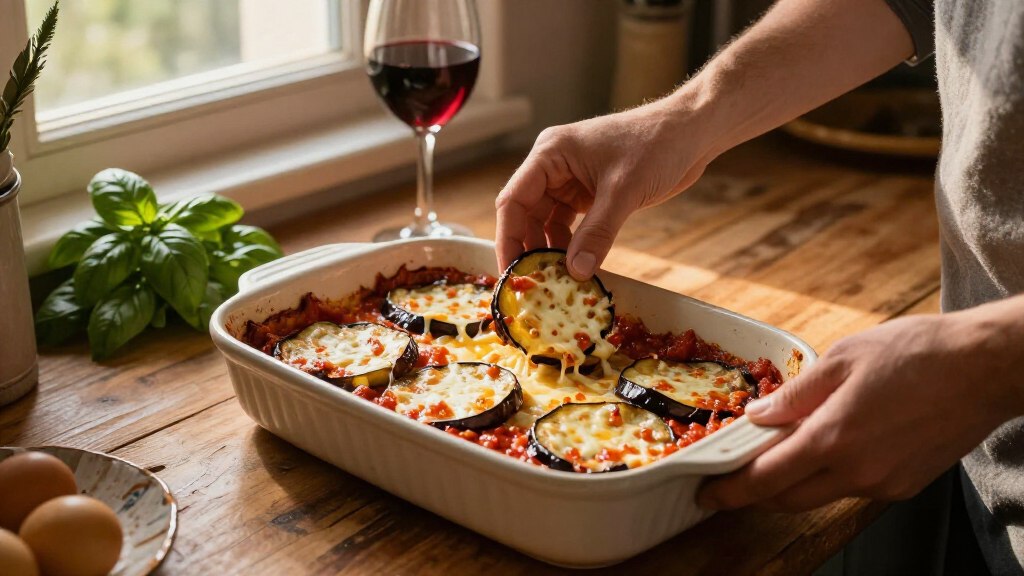

🔍 Read the full analysis: Melanzane Alla Parmigiana: The September Eggplant Bake, Done The Southern Way on Mad Tasting

Get kitchen staples and gadgets delivered free — and shop member deals
- Fast, free delivery on millions of items
- Access to Prime Big Deal Days deals on October 6–7
- Prime Video, Amazon Music and more included
TL;DR
Melanzane alla parmigiana, the layered Southern Italian eggplant bake, hits its seasonal peak in September when field-ripened eggplant and tomatoes meet cooler evenings. The method matters more than a fixed recipe: fry even 1 cm slices, use a reduced sauce sparingly, drain fresh mozzarella, and rest the bake 20 to 30 minutes before cutting.
As September brings the last field-ripened eggplant and tomatoes to Southern Italian markets while evenings turn cooler, melanzane alla parmigiana — the layered bake of fried eggplant, concentrated tomato sauce, basil, and cheese — reaches its seasonal sweet spot. A new guide from Mad Tasting lays out the Southern method: cook every wet ingredient before assembly, layer with restraint, and rest the finished bake for 20 to 30 minutes so it slices cleanly rather than pooling.
The dish is closely tied to Sicily, Campania, and Naples, though, as Mad Tasting notes, no accepted record gives any region sole ownership. The name is often assumed to point to Parmesan or the northern city of Parma, but food historians offer several competing explanations: it may refer to Parmigiano cheese, to cooking ‘in a Parmesan manner,’ or to the Sicilian word parmiciana, describing the overlapping slats of wooden shutters that resemble the layered eggplant. None has settled the debate.
The practical Southern definition, according to the guide, is method-based: cook the eggplant before layering, keep the tomato sauce concentrated, use cheese for savor rather than bulk, and bake until the layers merge. Traditional versions fry unbreaded slices, though some families add flour or a flour-and-egg coating; a thick breadcrumb jacket is described as a feature of many Italian-American adaptations rather than the broad Southern tradition.
For a 23-by-33-centimeter (9-by-13-inch) pan serving six as a meatless main or eight as a side, the guide directs cooks to slice eggplant about 1 centimeter thick, salt mature or watery slices for 30 to 45 minutes and blot them dry — wet eggplant spits in hot oil and absorbs fat instead of browning — and to drain fresh mozzarella before assembly. Fresh tomatoes are recommended only when they are fragrant and dense; otherwise, canned tomatoes such as Pomodoro San Marzano dell’Agro Sarnese-Nocerino DOP give a more dependable sauce after a short simmer.
Melanzane alla Parmigiana: The September Eggplant Bake, Done the Southern Way
As September brings the last field-ripened eggplant and tomatoes to Southern Italian markets while evenings turn cooler, the layered bake of fried eggplant, concentrated tomato sauce, basil, and cheese reaches its seasonal sweet spot. A guide from Mad Tasting lays out the Southern method: cook every wet ingredient before assembly, layer with restraint, and rest the bake so it slices cleanly.
Why Water Management Makes or Breaks the Dish
The guide’s central argument: parmigiana fails or succeeds on water. Each wet ingredient — eggplant, tomato sauce, fresh mozzarella — is cooked, reduced, or drained before assembly. Done properly, the result tastes “rich rather than greasy, lush rather than loose.”
Slice & Salt
Cut 1 cm slices; salt mature or watery eggplant 30–45 min, then blot dry — wet eggplant spits in oil and absorbs fat instead of browning.
Fry Unbreaded
Southern tradition fries plain slices; some families use flour or flour-and-egg. A thick breadcrumb jacket is an Italian-American feature.
Reduce the Sauce
Use a concentrated tomato sauce sparingly. Fresh tomatoes only when fragrant and dense; otherwise San Marzano DOP after a short simmer.
Drain the Cheese
Drain fresh mozzarella before assembly. Use cheese for savor, not bulk — regional choices reflect local custom.
Layer, Bake, Rest
Bake until the layers merge, then rest 20–30 minutes so the dish slices cleanly rather than pooling.
Where Does the Name Come From?
| Theory | Explanation | Status |
|---|---|---|
| Parmigiano Cheese | The name refers to Parmigiano cheese used in the dish. | ~ Unsettled |
| City of Parma | A northern connection to Parma — no settled record ties the dish to the city. | ✗ Disputed |
| “Parmesan Manner” | Cooking “in a Parmesan manner” — a style, not a place. | ~ Unsettled |
| Sicilian “Parmiciana” | The overlapping slats of wooden shutters, resembling the layered eggplant. | ~ Unsettled |
| Southern Method | Cooked eggplant, restrained sauce, savory cheese, basil, rest time — shared across regions. | ✓ Agreed |
The dish is closely tied to Sicily, Campania, and Naples — though no accepted record gives any region sole ownership, and the guide does not attempt to rank the claims.
Three Lines That Frame the Dish
“The goal is not to crown one recipe as the only authentic version; it is to help you build a balanced, regionally grounded dish.”
— Mad Tasting Guide“No explanation has settled the argument, and that uncertainty belongs to the dish.”
— Mad Tasting Guide“This is slow food made from ordinary things, but the method is forgiving once you understand where the moisture comes from.”
— Mad Tasting GuideCooking Through the Seasonal Overlap
Eggplant reached Mediterranean Europe through Arab trade and agriculture before becoming central to Southern Italian cooking. September is a seasonal overlap: mature eggplants and dense late tomatoes remain, while cooler air makes an oven dish welcome. After September, the same method carries into autumn with canned tomatoes and firm winter eggplant.
Three Firm Medium Ones
Choose eggplants heavy for their size, with taut reflective skin and a green cap that hasn’t dried brown. Very large ones risk developed seeds and cottony centers — three medium beat one oversized specimen.
Raw Test First
Use fresh tomatoes only when flavorful enough to eat raw. Otherwise, canned Pomodoro San Marzano dell’Agro Sarnese-Nocerino DOP gives a more dependable sauce after a short simmer.
Salt Isn’t Automatic
Modern eggplants are often less bitter than older varieties. Salting helps most with watery or mature fruit — it mainly improves frying by drawing moisture from the cut surface, not bitterness.
The September Supply Chain
Quick Answers Before You Bake
Is melanzane alla parmigiana from Parma?
No settled record ties it to Parma. Food historians offer several theories — Parmigiano cheese, cooking “in a Parmesan manner,” or the Sicilian word parmiciana for shutter slats. The dish is most closely associated with Sicily, Campania, and Naples.
Do I need to salt the eggplant?
Not always. Modern eggplants are often less bitter than older varieties. Salt for 30–45 minutes when the fruit feels watery or mature, then blot dry — this mainly improves frying, not bitterness.
Why is my parmigiana watery?
Excess moisture from undercooked eggplant, thin sauce, or undrained mozzarella. Fry the slices, reduce the sauce, drain the cheese, and rest the baked dish 20–30 minutes before cutting.
Should the eggplant slices be breaded?
Southern tradition commonly fries unbreaded slices, though some families use flour or flour-and-egg coatings. A thick breadcrumb crust is more characteristic of Italian-American adaptations.
What size pan and how many servings?
A 23-by-33-centimeter (9-by-13-inch) pan serves about six as a meatless main or eight as a side, with eggplant sliced roughly 1 centimeter thick.
Why Moisture Control Makes or Breaks the Dish
The guide’s central argument is that parmigiana fails or succeeds on water management. Each wet ingredient — eggplant, tomato sauce, fresh mozzarella — is cooked, reduced, or drained before assembly, and the finished bake rests 20 to 30 minutes so the layers set. Done properly, according to Mad Tasting, the result tastes ‘rich rather than greasy, lush rather than loose,’ needing little more than bitter greens and bread alongside.
The piece also matters for how it frames authenticity: rather than crowning one recipe as the only true version, it treats authenticity as a ‘family resemblance’, noting that Sicily and Campania disagree on details — caciocavallo in Palermo, fior di latte in Naples — while sharing tender eggplant, restrained sauce, savory cheese, basil, and resting time. Regional cheeses in Puglia and Calabria reflect local custom rather than a fixed formula.
As an affiliate, we earn on qualifying purchases.
Eggplant’s Route Into Southern Kitchens
Eggplant reached Mediterranean Europe through Arab trade and agriculture before becoming central to Southern Italian cooking, the guide notes. September is presented not as a separate historical recipe but as a seasonal overlap: mature eggplants — heavy for their size, with taut, reflective skin and a green cap that has not dried brown — are still available, and late tomatoes remain dense and fragrant, while cooler air makes an oven dish welcome.
On salting, the guide adds a practical caveat: modern eggplants are often less bitter than older varieties, so salting is not automatic. It helps most with watery or mature fruit and improves frying by drawing moisture from the cut surface. Very large eggplants risk developed seeds and cottony centers; three firm medium ones are preferred over one oversized specimen.
“The goal is not to crown one recipe as the only authentic version; it is to help you build a balanced, regionally grounded dish.”
— Mad Tasting guide
Contested Origins, Settled Method
The dish’s birthplace and the source of its name remain undetermined. Competing explanations — Parmigiano cheese, a Parma connection, a ‘Parmesan manner’ of cooking, or the Sicilian parmiciana shutter etymology — are all attributed to food historians without a settled answer. Regional claims to ownership are likewise unresolved, and the guide does not attempt to rank them.
Cooking Through the September Window
Cooks have the remaining weeks of the local eggplant and tomato season to build the dish while field produce lasts. The guide recommends choosing medium, heavy eggplants, testing whether fresh tomatoes are flavorful enough to eat raw before using them for sauce — otherwise reaching for good canned tomatoes — and planning the 20-to-30-minute rest into serving time. After September, the same method carries into autumn with canned tomatoes and firm winter eggplant.
Key Questions
Is melanzane alla parmigiana from Parma?
No settled record ties it to Parma. Food historians offer several theories — Parmigiano cheese, cooking ‘in a Parmesan manner,’ or the Sicilian word parmiciana for shutter slats. The dish is most closely associated with Sicily, Campania, and Naples.
Do I need to salt the eggplant?
Not always. Modern eggplants are often less bitter than older varieties. Salt for 30 to 45 minutes when the fruit feels watery or mature, then blot dry — this mainly improves frying, not bitterness.
Why is my parmigiana watery?
Excess moisture from undercooked eggplant, thin sauce, or undrained mozzarella. Fry the slices, reduce the sauce, drain the cheese, and rest the baked dish 20 to 30 minutes before cutting.
Should the eggplant slices be breaded?
Southern tradition commonly fries unbreaded slices, though some families use flour or flour-and-egg coatings. A thick breadcrumb crust is more characteristic of Italian-American adaptations.
What size pan and how many servings?
A 23-by-33-centimeter (9-by-13-inch) pan serves about six as a meatless main or eight as a side, with eggplant sliced roughly 1 centimeter thick.
Source: Mad Tasting
NFL season / tailgating Picks
team gear
As an affiliate, we earn on qualifying purchases.