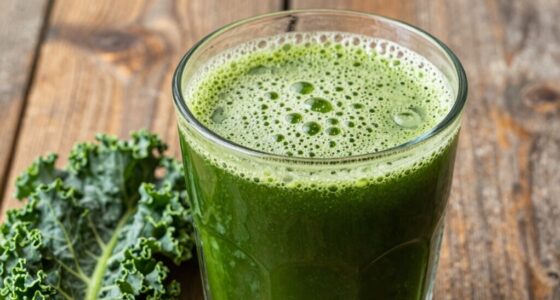
Microgreens are a small but powerful addition to your juices, offering intense flavor and a burst of nutrients. With choices like radish, broccoli, sunflower, or pea shoots, you can customize flavor profiles from spicy to earthy, enhancing your drink’s complexity. Growing your own allows you to experiment and tailor tastes to your liking, while their rich vitamins and antioxidants boost your health. Keep exploring to discover how microgreens can revolutionize your juicing routine.

Get kitchen staples and gadgets delivered free with Prime
- Fast, free delivery on millions of items
- Prime Video, Amazon Music and more included
- Member-only deals all year
Key Takeaways
- Microgreens add vibrant flavors and concentrated nutrients, enhancing juice taste and health benefits.
- Different seed varieties, like radish or sunflower, provide spicy, sweet, or earthy flavor profiles.
- Proper growth and harvesting techniques preserve flavor and maximize nutritional content in microgreens.
- Microgreens’ small size allows quick growth, making them a fresh, customizable addition to daily juices.
- Incorporating microgreens boosts vitamins, antioxidants, and phytochemicals, shifting juice flavor and nutritional richness.

Have you ever considered adding microgreens to your juicing routine? These tiny greens pack a punch of flavor and nutrients, offering an invigorating twist to your daily beverages. When you start exploring microgreens, one of the first things you’ll notice is the wide variety of seed varieties available. From radish and broccoli to sunflower and pea shoots, each seed type brings its own unique flavor profile and nutritional benefits. Selecting the right seed varieties depends on the taste you want to enhance in your juice, whether it’s spicy, sweet, or earthy. With so many options, you can experiment to discover the perfect combinations that elevate your juice’s flavor. Growing microgreens is surprisingly straightforward, especially when you understand the right growth techniques. To get started, you’ll want a shallow container with drainage holes, some quality soil or a seed-starting mix, and your chosen seed varieties. Spread the seeds evenly over the soil surface, then lightly cover them with a thin layer of soil or press them gently into the surface. Keep the soil consistently moist by watering lightly but regularly, avoiding overwatering that can lead to mold or rot. One of the most effective growth techniques is to provide ample light—either natural sunlight or grow lights—to encourage healthy, lush growth. Microgreens typically sprout within a few days and are ready to harvest when they reach about 1 to 3 inches tall, usually within one to two weeks. Additionally, understanding seed varieties can help you tailor your microgreens to maximize flavor and nutritional benefits in your juices. Proper growth techniques can significantly impact the quality of your microgreens, both in flavor and nutrients. To ensure optimal growth, it’s helpful to learn about seed germination and how environmental factors influence sprouting success. Proper harvesting methods are also essential to preserve the freshness and nutritional integrity of your microgreens, making sure you get the most out of your efforts. As you tend to your microgreens, remember that proper growth techniques can make a significant difference in flavor and nutritional quality. Regular maintenance and monitoring can help prevent common issues like pests or fungal growth. Harvest them by snipping just above the soil line with clean scissors, and you’ll have fresh, vibrant greens ready to juice. Incorporating microgreens into your juicing adds more than just flavor; it amplifies nutrient content, providing concentrated vitamins, antioxidants, and phytochemicals. Because they’re so nutrient-dense, even a small handful can transform your juice into a powerhouse of health benefits. Plus, their delicate textures and bright flavors can add an invigorating, complex note to your beverages. Once you get the hang of selecting seed varieties and mastering growth techniques, you’ll find it’s easy to produce a steady supply of microgreens that can be juiced daily, giving your routine a flavorful, nutritious boost.
As an affiliate, we earn on qualifying purchases.
Frequently Asked Questions
How Long Do Microgreens Stay Fresh After Harvest?
After harvest, microgreens typically stay fresh for 5 to 7 days when stored properly. To maximize their microgreens shelf life, keep them in a breathable container or loosely wrapped in a damp paper towel inside the refrigerator. Proper microgreens storage prevents moisture loss and spoilage, ensuring you enjoy their vibrant flavor and texture for as long as possible. Check them regularly and discard any that show signs of spoilage.
Can Microgreens Replace Traditional Leafy Greens in Juices?
You can replace traditional leafy greens with microgreens in your juices, and you’ll notice a flavor intensity boost—up to 40% more vibrant than mature greens. Microgreens pack a higher nutrient concentration, making your juice more nutritious. Their small leaves deliver big flavor, adding a fresh, punchy taste that enhances your drink. So, microgreens are an excellent, concentrated alternative to traditional greens, giving your juice a powerful nutritional and flavor upgrade.
Are Microgreens Suitable for All Types of Juicers?
Microgreens are suitable for most juicers, but their flavor and juicing efficiency depend on the type. If you use a masticating or slow juicer, you’ll extract more nutrients and flavor from microgreens, enhancing your juice. However, with centrifugal juicers, microgreens might be less efficient due to their delicate leaves, which can clog or get damaged. Experiment to find the best method that maximizes flavor and juicing efficiency for your setup.
What Is the Best Season to Harvest Microgreens for Juicing?
You should harvest microgreens for juicing during their peak seasonal growth, usually in spring or early summer. For example, a home gardener in California finds her basil microgreens most flavorful and nutrient-rich in late spring, aligning with their natural growth cycle. Different microgreen varieties thrive in various seasons, so knowing their seasonal growth patterns guarantees you get the best flavor and nutrition in your juice.
Do Microgreens Retain Nutrients Better Than Mature Greens?
You’ll find that microgreens generally retain more nutrients than mature greens, thanks to their younger, less processed state. This enhanced nutrient retention boosts the microgreen benefits, providing you with higher levels of vitamins, antioxidants, and enzymes. Eating microgreens in your juices maximizes these benefits, giving you a nutrient-dense boost. So, for the best microgreen benefits, incorporate them early in their growth cycle, when their nutrient density is at its peak.
Conclusion
Imagine tearing into a vibrant handful of microgreens, their tiny leaves bursting with fresh, bold flavor. As you juice them, their bright, crisp essence transforms your drink into a garden of energy—green, lush, and alive. With each sip, you’ll feel the subtle power of these miniature greens, turning ordinary juice into a invigorating, flavorful celebration of nature’s smallest, most potent treasures. Small leaves, big flavor—your journey to vibrant health starts here.
NFL season / tailgating Picks
team gear
As an affiliate, we earn on qualifying purchases.