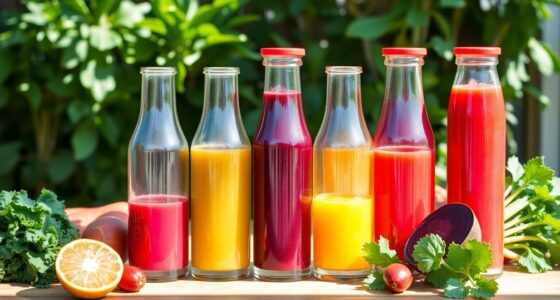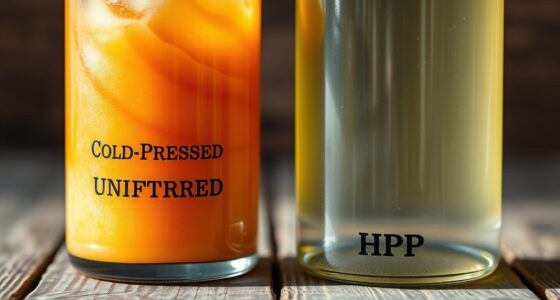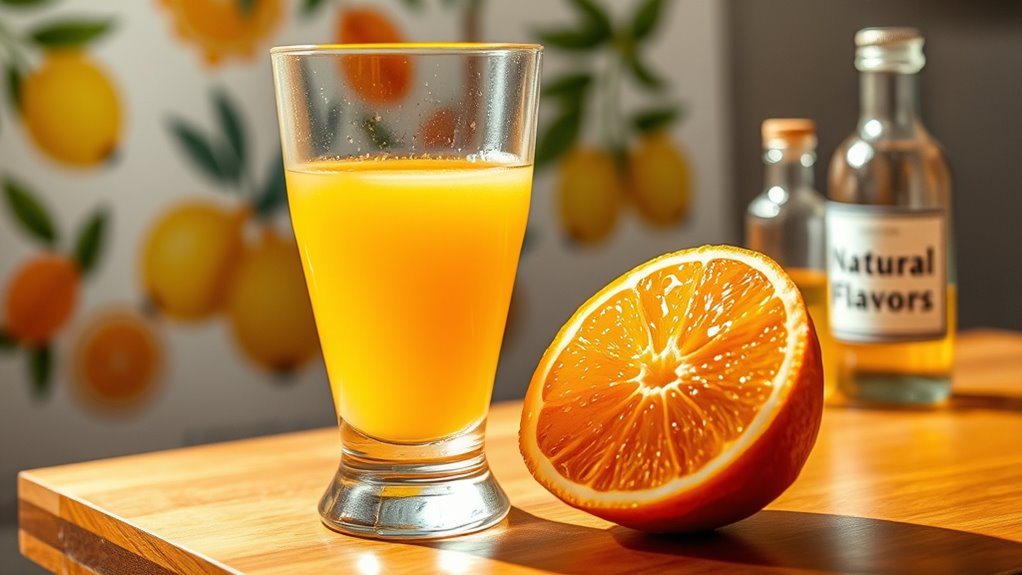

Yes, natural flavors are often added to natural juices to enhance or replicate the authentic taste of fruits. Although the term suggests minimal processing, these flavors are usually blends of extracts from various sources like fruits and herbs. They help achieve consistent flavor regardless of seasonal changes. Keep exploring to discover more about how these natural flavors work and what they really involve.
Key Takeaways
- Natural juices may contain natural flavors to enhance or replicate specific fruit tastes.
- Natural flavors in juices are derived from real fruits and herbs through extraction methods.
- Not all natural juices are free from added natural flavors; label reading is essential.
- Natural flavors can be blended from multiple sources, so their exact origin may be unclear.
- Using natural flavors helps achieve consistent flavor profiles in juices regardless of seasonal variations.
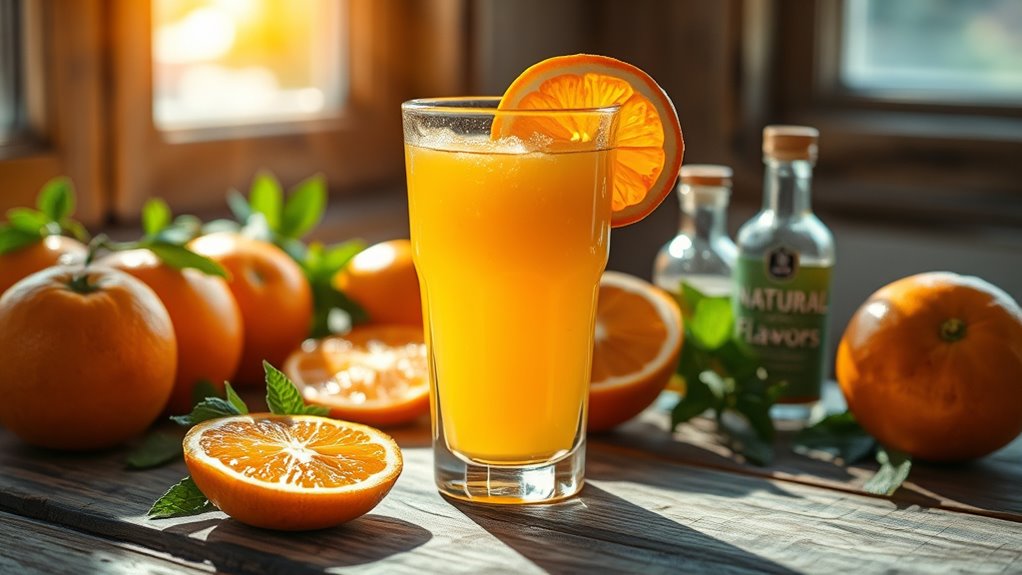
Natural flavors in juices are derived from real fruits, herbs, and other natural sources, offering a more authentic taste experience. When you see ‘natural flavors’ on a juice label, it often indicates that the flavor has been obtained through processes like flavor extraction from these sources. Unlike artificial additives, which are synthesized in labs, natural flavors aim to preserve the genuine essence of the original ingredients, giving you a product that’s closer to what nature intended.
Natural flavors come from real fruits, herbs, and natural sources for authentic taste.
However, understanding what goes into these flavors can be complicated. Flavor extraction is a key process used by manufacturers to capture the aromatic and flavorful compounds from fruits, herbs, or other natural sources. This process involves methods like steam distillation, cold pressing, or solvent extraction, which help isolate the desired compounds without adding synthetic chemicals. When done correctly, flavor extraction ensures that the natural taste remains intact, but it also raises questions about how ‘natural’ the final product truly is, especially since some extraction methods involve solvents or other processing aids. extraction methods can sometimes alter the purity of the flavor or introduce trace contaminants.
While natural flavors are marketed as more authentic, it’s crucial to remember that they can sometimes be a mixture of compounds derived from multiple sources. For example, the flavor profile of a fruit juice might include natural flavors extracted from a blend of fruits, making it difficult to identify the exact origin. This blending allows manufacturers to create consistent flavors year-round, regardless of seasonal variations in fresh produce. Still, it can also blur the line between pure, whole fruit and processed flavoring.
Many consumers assume that natural flavors mean the juice is free from artificial additives, but that’s not always the case. Some natural flavors may still contain preservatives or stabilizers to prolong shelf life. It’s wise to read labels carefully, especially if you’re trying to avoid certain additives. Natural flavors are often considered a better option than artificial ones, but they’re not free from processing or potential contaminants. The key lies in transparency from manufacturers about how they extract and formulate these flavors.

COSORI Food Dehydrator for Jerky, 176°F Temperature Control, 5 Stainless Steel Trays with 5.1 ft² Drying Space, 4 Presets, 48H Timer, for Dog Treats, Meat, Fruit, Veggies, Snacks, Bright-Silver
𝟭𝟳𝟲 °𝗙 𝗠𝗔𝗫 𝗧𝗘𝗠𝗣𝗘𝗥𝗔𝗧𝗨𝗥𝗘: Adjust the dehydrator between 95-176°F in 1°F increments. Higher temps ensure safer beef jerky....
As an affiliate, we earn on qualifying purchases.
Frequently Asked Questions
Are Natural Flavors Always Derived From Fruit Sources?
Natural flavors aren’t always derived from fruit sources. During flavor manufacturing, companies may use fruit extraction or other plant-based ingredients, but sometimes they also include flavor compounds created through chemical processes. As a consumer, you should check labels carefully, as natural flavors can be made from various sources, not just fruits. This means that even in natural juices, the flavor might be crafted rather than directly extracted from the fruit.
Can Natural Flavors Contain Artificial Ingredients?
Natural flavors can sometimes contain artificial ingredients, which may concern you if you’re wary of artificial additives. Manufacturers aren’t always required to specify the exact ingredients, so label transparency can be limited. If you’re seeking pure, additive-free options, check labels carefully and look for products that clearly state they contain only natural ingredients. Being vigilant helps you avoid unwanted artificial components and addresses your concerns about artificial additives.
How Can I Identify Natural Flavors on Ingredient Labels?
You might think ingredient labels are crystal clear, but “natural flavors” often hide more than they reveal. To identify them, look for labels that specify flavor varieties, like “strawberry” or “lemon.” Sadly, “natural flavor” can mean a mix of natural ingredients or just a single natural essence. So, don’t rely on vague terms—seek transparency and detailed ingredient lists for true clarity.
Are Natural Flavors Safe for Children and Pregnant Women?
Natural flavors are generally considered safe for children and pregnant women, but you should stay cautious. They can sometimes contain trace pesticide residues or allergen concerns, which might pose risks. Always check labels for allergen info and opt for brands that prioritize organic ingredients. If you’re concerned, consult your healthcare provider to ensure the natural flavors in your juice won’t cause any adverse reactions or health issues.
Do Natural Flavors Vary Between Different Juice Brands?
Surprised? Natural flavors can indeed vary between juice brands, despite claims of purity. You might think all natural juices taste the same, but flavor consistency isn’t guaranteed. Some brands prioritize transparency, clearly listing ingredients, while others keep you guessing. So, if you crave uniform taste and honesty, it’s worth checking labels carefully. Don’t assume all natural flavors are created equal—brand transparency makes all the difference.

Magic Mill Pro Food Dehydrator Machine | 10 Stainless Steel Trays | Dryer for Jerky, Dog Treats, Herb, Meat, Beef, Fruit | Keep Warm Function, Digital Timer and Temperature Control, ETL Approved
REAR MOUNTED FAN FOR SUPERIOR HEAT DISTRIBUTION – Dries food evenly, This electric dehydration machine is equipped with...
As an affiliate, we earn on qualifying purchases.
Conclusion
So, next time you sip on that juice, ask yourself—what’s really inside? Those “natural flavors” might seem harmless, but their true nature remains a mystery. Are they just fruit extracts, or is there more lurking beneath the label? The truth might surprise you, and uncovering it could change how you see your favorite drinks forever. Stay curious—because what you don’t know could be more surprising than you ever imagined.

Food Dehydrator with Adjustable Timer & Temperature, 8 Stainless Steel Trays, 650W Powerful Machine, Quiet Operation Dehydrator for Jerky, Fruits, Herbs, Dog Treats
Large 8-Tray Capacity & High-Efficiency 650W Motor: Make apple chips, beef jerky, and dried herbs simultaneously! With spacious...
As an affiliate, we earn on qualifying purchases.

Magic Mill Pro Food Dehydrator Machine | Powerful 600W Rear Fan Even-Drying System | 7 Full-Size Stainless Steel Trays | 95°-176° Temperature Control, 48H Timer, Keep Warm + Auto Shutoff | ETL Listed
FULL-STAINLESS BUILD, INSIDE & OUT | Built the way a premium dehydrator should be—stainless steel exterior + stainless...
As an affiliate, we earn on qualifying purchases.

Cindy thoroughly researches juicing trends, techniques, and recipes to provide readers with practical advice and inspiration. Her writing style is accessible, engaging, and designed to make complex concepts easy to understand. Cindy’s dedication to promoting the advantages of juicing shines through her work, empowering readers to make positive changes in their lives through the simple act of juicing.