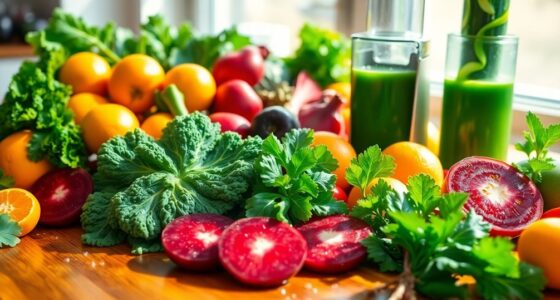
If you’re comparing Navel and Valencia oranges for juice, you’ll find that Navels are best for eating—they’re seedless, easy to peel, and have a sweet, juicy flavor. Valencias are ideal for juicing since they have thin skin, high juice content, and a robust flavor. Knowing these differences helps you choose based on your preference, but there’s more to discover about their unique characteristics and best uses as you explore further.
Key Takeaways
- Navel oranges are seedless and ideal for eating fresh, while Valencia oranges are prized for their high juice content.
- Navel oranges have thicker, easy-to-peel skin, making them suitable for snacking; Valencia oranges have thinner skin, ideal for juicing.
- Navel oranges are harvested at peak ripeness, ensuring maximum flavor; Valencia oranges are harvested later for optimal juice quality.
- Valencia oranges generally produce more juice and are preferred for fresh-squeezed juice, whereas Navel oranges are less juicy.
- Both varieties are nutritious with high vitamin C, but Valencia oranges are specifically valued for their juice yield and flavor.

Have you ever wondered what sets different orange varieties apart? When it comes to choosing between Navel and Valencia oranges for juice, understanding their unique qualities can really make a difference. Both varieties offer distinct flavors and textures, but their health benefits and harvesting techniques also set them apart. Knowing these factors helps you pick the best orange for your needs, whether you’re after a quick snack or fresh-squeezed juice.
Discover what makes Navel and Valencia oranges unique for snacking and juicing.
Navel oranges are known for their seedless nature and easy-to-peel skin, making them a popular choice for eating fresh. They’re typically harvested when fully ripe, which is indicated by their bright orange color and smooth skin. The harvesting techniques for Navel oranges often involve hand-picking to avoid damage, since they’re usually grown on trees with delicate skin. This careful approach ensures the fruit remains in top condition, preserving its juicy, sweet flavor. Because they’re harvested at peak ripeness, Navel oranges retain a high level of vitamin C, fiber, and antioxidants, giving you numerous health benefits like boosting your immune system and improving skin health. Additionally, their minimal processing makes them a convenient and nutritious snack.
Valencia oranges, on the other hand, are prized for their juiciness and thin, smooth skin. They are generally harvested later in the season, often requiring multiple passes through orchards to gather the ripe fruit at the ideal time. Their harvesting techniques involve more precise timing because overripe fruit can quickly lose quality, especially for juicing. Since Valencia oranges are usually grown for juice production, they are harvested when the fruit is fully mature but still firm, ensuring maximum juice content. Their health benefits are similar to Navel oranges, providing essential nutrients and antioxidants, but Valencia oranges tend to be juicier, making them the go-to choice for fresh-squeezed juice lovers who want a robust, flavorful drink. Proper wall organization and storage techniques can help maintain their quality longer.
Both orange varieties support your health by offering plenty of vitamin C, which helps fight off colds and supports overall immunity. They also supply dietary fiber, aiding digestion and promoting heart health. The difference lies in their harvesting techniques—Navel oranges are carefully picked to maintain their quality for eating, while Valentias are harvested with precision to maximize juice yield. This impacts not just their taste and texture but also how you should store and handle them. Navel oranges are better for snacking and salads, whereas Valencia oranges shine in fresh-squeezed juice, thanks to their high juice content and thin skin. Understanding these distinctions helps you appreciate what each variety can offer, ensuring you get the most health benefits and enjoyment from your choice.
Top picks for "compar orange variety"
Open Amazon search results for this keyword.
As an affiliate, we earn on qualifying purchases.
Frequently Asked Questions
How Do Storage Methods Affect Orange Juice Flavor?
Storage techniques greatly impact orange juice flavor preservation. When you store juice in airtight containers and keep it refrigerated, it stays fresh and retains its natural flavor longer. Avoid exposing juice to light or heat, which can cause oxidation and degrade taste. Proper storage methods, like sealing tightly and refrigerating promptly, make certain you enjoy the vibrant, authentic flavor of your orange juice for as long as possible.
Are There Health Benefits Unique to Each Orange Variety?
You’re in for a treat—each orange variety packs unique health perks. Navel oranges are rich in citrus phytochemicals that boost your immune system, while Vallencia oranges contain higher levels of orange antioxidants that fight free radicals. Eating either helps reduce inflammation and supports heart health. Though both varieties are nutritious, enjoying a mix guarantees you receive a broader spectrum of these health-boosting compounds.
Which Orange Variety Is More Eco-Friendly to Harvest?
You’ll find Valencia oranges are generally more eco-friendly to harvest because they benefit from sustainable harvesting practices and eco-friendly farming methods. These oranges often grow in regions that prioritize environmental sustainability, reducing chemical use and conserving water. Navel oranges, while delicious, may involve more intensive harvesting processes. Choosing Valencia supports eco-conscious farming, helping reduce your environmental impact and promote healthier ecosystems during orange production.
Can Orange Varieties Be Hybridized for Better Juice Quality?
A stitch in time saves nine, and with orange hybridization, you can improve juice quality effectively. Yes, you can hybridize orange varieties to enhance flavor, sweetness, and juiciness. By cross-breeding different types, you develop new hybrids that combine the best traits, boosting juice quality. This process allows you to tailor oranges to meet consumer preferences and optimize harvests, making your orange cultivation more innovative and profitable.
How Do Seasonal Changes Impact Juice Taste From Each Variety?
Seasonal changes considerably impact juice taste from both Navel and Valencia oranges. You’ll notice seasonal flavor shifts, with Navel juice tasting sweeter and more consistent during winter harvests, while Valencia juice peaks in brightness and tanginess during summer harvests. Harvest timing effects play a role, as oranges picked at ideal ripeness develop richer flavors. So, your juice’s taste varies throughout the year based on these seasonal and harvest-related factors.
Conclusion
So, whether you prefer the sweet, mellow embrace of Navel oranges or the zesty splash of Valencia juice, each variety offers a unique burst of sunshine. Think of Navel as a cozy, reliable friend, while Valencia’s lively spirit keeps your taste buds dancing. Whichever you choose, you’re savoring a piece of nature’s vibrant artwork. Remember, life’s too short for dull juice—grab your favorite and let your palate soar like a carefree kite in the sky.

Cindy thoroughly researches juicing trends, techniques, and recipes to provide readers with practical advice and inspiration. Her writing style is accessible, engaging, and designed to make complex concepts easy to understand. Cindy’s dedication to promoting the advantages of juicing shines through her work, empowering readers to make positive changes in their lives through the simple act of juicing.