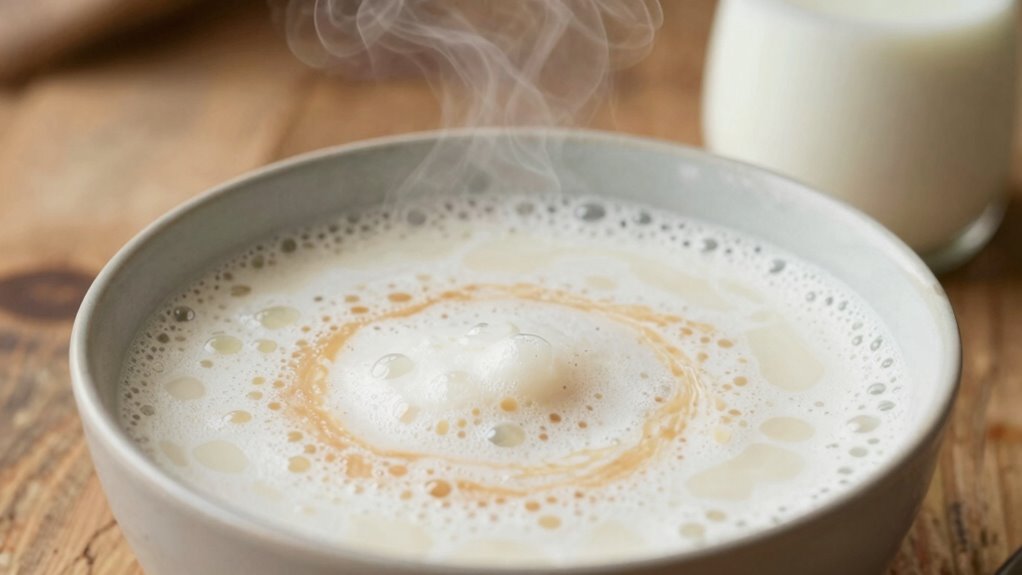

Many beginners overlook how heat and friction can ruin their oat milk frothing, causing burnt flavors and grainy textures. Overheating or stirring too vigorously damages the milk, making it taste bitter and uneven in texture. Using high steam pressure quickly raises the temperature, risking scorching. To keep your oat milk smooth and tasty, you need to control heat and stay gentle with your techniques. Keep going, and you’ll discover how to master perfect frothing every time.

Get kitchen staples and gadgets delivered free — and shop member deals
- Fast, free delivery on millions of items
- Access to Prime Big Deal Days deals on October 6–7
- Prime Video, Amazon Music and more included
Key Takeaways
- Overheating oat milk causes burnt, grainy, or bitter flavors, often unexpectedly for beginners.
- Excessive friction from vigorous stirring or high steam pressure damages texture and can lead to breakdown.
- Maintaining gentle, controlled steam prevents scorching and preserves smooth, creamy froth.
- Using too high heat quickly results in flavor degradation and undesirable graininess.
- Monitoring temperature and avoiding rapid temperature spikes are crucial to prevent heat-related mistakes.
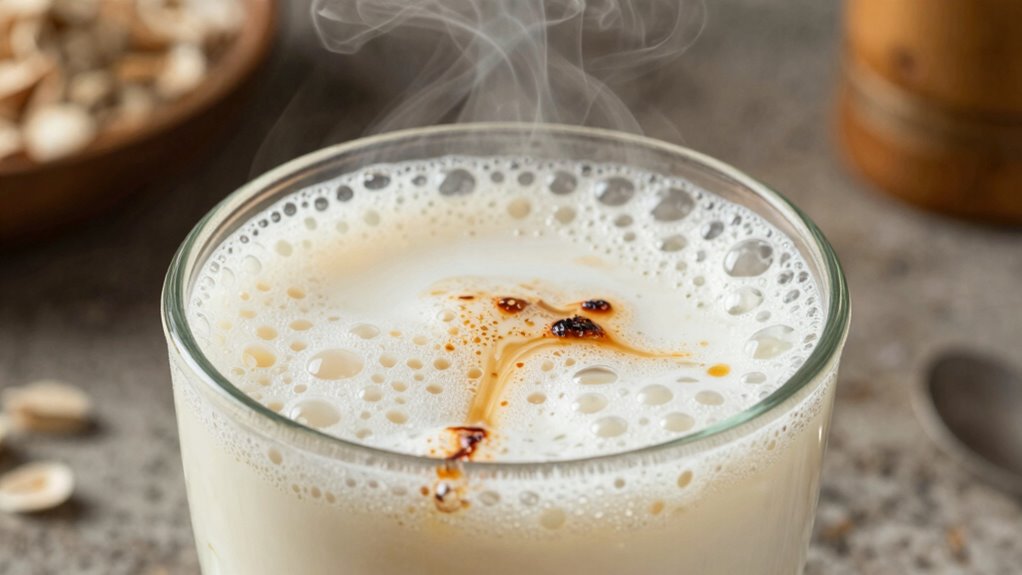
Oat milk has become a popular dairy alternative, but many people make common mistakes that can affect its taste and texture. One of the biggest issues is how you handle it during steaming or frothing. Unlike dairy milk, oat milk is more sensitive to heat and friction, which can lead to a burnt or grainy taste if you’re not careful. This is where understanding barista techniques becomes essential. If you’re trying to create a creamy, velvety foam, you might be tempted to crank up the steam wand or stir vigorously, but this can cause the oat milk to overheat quickly or develop undesirable textures. Instead, aim for a gentle, controlled steam—keeping the temperature just below boiling point. This preserves the smoothness and prevents the milk from breaking down, which is vital for achieving that perfect, luscious foam.
Another common mistake is neglecting flavor enhancements. Oat milk on its own can be a bit bland, and many beginners overlook the power of small additions that can elevate its taste. Adding a pinch of salt, a dash of vanilla extract, or a hint of cinnamon can make a noticeable difference. These flavor enhancements don’t just improve taste—they also help mask any subtle off-flavors caused by overheating or poor frothing techniques. When you incorporate these simple tweaks, you’ll find your oat milk drinks tasting richer and more satisfying, making the most of this versatile dairy alternative.
Your approach to frothing and steaming also ties into your barista techniques. Instead of rushing the process, pay attention to the texture and temperature. Use a thermometer if needed, and maintain steady, gentle motion with the steam wand. This helps avoid friction-induced heat spikes that can cause the milk to scorch or become grainy. Remember, oat milk’s natural sugars can burn easily, which imparts a bitter taste—something you definitely want to avoid. If you notice any signs of overheating, immediately turn off the steam and cool the milk slightly before continuing. Practicing these techniques will help you develop a smoother, creamier froth with a balanced flavor profile. Additionally, understanding heat sensitivity of oat milk is crucial to prevent unintended flavor issues.
As an affiliate, we earn on qualifying purchases.
Frequently Asked Questions
Can Oat Milk Be Heated Too Quickly Without Curdling?
Yes, you can heat oat milk too quickly without curdling, but it may affect its flavor and nutritional impact. Rapid heating can cause the oat milk to develop a burnt taste and reduce some nutrients. To avoid this, heat it gently over low or medium heat, stirring constantly. This preserves its smooth flavor and nutritional benefits, ensuring a better experience in your coffee or recipes.
Does the Type of Oat Milk Affect Heat Sensitivity?
Think of oat milk like a delicate dance partner—you need to match its rhythm. Different alternative oat types and flavor variations affect heat sensitivity. Some, like barista blends, handle heat better, resisting curdling and separation. Others, with added flavors or different oats, may curdle faster when heated. So, choose your oat milk carefully, especially if you’re planning to heat it, to keep your drink smooth and delicious.
How Does Stirring Impact Oat Milk’s Heat Stability?
Stirring plays a vital role in maintaining oat milk’s heat stability. When you stir gently and consistently, you help preserve its texture consistency and prevent separation, ensuring an even heat distribution. This gentle movement also aids in flavor preservation, as it minimizes the risk of scorching or burning at the bottom. Regular stirring during heating keeps the oat milk smooth, flavorful, and well-integrated, avoiding undesirable changes caused by heat friction.
Is There a Best Temperature to Avoid Frothing Issues?
You should aim for a temperature around 140°F (60°C) to avoid frothing issues with your oat milk. At this temperature, milk texture remains smooth, and frothing consistency stays stable. Too hot, and the heat causes friction that breaks down the proteins, leading to a thin, less creamy foam. Keep the temperature controlled, and you’ll get a rich, velvety froth without compromising the milk’s overall texture.
Can Adding Other Ingredients Prevent Heat-Related Problems?
Sure, adding ingredients like a splash of vanilla or a pinch of salt can actually help with flavor enhancement and might slightly buffer heat issues. But don’t expect a miracle—your frothing hero is still vulnerable to heat, not magic. Mix up ingredient combinations to mask or reduce problems, but ultimately, keeping the temperature in check is your best move. After all, who knew heat could be so tricky?
Conclusion
Just like the delicate dance of heat and friction can unravel your oat milk’s smoothness, your journey in mastering it reveals more than just technique—it’s a symbol of patience and understanding. Every mistake is a ripple, reminding you that growth comes from mindful effort, not haste. Embrace these lessons as part of the process, knowing that with each attempt, you’re forging a richer, more resilient craft—one that ultimately mirrors your own resilience and quiet mastery.
Fall Picks
fall essentials
As an affiliate, we earn on qualifying purchases.