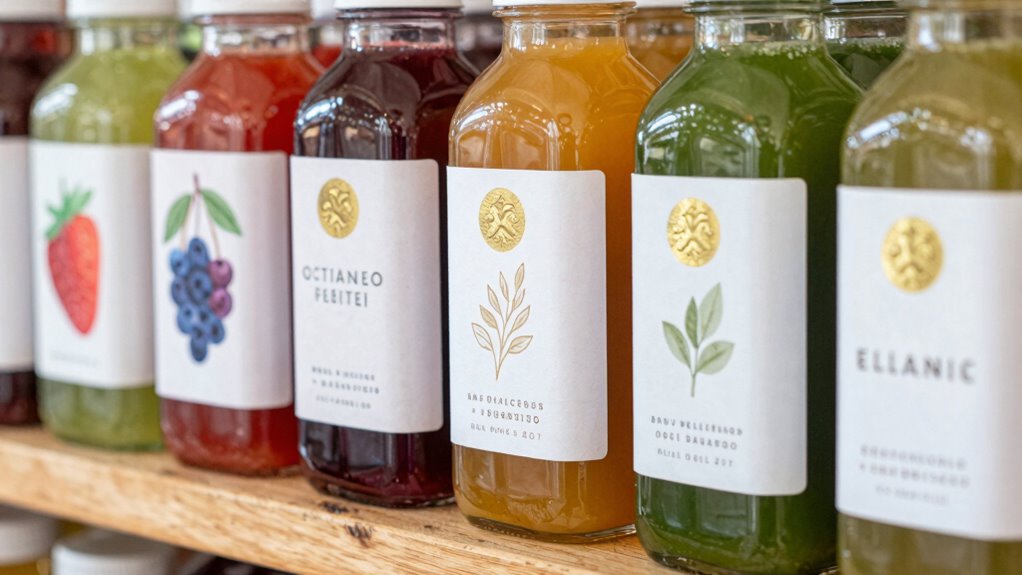

Organic juice labels differ based on their certification category. 100% organic juices must use only certified organic ingredients and display a USDA Organic seal. Blended organic juices contain a mix of organic and non-organic ingredients, with labels indicating the percentage of organic content. Less strict labels may include natural flavors or added sugars, often with vague claims. Understanding these differences helps you choose authentic products; explore further to learn how to spot genuine organic options.

Get kitchen staples and gadgets delivered free with Prime
- Fast, free delivery on millions of items
- Prime Video, Amazon Music and more included
- Member-only deals all year
Key Takeaways
- 100% organic juice labels prominently display USDA Organic seals, indicating all ingredients meet strict organic standards.
- Organic blended juice labels specify the percentage of organic ingredients, reflecting a mix of organic and non-organic components.
- Less strict organic juice labels may include natural flavors or added sugars, with vague or partial certifications.
- Certification labels ensure compliance through regular inspections, with clear documentation of ingredient sourcing and standards.
- Label clarity varies; genuine organic products have transparent certifications, while vague claims require consumer vigilance.
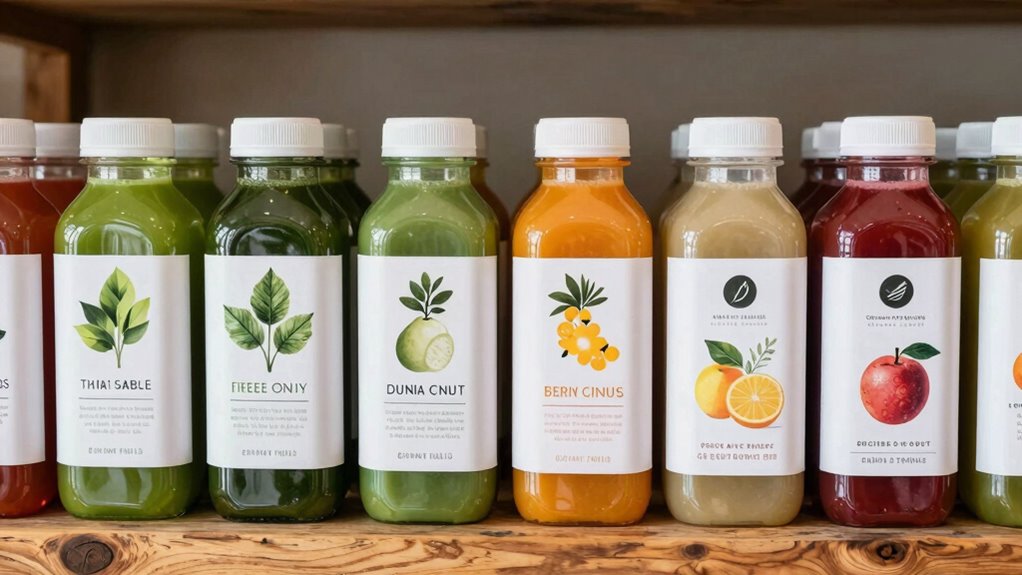
Have you ever wondered how organic juice labels vary across different categories? It all comes down to how brands handle ingredient sourcing and the certification standards they meet. When you pick up a bottle labeled “organic,” it’s essential to understand what that really means. Different categories, like 100% organic, organic blended, or juice beverages, have distinct requirements that influence how ingredients are sourced and what certifications are necessary.
Understanding organic juice labels helps you choose products that match your health and environmental values.
In the case of 100% organic juices, ingredient sourcing is strict. Every ingredient must be certified organic, which means growers avoid synthetic pesticides, fertilizers, and GMOs. These juices often carry a prominent certification seal, such as USDA Organic, indicating they meet rigorous standards. Certification standards in this category are clear-cut: all ingredients must be organic from farm to bottle. This guarantees you’re getting a product that’s free from synthetic additives and heavily regulated for purity. Brands aiming for this label must undergo regular inspections and maintain detailed documentation to prove compliance, giving you confidence in the product’s integrity. Understanding the certification process is crucial because it ensures consistency and trustworthiness in the label claims. Additionally, the certification process often involves periodic testing to verify compliance with organic standards.
When it comes to organic blended juices, the standards become a bit more flexible. These products might include a mix of organic and non-organic ingredients, but the organic portion must still meet specific criteria. Ingredient sourcing for these blends involves sourcing organic ingredients that are certified according to industry standards, but non-organic ingredients may be included under certain allowances. Certification standards for blended products typically specify the minimum percentage of organic ingredients required, and labels often specify what percentage is organic. This transparency helps you understand what’s in your juice, but it also means you need to be more vigilant. The certification process for blended juices may focus more on verifying the percentage of organic ingredients rather than every component being organic. Moreover, understanding certification standards is crucial to ensure the product aligns with your expectations for organic quality.
For juice beverages that are less strictly labeled as organic, the requirements loosen further. These products might contain natural flavors or added sugars, and their ingredient sourcing could involve non-organic ingredients. While they might display some organic labels or partial certifications, the standards are generally less stringent. It’s important to scrutinize the label to see what certifications are present and whether the ingredients sourcing aligns with your expectations of organic quality. Moreover, consumers should be aware that some brands may use vague or misleading terms on labels, so understanding the regulatory standards can help you make more informed choices. Being familiar with labeling regulations can help you distinguish between truly organic products and those that merely use the term for marketing purposes.
As an affiliate, we earn on qualifying purchases.
Frequently Asked Questions
How Are Organic Juice Labels Regulated Internationally?
You should know that organic juice labels are regulated internationally through standards focused on organic farming practices and label authenticity. Countries often have their own certifying bodies, like USDA Organic in the U.S. or EU Organic in Europe, which guarantee that labels genuinely reflect organic farming methods. These regulations help protect consumers from misleading claims and ensure the consistency and authenticity of organic juice labels across different markets.
What Certifications Verify Organic Juice Claims Globally?
You can verify organic juice claims globally through certifications like USDA Organic, EU Organic, and Japan Organic, which guarantee adherence to strict standards. These certifications promote label transparency, giving you confidence in the product’s organic integrity. Look for official seals on labels, and understand that each certification has specific requirements. By checking these marks, you confirm the juice you’re choosing truly meets organic standards across different countries.
How Do Label Designs Influence Consumer Perceptions of Organic Juices?
You notice that label designs greatly influence your perception of organic juices. Label color psychology plays a key role, with green and earthy tones signaling naturalness and health. Packaging imagery trends, like fresh fruit photos, evoke freshness and quality. These visual cues build trust and attraction, making you more likely to choose a juice that looks wholesome. Effective label design influences your buying decision by aligning with your desire for purity and natural ingredients.
Are There Legal Differences in Organic Labeling Between Countries?
Yes, there are legal differences in organic labeling between countries. You’ll find that many nations require organic farming practices to meet specific standards, ensuring label authenticity. For example, the USDA Organic label in the U.S. has strict rules, while European countries follow their own regulations. These laws aim to protect consumers and promote transparency, so when you see an organic label abroad, it’s wise to understand the local organic farming standards behind it.
How Often Do Organic Juice Label Standards Change?
You might be surprised, but organic juice label standards rarely change, helping maintain label consistency and consumer trust. When standards do shift, it’s usually due to updates in regulations or new scientific findings, which occur infrequently—often every few years. This consistency reassures you that organic claims are reliable, and brands uphold transparency. Staying informed about these updates guarantees you can confidently select products that meet current organic standards.
Conclusion
Understanding how organic juice labels vary across categories helps you make informed choices. Did you know that the organic juice market has grown over 12% annually in recent years? This surge means more options and clearer labels, so you can easily identify truly organic products. By paying attention to these labels, you guarantee you’re getting the quality you want while supporting sustainable farming practices. Stay vigilant and enjoy healthy, authentic organic juices every time!
NFL season / tailgating Picks
team gear
As an affiliate, we earn on qualifying purchases.