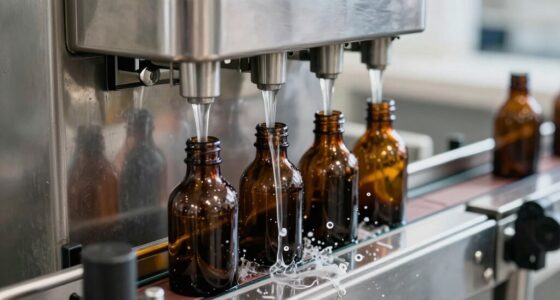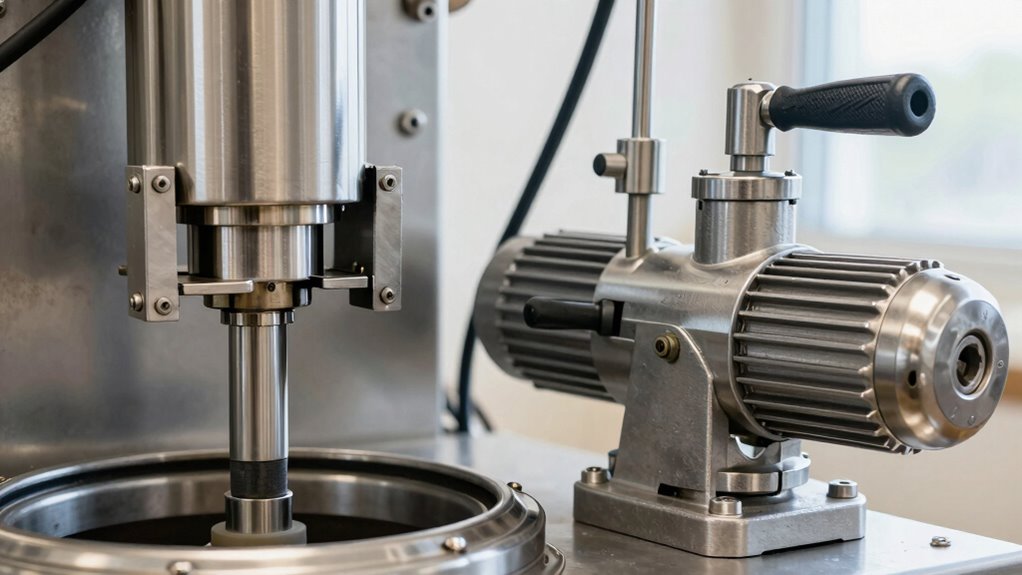

If you’re choosing between piston and pump fillers for chunky juice, consider viscosity first. Piston fillers handle thick, chunky products with high precision, making them ideal for control and consistency. Pump fillers work best with less viscous liquids and offer faster operation but may struggle with dense textures. For a versatile, accurate solution for heavy or chunky liquids, piston fillers are usually better. Keep exploring to discover which option matches your specific production needs.
Key Takeaways
- Piston fillers handle high-viscosity, chunky juices easily, providing precise and consistent fills.
- Pump fillers are faster and more efficient for low-viscosity, liquid-based products but struggle with chunky textures.
- Piston fillers offer better adaptability for different container sizes and product variations.
- Pump fillers require more setup and adjustments when switching between thick and thin products.
- Overall, piston fillers are preferable for chunky juices due to their control, accuracy, and handling of viscous materials.
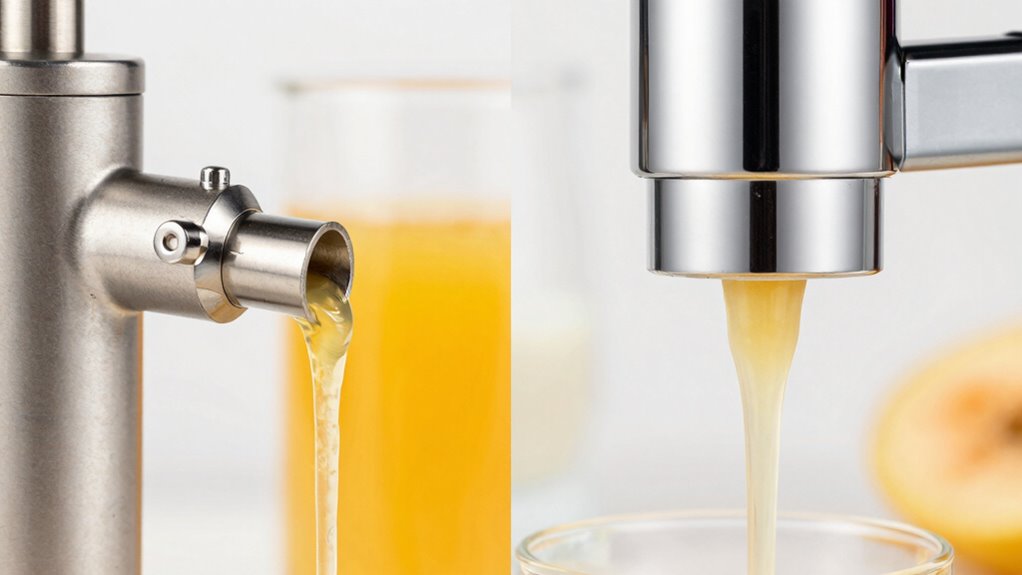
When choosing between piston fillers and pump fillers, understanding their differences is essential for optimizing your filling process. The type of product you’re working with, especially its liquid viscosity, plays a significant role in this decision. Piston fillers excel with thick, viscous liquids because they can generate the high pressure needed to push dense materials through the nozzle. These fillers move a set volume with each stroke, making them highly accurate for products like syrups, creams, or chunky juices. Their design allows for consistent filling, regardless of the liquid’s thickness, which is crucial when precision is a priority. On the other hand, pump fillers are better suited for less viscous liquids. They operate by using a positive displacement mechanism, which makes them ideal for products that flow easily. Pump fillers generally offer faster filling speeds with liquids of lower viscosity, enabling you to process larger volumes efficiently. If your product has a higher viscosity, pump fillers may struggle to deliver the desired speed without sacrificing accuracy, but piston fillers can handle this challenge with ease. Additionally, the filling speed you require influences your choice. Pump fillers are known for their rapid operation, making them suitable for high-volume production lines where speed is critical. They can quickly fill containers with minimal downtime, but their performance diminishes with thicker liquids. Piston fillers, while typically slower, provide better control over the fill amount, especially with chunky or viscous products, ensuring each container receives the right amount without spills or overflow. You also need to consider how often you change products or container sizes. Piston fillers are more adaptable for varying container sizes and product types because they can be easily adjusted for different volumes. Pump fillers, however, usually require more configuration changes to handle different viscosities or container sizes, which might slow down your production line if you frequently switch products. Cost is another factor; piston fillers tend to be more complex and expensive initially but offer long-term precision and versatility for challenging products. Pump fillers are generally more economical upfront and are perfect for straightforward, low-viscosity liquids. Understanding device science and how these machines operate can help you make a more informed decision. Ultimately, the choice hinges on your specific needs regarding liquid viscosity and filling speed. If you work with thick, chunky liquids and need precise, controlled fills, piston fillers are your best bet. If your focus is on rapid processing of thinner liquids, pump fillers will serve you well. Understanding these differences ensures you select the right equipment to maximize efficiency, maintain quality, and reduce waste.
Frequently Asked Questions
Which Filler Type Is More Environmentally Friendly?
You’ll find piston fillers generally more environmentally friendly because they often have better recyclability considerations and lower environmental impact. They typically use fewer materials and generate less waste than pump fillers. Plus, piston fillers are easier to clean and reuse, reducing disposal concerns. If eco-friendliness matters most to you, choosing piston fillers helps minimize your packaging’s overall ecological footprint while supporting sustainability goals.
Can Piston Fillers Handle Thicker, Pulpy Juices?
Yes, piston fillers can handle thicker, pulpy juices effectively. Their piston efficiency allows you to precisely control the filling process, making them ideal for products with pulp. You’ll appreciate how well piston fillers maintain consistent volume and minimize waste, even with chunky liquids. Their design guarantees pulp compatibility, so you won’t have to worry about clogging or uneven filling, making them a reliable choice for pulpy juice packaging.
Are Pump Fillers Easier to Clean Than Piston Fillers?
You get what you pay for, and when it comes to cleaning, pump fillers are easier than piston fillers. Their cleaning process is simpler, with fewer parts to disassemble, making maintenance ease a breeze. This means less downtime and more reliable operation. If quick, efficient cleaning matters to you, pump fillers are the better choice, saving you time and effort in the long run.
What Is the Cost Difference Between the Two?
You’ll find that piston fillers generally cost more upfront due to their higher filler durability and complex design. Pump fillers tend to be more affordable initially, but maintenance costs can add up if they require frequent cleaning or repairs. Overall, piston fillers have a higher initial investment but may save you money long-term through reduced maintenance costs, whereas pump fillers are cheaper initially but might incur higher ongoing expenses.
Which Filler Type Has Faster Throughput Rates?
You’ll find pump fillers generally have faster throughput capacities and superior filling speeds, making them ideal for high-volume production. Their design allows continuous operation with minimal downtime, boosting efficiency. Piston fillers, on the other hand, excel at handling thick or chunky liquids but typically operate at slower filling speeds. If your priority is maximizing filling speed and throughput capacity, pump fillers are the better choice for your needs.
Conclusion
Ultimately, choosing between piston and pump fillers depends on your specific product needs and production goals. Consider the nature of your liquids, desired accuracy, and volume requirements. Remember, “the proof of the pudding is in the eating”—so test both options to see which fits best. By weighing the pros and cons carefully, you’ll make an informed decision that guarantees your “chunky juice” reaches customers perfectly filled and ready to enjoy.